Can You Bring a Longboard on a Plane?
This post contains affiliate links. As an Amazon Associate, we earn from qualifying purchases.
You can bring a longboard on a plane, but the process splits into two completely different paths based on one thing: whether it’s electric. A standard longboard falls under general baggage or sports equipment rules, with final discretion at security. An electric longboard is governed by strict lithium-ion battery regulations, where the battery’s watt-hour rating decides everything.
The difference isn’t just a checkbox. It’s the difference between a screening officer asking you to open your bag and an airline refusing to board you at the gate because your battery exceeds 160 watt-hours. The core rules come from two U.S. Agencies: the Transportation Security Administration (TSA) for security screening and the Federal Aviation Administration (FAA) for battery safety. A common question is: can you bring a longboard on a plane?
What follows is the mechanic’s view: the specific size limits from United and Jetstar, the exact watt-hour math from the FAA, and the packing steps that stop your deck from getting crushed. By the end, you’ll know whether to check it, carry it, or ship it ahead of time.
Key Takeaways
- The TSA permits longboards in both carry-on and checked baggage, but the final call belongs to the screening officer at the checkpoint.
- For electric boards, the FAA’s 160 watt-hour (Wh) limit is absolute; any lithium-ion battery exceeding 160 Wh is prohibited on any aircraft, in any baggage.
- Airline size and fee policies are wildly inconsistent; for example, United waives oversized fees for California routes, while Jetstar charges a fee if any side exceeds 39 inches.
- Always pack your board in a purpose-made bag, disassemble the trucks if possible, and pad the deck—this is what prevents the deep scratches and stress cracks you see at baggage claim.
- Have a Plan B ready, like knowing a local shipping depot, because some airlines simply do not accept battery-powered recreational vehicles, even if your battery is under 100 Wh.
The TSA’s Official Stance on Longboards
We should clarify something. The Transportation Security Administration’s policy is publicly available and hasn’t changed since March 22, 2017. It states longboards are permitted in both carry-on and checked baggage. That’s the official line.
The real-world clause is the second sentence: final discretion rests with the screening officer. This isn’t a loophole; it’s a safety valve. A screening officer can deny anything they deem a security risk or a hindrance to the screening process. Your 46-inch pintail might be fine on a slow Tuesday but deemed too cumbersome during a holiday rush. I’ve seen skaters get turned away at the checkpoint because their board bag wouldn’t fit through the X-ray belt without holding up the line for ten minutes.
The TSA’s published policy is a third-person, pronoun-free statement of permission: “Longboards are permitted in carry-on and checked baggage.” This is the baseline rule all U.S. Airport security follows, though officers have final say.
So how do you navigate this? Your goal is to make the screening officer’s job effortless. If carrying on, use a slim bag. If checking, ensure nothing inside looks ambiguous on an X-ray. Loose hardware, like skate tools or spare bearings, should go in your checked luggage to avoid questions. The interaction is straightforward if you’re prepared for the can you bring a longboard on a plane check; it becomes a debate if you’re not.
Airline Policies: Size, Weight, and the Fee Maze
The TSA allows you through security, but your airline determines if you can bring a longboard on a plane and what you’ll pay for it. This is where policies fragment. You cannot assume the rules for United apply to Jetstar or AirAsia.
| Airline | Max Length (Mainline) | Max Weight | Key Fee Exception |
|---|---|---|---|
| United Airlines | 115 inches | Under 100 lbs (45.3 kg) | Oversized bag fees waived for routes to/from California. |
| Jetstar | Varies by aircraft | 32 kg per item | Oversized fee triggered if any single side > 39 inches (1 meter). |
| AirAsia | 277 cm (109 inches) | 15 kg per bag | Complimentary surfboard allowance only for Australia routes. |
United’s policy for surfboards and paddleboards is the best proxy for a longboard. Their 115-inch limit on mainline flights is generous, but drop to 92 inches if you’re on a United Express regional jet. The 100-pound weight limit is a non-issue for any longboard, but the California fee waiver is a specific, money-saving detail most travelers miss.
Jetstar represents the low-cost carrier model. Their 39-inch rule for any side is the killer. A standard board bag will almost certainly exceed 39 inches in length, triggering an oversized item handling fee. Their maximum weight of 32kg (70.5 lbs) is also lower than United’s.
AirAsia’s complimentary policy for Australian routes, effective May 1, 2018, shows how regional exceptions work. Your board might fly free to Sydney but incur a steep sports equipment fee to Bangkok.
The takeaway? You must look up your specific airline’s “sports equipment” or “oversized baggage” policy. “Checked baggage” rules are for suitcases, not for six-foot-long objects.
Packing Your Longboard: A Damage-Prevention Checklist
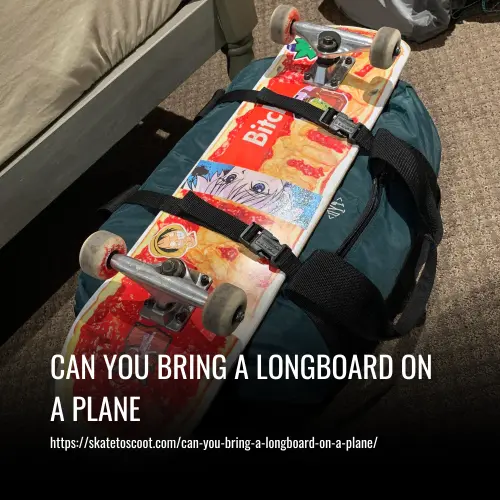
Take this advice: putting your board in a duffel bag is a sure way to get a broken deck. Baggage handlers are not gentle, and the machinery isn’t designed for oddly shaped, rigid items. You need a system.
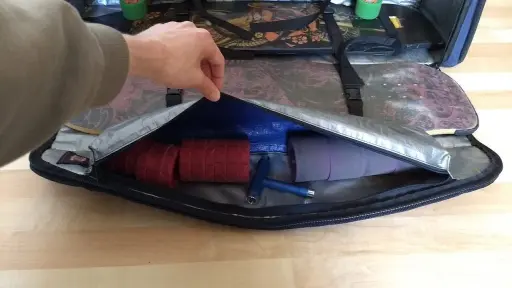
Here is the step-by-step packing list most articles omit. It’s the difference between a board that arrives ready to ride and one that needs a trip to the shop.
- Disassemble the trucks. This is the single most effective step. It reduces the overall size, eliminates axles that could catch and bend, and allows you to cushion the deck evenly. Use a skate tool, not a makeshift wrench. Not doing this leaves your trucks as levers that can crack the deck under a heavy suitcase.
- Remove the wheels and bearings. Pack them in a small pouch or ziplock bag. This prevents them from acting as pressure points against the deck and keeps your bearings clean.
- Wrap the deck. Use bubble wrap or a thick towel. Focus on the nose, tail, and any graphic you care about. The goal is to prevent scratches and impact cracks.
- Place it in a purpose-made board bag. A padded surfboard or ski bag is ideal. The bag provides a smooth exterior that won’t catch on conveyor belts. Jetstar explicitly requires packing surfboards, skateboards, or scooters “in a bag designed for that equipment.”
- Fill dead space. Stuff clothing, towels, or packing peanuts around the wrapped deck inside the bag. A board shifting in transit causes impact damage. A board held snug does not.
- Secure the bag. Use nylon straps or the bag’s own compression system. A floppy bag is harder for handlers to manage.
Where this goes sideways: Checking a board without a hard-case bag. The first time a 50-pound suitcase is dropped on your unprotected deck, you’ll hear a sickening crunch from three rows away at the baggage carousel. The repair costs more than a proper bag.
This checklist adds 15 minutes to your packing. It saves you a $200 deck replacement and the frustration of a ruined trip. Your fundamentals are your foundation, even for travel.
Electric Longboards: The FAA’s Battery Rules Are Non-Negotiable
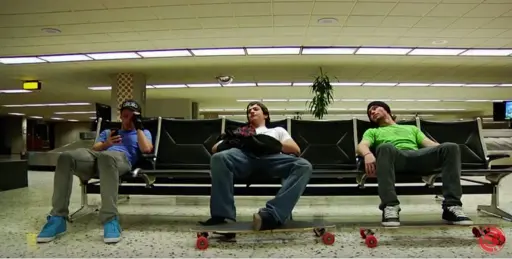
This is where the conversation shifts from baggage policy to hazardous materials regulation. The Federal Aviation Administration doesn’t care about your board’s length. It cares about the lithium-ion battery inside it. These rules are federal law, not airline preference.
The FAA’s framework is built on watt-hours (Wh), a measure of energy capacity. You calculate it: Volts (V) x Amp-hours (Ah) = Watt-hours (Wh). Most manufacturers list this on the battery label. If they don’t, you must calculate it.
| Battery Watt-Hours (Wh) | FAA Rule | Airline Approval Needed? |
|---|---|---|
| Under 100 Wh | Generally permitted. | No. |
| 101 – 160 Wh | Permitted only with airline approval. | Yes, and it’s not guaranteed. |
| Over 160 Wh | Prohibited in all baggage. | No—it’s simply banned. |
The critical number is 160 Wh. Exceed it, and you cannot bring that battery on a commercial aircraft, period. The FAA notes that most board-type self-balancing scooters hover around 158.4 Wh, deliberately skirting just under the limit. Your electric longboard likely falls in the 101-160 Wh range.
Common mistake: Assuming airline approval for a 101-160 Wh battery is a formality. The FAA states “many [airlines] do not accept battery-powered recreational vehicles at all.” You must contact your airline well in advance—Jetstar recommends at least 5 business days—and get explicit, written permission.
The physical rules are just as strict. The device must be protected from accidental activation. The battery terminals must be insulated against short circuits. If the watt-hour rating isn’t clearly marked on the outside, the airline can demand proof. A damaged or recalled battery is absolutely prohibited.
This makes flying with an electric skateboard a multi-step verification process: know your Wh, get airline approval, pack to prevent activation, and have your documentation ready. It’s a chore, but it’s the only way.
Carry-On vs. Checked: The Strategic Choice
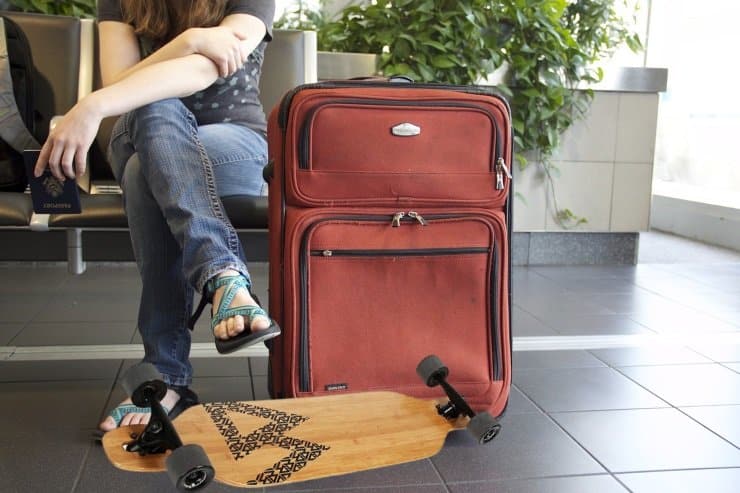
Can you carry your longboard onto the plane? The TSA says yes. Your airline’s capacity limits say maybe. This isn’t an academic question; it’s a practical one of space and convenience.
For a standard longboard, carry-on is often the safer play for the board itself. It avoids the rough-and-tumble of checked baggage. But you must meet the size restrictions for overhead bins. Many airlines have strict size limits for carry-on items, often measured by total linear dimensions. A longboard deck often exceeds standard carry-on size limits. Some skaters get away with it on half-empty flights, but it’s a gamble.
Checking the board as sports equipment is the reliable path. You declare it at the counter, pay any applicable fees (which can be $100 or more on some carriers), and it travels in the aircraft’s bulk luggage hold. This is where knowing the TSA longboard carry-on rules is just the first step. You must then layer on your airline’s specific sports equipment size and fee policy.
For electric boards, the calculation changes. The FAA lithium battery travel rules typically require the device to be in carry-on baggage, so any potential thermal event can be addressed. For batteries under 100 Wh, the FAA generally permits them, but many airlines do not accept battery-powered recreational vehicles at all, even if they meet watt-hour limits. You’re often forced to carry it on, which again runs into the size problem.
“Skateboard” or “Sports Equipment”? What to Say at Check-In
Your choice of words at the airline counter can trigger different fee categories. “Sports equipment” is a defined, often expensive baggage type. “Skateboard” might be assessed under standard oversized baggage rules, which can be cheaper or more expensive—it depends on the airline’s internal coding.
I don’t recommend gaming this. Be direct. “I need to check a longboard as sports equipment.” This aligns with how airlines like United and Jetstar categorize it. It sets the correct expectation for the agent. If they classify it as a standard oversized bag, that’s their call. Trying to sneak it through as a “skateboard” can backfire if their system has a specific, higher fee for sports gear, leading to a surprise charge at the gate.
The goal is predictable, not clever. You want to know the cost and process before you arrive. A surprise at check-in is a stress you don’t need.
When Your Board Gets Denied: Your Contingency Plan
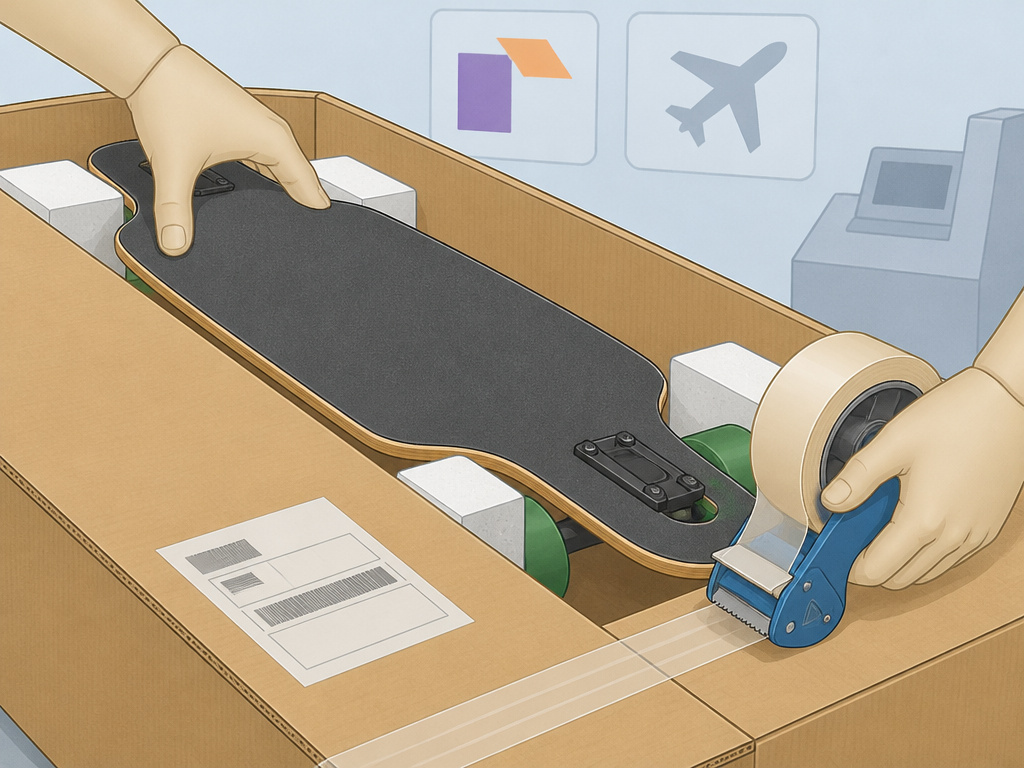
You followed the rules. You have your airline’s email approval for your 150 Wh battery. Then the gate agent says no. It happens. The FAA explicitly notes that airline approval is separate and not guaranteed. What’s your move?
Your Plan B should be researched before you leave for the airport. Here are the realistic options, in order of practicality:
- Airport Shipping Office. Most major airports have a FedEx, UPS, or DHL office either in the terminal or very nearby. You can ship the board to your destination. It’s expensive, but it’s faster than missing your flight.
- Airport Left Luggage/Storage. Some airports offer long-term storage. You can stash the board, take your trip, and retrieve it on your return. This only works for round-trip journeys from the same airport.
- Friend/Family Drop-off. If you have time, call a local contact to come retrieve the board.
- Abandonment. This is the last resort. Some low-cost carriers make it so prohibitively expensive to change plans that abandoning the board is the only economic choice. It’s brutal, but it happens.
Knowing how to ship a longboard is a core part of this contingency. Find details on shipping costs and methods. Have the address of the shipping depot saved in your phone. The cost and hassle are high, but they beat losing your entire fare.
Where do I pick up my longboard after the flight?
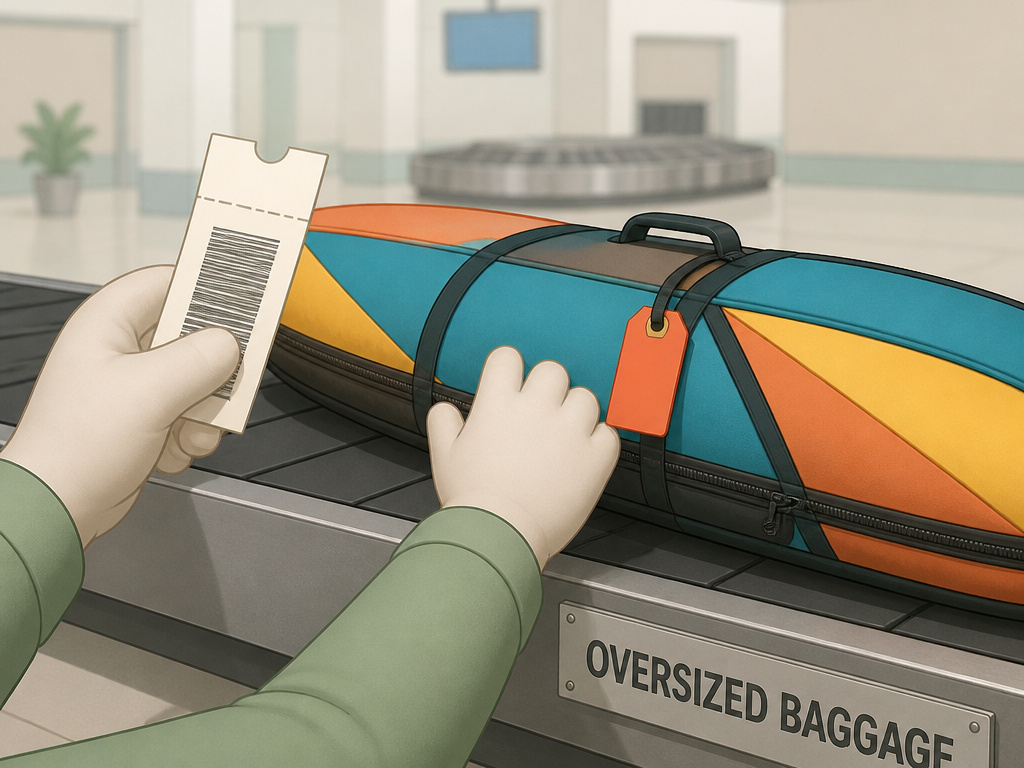
On many airlines, oversized items like longboards are handled as special baggage and may need to be collected from a designated oversized baggage drop-off point, not the standard carousel. You will need to present your baggage claim ticket to collect it. Airlines like United have specific size limits for items like surfboards, so if your board bag meets those dimensions, it will be processed through this special system. Always allow extra time after landing to retrieve your board from this separate location.
Are the rules different for international and domestic flights?
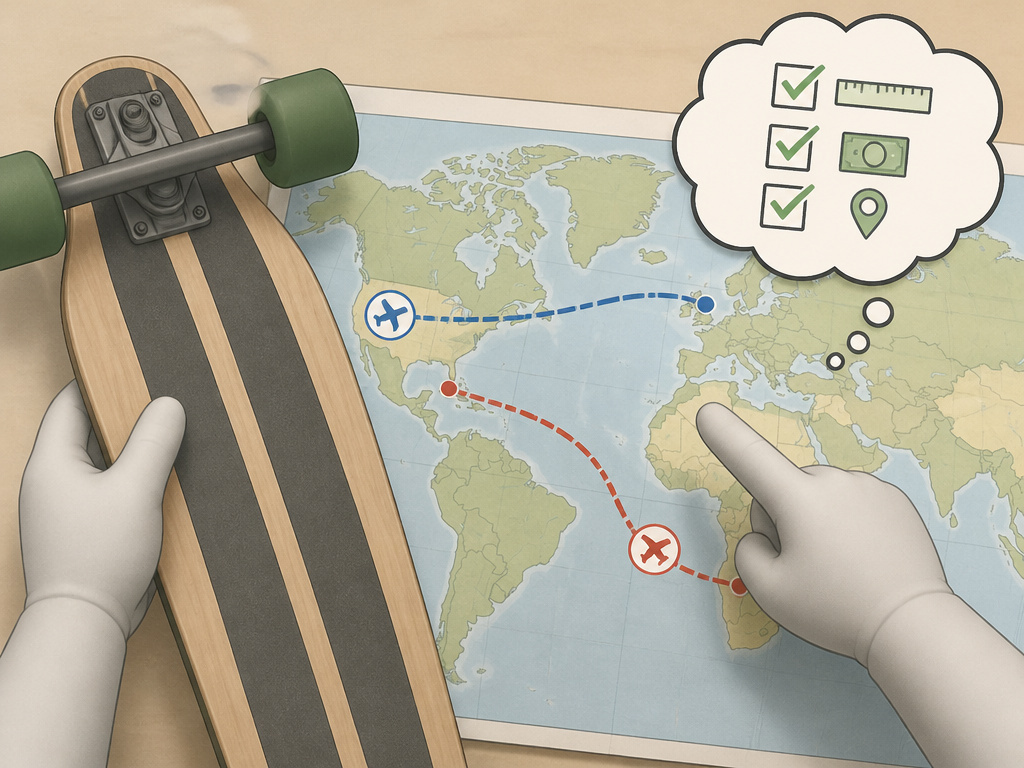
Yes, the rules can differ significantly. While the TSA’s security screening policy for longboards is the same for all flights departing the U.S., airline policies on size, weight, and fees vary by route. For example, United waives oversized bag fees for boards on routes to or from California, but that specific waiver may not apply on other domestic or international routes. International carriers like Jetstar and AirAsia have their own regional rules, such as complimentary surfboard allowances only on flights to and from Australia. Always check your specific airline’s policy for your exact departure and arrival cities.
Frequently Asked Questions
Can I take my longboard as a carry-on?
The TSA allows it, but your airline’s carry-on size limits are the real constraint. Most longboards exceed standard 45 linear inch carry-on dimensions. Success depends on the airline’s discretion and available overhead space.
Does TSA allow skateboards?
Yes. The TSA’s policy for “longboards” explicitly applies to skateboards. They are permitted in both carry-on and checked baggage, with the same caveat that the screening officer has final discretion.
Does it cost extra to bring a skateboard on a plane?
Almost always, yes, if you check it. It will typically incur an oversized baggage fee or a sports equipment fee. The cost varies wildly by airline. Some airlines, like United on California routes or AirAsia on Australia routes, have specific waivers.
How do I transport a longboard safely on a plane?
Disassemble it. Remove the trucks and wheels. Wrap the deck in padding. Place it in a padded board bag designed for surfboards or skis. Fill empty space inside the bag with soft items like clothing. This system absorbs impacts and prevents the deck from flexing and cracking under other luggage.
Can I bring an electric longboard on a plane?
You can, but only if its lithium-ion battery is under 160 watt-hours (Wh). Batteries between 101-160 Wh require explicit airline approval before travel. You must also protect the device from accidental activation and the battery from short circuits. Many airlines refuse them outright.
What about other wheeled gear, like hoverboards or roller skates?
The rules differ by item. A hoverboard falls under the same FAA battery rules as an electric longboard. Standard roller skates are typically treated like shoes or sporting goods and can often be packed in checked luggage without special fees, though it’s best to confirm with your airline.
Before You Go
A common but unspoken problem is that failure usually comes not from the rules, but from assuming all airline staff apply them consistently. One gate agent might see your board bag and wave it through; another might insist on measuring it and applying a fee you didn’t budget for. Your job is to be the expert in the room.
Print out the TSA policy page and your airline’s sports equipment policy. Have your battery’s watt-hour calculation ready if you’re flying electric. Know how to carry a longboard comfortably through the terminal to avoid looking overwhelmed. Get tips for carrying a longboard. This preparation turns a potential argument into a brief, professional transaction.
If your board is over 45 inches long or has a battery, calling your airline 72 hours before your flight isn’t a suggestion—it’s your best chance for a smooth trip. And if all else fails, know where the nearest shipping depot is. That’s your escape hatch.
