White Space Snowboard Review: Should You Buy One?
This post contains affiliate links. As an Amazon Associate, we earn from qualifying purchases.
Whitespace snowboards are Shaun White’s post-Olympic brand, built with premium materials like carbon fiberglass and sintered bases and marketed as high-performance gear. The situation is more nuanced: the boards are manufactured by GP87 in China, the brand faces significant community backlash, and while some models like the Montano receive glowing owner reviews, the value proposition versus established brands is a central question.
That gap between marketing and community reception is where the real review lives. The specs tell one story, but the chatter on forums and the details in the warranty fine print tell another. This is the context for a genuine white space snowboard review.
What follows: a breakdown of the exact materials and ISO standards the boards meet, a head-to-head look at the Shaun White Pro versus the all-mountain Montano, the warranty you’re actually getting, and the real-world feedback from riders who’ve bought them, both the fans and the critics.
Key Takeaways
- Whitespace boards are manufactured by GP87 in China, a point of contention for riders concerned about brand authenticity versus cost.
- The 4-year limited warranty only covers boards bought from the official website and requires a Return Authorization Number, read the fine print before assuming you’re covered.
- For aggressive carving, look at the Montano’s 6.9m sidecut radius; for a park-focused twin, the AMF Twin‘s symmetrical shape is the default.
- Community sentiment is sharply divided, many riders refuse to support the brand due to Shaun White’s perceived disconnect from core snowboard culture.
- The ISO 10958-2:2015 standard guarantees binding insert strength (4,500 N minimum retention force), a critical spec that matters more than marketing claims.
The ISO Standard That Matters (and What It Means For You)
Forget “lightning speed” slogans for a second. The most concrete performance promise on any snowboard isn’t printed on the top sheet; it’s buried in an international engineering document.
ISO 10958-2:2015 specifies the thread type for snowboard binding inserts as M6×1, a minimum screw engagement of 2.0 threads, and a minimum retention force of 4,500 Newtons for boards rated for riders 45 kg and up. This standard has been verified by extensive manufacturer testing.
That 4,500 N figure, roughly 1,012 pounds of force, is the minimum pull-out strength each binding insert must withstand. It’s a pass/fail test for the hardware that keeps you connected to the board. When you’re comparing brands in a white space snowboard review, knowing they all adhere to this ISO standard levels the playing field on fundamental safety. The real differences start above this floor.
Where this goes sideways: Assuming a higher price tag automatically means better construction. The ISO standard is a baseline. A board from a reputable brand and a discounted model from a direct-to-consumer startup both must meet the ISO 10958-2:2015 standard. The quality divergence happens in core materials, base technology, and layup precision, things the standard doesn’t grade.
So a Whitespace board, a Burton board, and a Season Nexus snowboard all have inserts that meet the same strength requirement. That’s good. It means you can focus your comparison on what actually affects ride feel: the shape, the flex, and the materials sandwiching those standardized inserts.
Decoding the Whitespace Lineup: Shaun White Pro vs. Montano vs. AMF Twin
Whitespace markets three main models. Each targets a different rider, but the marketing blurbs often gloss over the trade-offs.
The Freestyle Shaun White Pro is the flagship. According to brand material, it uses a poplar and paulownia wood core, triaxial ultra dense weave fiberglass, C4X carbon fiberglass, a plant-based bio-resin, and a premium sintered base. It’s billed as a do-it-all freestyle board for pipe, park, and freeriding. Sizes run from 132 cm to 165 cm.
The Montano is their first dedicated all-mountain shape. It’s directional, with a taper (4mm on the 155cm Spectrum) and a stance setback, built for charging variable terrain and floating in powder.
The AMF Twin is the true twin, pure park-and-play terrain. It’s symmetrical, designed for switch riding and jibbing.
The specs tell a clear story, but owners highlight the gaps in any white space snowboard review. One Reddit user directly questioned if the Shaun White Pro was suitable for high-speed carving on hard snow, suggesting its 7/10 flex might be more park-oriented than the marketing implies. Another found a 120cm Shaun White Pro board for $115, a price that screams “clearance” and hints at sales challenges.
| Model | Best For | Key Spec (Example) | Where Marketing & Reality Diverge |
|---|---|---|---|
| Shaun White Pro | Park, Pipe, Freestyle | Directional Twin, Carbon Layup | Marketed as versatile; owners question hard-snow carving. |
| Montano | All-Mountain, Powder | 26.2 cm Waist (155cm), 6.9m Sidecut | Glowing reviews; seen as the line’s true value. |
| AMF Twin | Park, Jibbing, Switch | True Twin, Sintered Base | High-rated (5.0/5); community questions price vs. Peers like Forum snowboards. |
The takeaway? Don’t buy the pro model name alone. If you’re an all-mountain rider, the Montano’s geometry, with its waist width and sidecut, is where the performance math actually adds up. For park rats, the AMF Twin or a dedicated best freestyle snowboard from a park-centric brand might be a more focused tool.
The Montano: A Closer Look at the Numbers
We can strip the hype and look at one specific board: the Montano Spectrum in 155cm. The product page gives us hard numbers, and those numbers don’t lie.
A 155cm Montano has a waist width of 26.2 cm, a tip width of 31.0 cm, and a tail width of 30.5 cm. That’s a noticeable taper. The sidecut radius is 6.9 meters, and it’s recommended for riders 150–175 lbs (68–79 kg). The stance setback is about 1.5 inches.
What does this mean under your feet? A 26.2 cm waist is on the narrower side, great for quick edge-to-edge response if you have average-sized boots. The 6.9m sidecut is tight, favoring quick, energetic turns over long, drawn-out carves. The taper and setback position you over the effective edge for powder, but the tail isn’t so pinched that you lose stability landing switch.
Now, compare that to the limited-edition AspenX LE Freestyle Shaun White Pro (156cm). Its specs, per an industry analyst Rob Breed’s report, tell a different story: a 25.3 cm waist, a 7.7m sidecut, and only a 12.5 mm setback. That’s a narrower, more freestyle-focused profile with a longer, slower turn radius. It’s a different tool for a different job.
The Montano’s numbers align with a specific use case: aggressive all-mountain riding where quick turns and powder performance are priorities. If your local hill is tight trees and variable snow, this geometry makes sense. If you live for wide-open groomers, that 6.9m radius might feel twitchy. This is why comparing spec tables beats relying on “versatile” or “aggressive” marketing labels every time. It’s also why our best all-mountain decks guide compares these exact figures across brands.
The 4-Year Warranty: What’s Covered and What’s Not
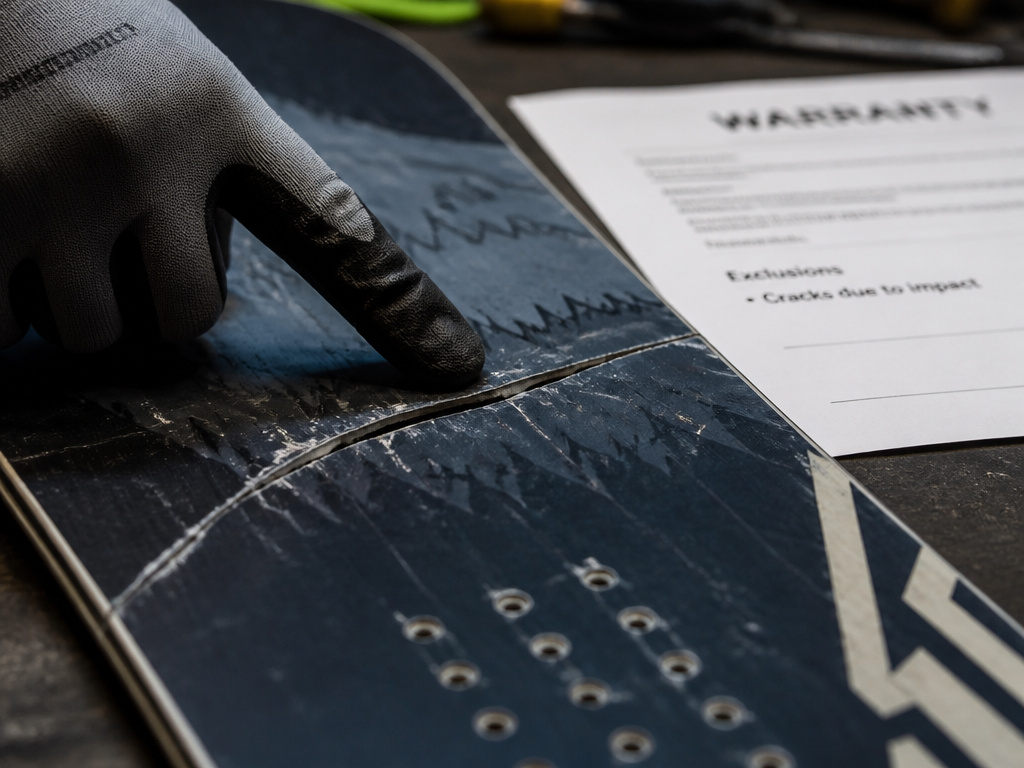
Whitespace offers a 4-year limited warranty against defects in materials and workmanship. It sounds solid, but the details in the terms are where your protection gets specific.
The warranty applies only to snowboards purchased from www.whitespacesnow.com. It also covers the original purchaser only. If you buy from a third-party retailer or sell the board, the warranty voids. All claims require a prior Return Authorization Number (RA#) obtained from Whitespace. You ship the board pre-paid and insured; they assume no responsibility for damage in transit.
Common mistake: Assuming a warranty is a blanket guarantee. It’s not. The standard exclusions apply: damage from misuse, modifications, normal wear and tear, and, importantly, “cracks or splits in the top sheet due to impact.” That last one is a big one. A slammed rail or a rock strike can crack a top sheet, but that’s an impact, not a material defect. The warranty won’t cover it.
This structure is fairly standard, but it highlights a key point: the warranty protects you against a board delaminating under normal use or an insert pulling out. It doesn’t insure your board against the realities of riding. That fine print is why understanding build quality, the ISO standard, the core, the layup, matters more than the warranty length. A well-built board from a brand like Chamonix might have the same warranty period but fewer reasons for you to ever use it.
Where the Community Chorus Diverges from the Marketing
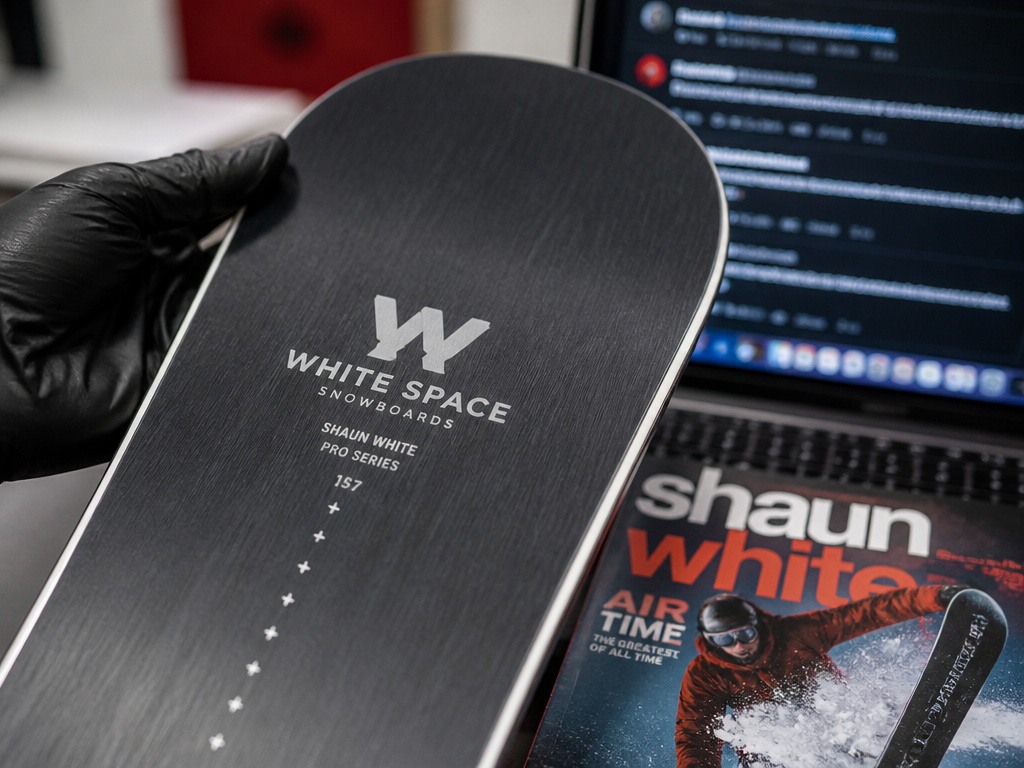
You can’t review Whitespace without addressing the elephant in the room: Shaun White’s reputation within the snowboarding community and how it tangles with perceptions of his brand.
Promotional articles frame White as an iconic athlete bringing authenticity and performance to a new brand, while many Reddit users describe him as disconnected from the core community. The Whitespace snowboard model overview in Forbes positions it alongside established players. On the brand’s own site, the Montano holds a 4.9 out of 5-star rating based on 20 reviews; the AMF Twin has a perfect 5.0 rating from 37 reviews. Verified buyers praise performance.
On the other side, Reddit and forum discussions paint a starkly different picture. Multiple threads are filled with anecdotes labeling White an “entitled asshole” who didn’t engage with the snowboard community. This sentiment fuels outright boycotts. Others point to manufacturing: “They are manufactured by GP87 in China,” one user states, framing them as generic OEM boards with a celebrity name. Another reports a friend in Japan receiving “unsold, shrink-wrapped Whitespace boards at a discarded price.”
Then there’s the value debate. One user argues that the specs don’t justify the price, claiming the boards “don’t use expensive materials.” Another counters, defending the material list (carbon, sintered base) and comparing it favorably to similarly priced park boards from other brands.
Who’s right? Both sides are reporting their truth. The positive reviews (like the 4.9/5 and 5.0/5 ratings) are real; the community resentment and reports of discounted inventory are also reported. This disagreement is itself a data point. It means the brand lacks the unified grassroots support that fuels companies like Symbolic snowboards. For some buyers, that social capital matters. For others, only the ride and the price tag do.
Should You Buy a Whitespace Snowboard?
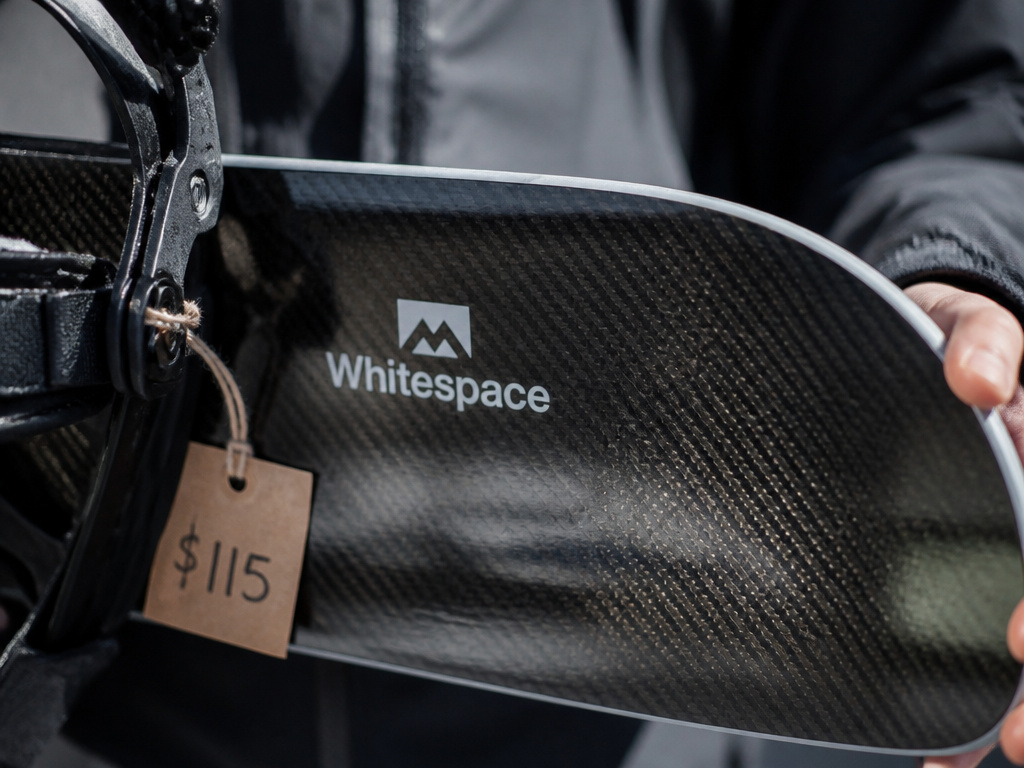
So, do you pull the trigger on a Whitespace board? It depends less on the specs sheet and more on your personal calculus.
If you find a deeply discounted model, like the $115 Shaun White Pro or a Montano under $300, and its specs match your needs, it can be a fantastic deal. The performance, based on positive owner reviews, is there. The materials include carbon fiberglass and, according to brand marketing, a sintered base. In this scenario, you’re buying a tool, not a brand statement.
If you’re paying full retail price, the equation changes. You’re now comparing it directly to established brands in that $600+ range. At that point, you must ask: does the Shaun White association add value for you, or does the community backlash subtract it? Does the knowledge it’s made by GP87 in China bother you, or is that just modern global manufacturing? You’re not just buying a snowboard; you’re buying into a contested narrative.
But if you stumble upon a Whitespace board on a steep sale, and the geometry fits your style, you might just get a high-performing stick for a fraction of the cost, and learn to ignore the comments in the lift line.
Frequently Asked Questions
Are Whitespace snowboards any good?
Based on owner reviews, yes, specific models like the Montano and AMF Twin perform very well. They use quality materials like sintered bases and carbon fiberglass. However, “good” is relative to price and brand perception. At full retail, they face stiff competition. On sale, they can represent significant value.
Who makes Whitespace snowboards?
Whitespace snowboards are manufactured by GP87 in China. This is a point of discussion in the community, with some viewing it as a negative mark against the brand’s premium positioning and others seeing it as a standard practice for direct-to-consumer companies.
What is the warranty on a Whitespace snowboard?
Whitespace offers a 4-year limited warranty against defects in materials and workmanship. It only covers boards purchased directly from their official website by the original owner and requires obtaining a Return Authorization Number (RA#) before filing a claim. Normal wear and tear or impact damage is not covered.
Is the Shaun White Pro snowboard good for beginners?
No, it is not ideal for beginners. Marketed as a 7/10 flex freestyle board for pipe and park, it requires a developed skill set to control effectively. Beginners would benefit more from a softer, more forgiving all-mountain or beginner-specific model.
How does Whitespace compare to brands like Burton or Lib Tech?
Whitespace is a boutique, celebrity-driven brand with a limited model lineup and direct-to-consumer sales focus. Established brands like Burton or Lib Tech have decades of R&D, extensive pro teams, wider model ranges, and stronger retail distribution. Whitespace often competes on price (when on sale) and specific tech specs, while the majors offer proven consistency and deep community roots.
The Bottom Line
Whitespace snowboards are a paradox. The specs and many owner experiences confirm they are capable, well-built boards. The Montano, in particular, seems to hit a sweet spot. Yet, the brand is shadowed by manufacturing origins, community controversy, and a market presence that seems to rely heavily on discounts.
Your decision comes down to this: are you buying a riding tool or a brand? If it’s the former, and you can score a Whitespace board on a deep sale, you’ll likely get a high-performance deck that makes you happy. Just manage your expectations on long-term support and resale value. If it’s the latter, or if you demand unwavering community endorsement from your gear, your money is safer with one of the established top snowboards that have already earned their stripes.
Either way, read the spec sheet, not the hype. The numbers on the Montano product page tell you more about how it will ride than any athlete’s name ever could.
