How Much Do Skateboards Cost: Price Ranges Explained
This post contains affiliate links. As an Amazon Associate, we earn from qualifying purchases.
The price jumps from a basic pre-built complete to a custom build when you swap generic parts for name-brand decks, precision trucks, and faster bearings.
That $100 average is just the start. The real question is what you get for your money at each price point, and what you give up when you try to save too much. A board under $60 is considered lower quality, ranging from $30 to $60 according to SkateboardersHQ. Spending around $50 to $80 can get you a complete from a known brand like Yocaher or Cal 7. Crossing the $150 mark is where you enter custom territory, picking each component for your specific style of skating. A common first question for beginners is, “How much do skateboards cost?”
What follows is a straight breakdown of where the money goes: a component-by-component price list, a head-to-head look at what changes between a $50 and a $150 board, the real-world lifespan of parts from skater reports, and the one safety warning from federal regulators that changes the entire electric skateboard conversation.
Key Takeaways
- The average retail price for a skateboard is $100, but reliable beginner completes start as low as $50.
- Spending over $150 often means a custom build with name-brand parts, which can offer better performance and durability.
- Skateboard decks are consumables; a deck skated daily might last only 3 months, while trucks and wheels can last years.
- The U.S. Consumer Product Safety Commission (CPSC) has issued a stop-use warning for all Onewheel electric skateboards due to ejection hazards linked to at least four deaths, while the manufacturer, Future Motion, states the boards are safe when used properly.
- Long-term costs add up: expect to budget for replacement decks, wheels, shoes, and possibly skate park fees.
The $50 vs $150 Complete Skateboard: What Changes?
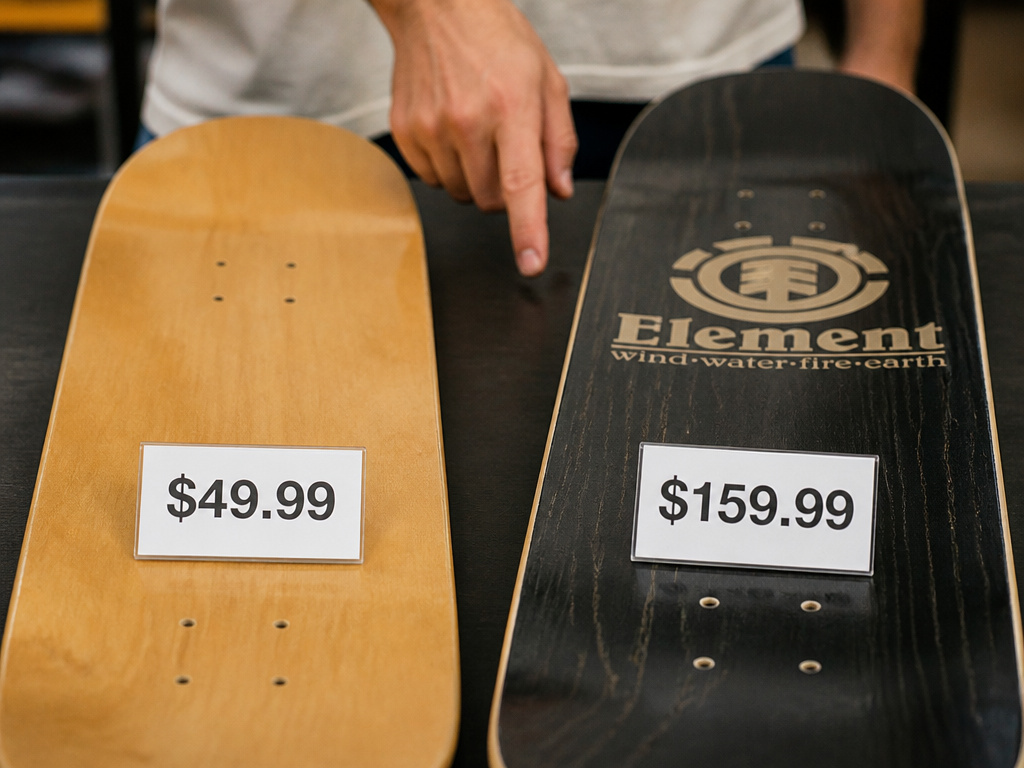
Open two browser tabs. In one, load a $49.99 Cal 7 Complete. In the other, build a $151 custom setup from an online skate shop. The specs tell the story.
The Cal 7 deck is 7-ply maple, which meets a basic material criterion. Its trucks are listed as “5-inch aluminum.” The wheels are 52mm 99A, a fine hardness for park skating, but the brand isn’t specified. The bearings are ABEC 7 carbon.
Now look at the custom cart for $151. The deck is a named brand, also 7-ply maple. The trucks are Independent Stage 11s, the industry benchmark for a reason, they grind smoother, turn more predictably, and the axles are less likely to bend. The wheels are Bones STF or Spitfire Formula Four. The bearings are Bones Reds.
Common mistake: Buying a complete skateboard without checking the truck brand. Generic trucks may not perform as well as name-brand trucks.
The difference lies in the feel, not just prestige. A custom setup with quality trucks is often preferred by experienced skaters for its performance.
This is the core price/performance jump when you compare a how much do skateboards cost analysis. You move from a board that functions to a tool that responds. For a beginner, a $50 complete is a perfectly fine test to see if skating sticks. But if you’re committing to learning, a complete from a brand like Yocaher ($59.99) or Penny ($79.99) is a common step before a custom build.
Component Cost Breakdown: Where Your Money Goes
Building a skateboard is like assembling a PC. You pay for each part, and the total reflects your choices. Here’s what each component typically costs, according to retail market data.
| Component | Budget Range | Mid-Range / Common | Premium Range |
|---|---|---|---|
| Deck | $30 – $40 | $50 – $70 | $80 – $90+ |
| Trucks (pair) | $30 – $40 | $45 – $50 | $50+ |
| Wheels (set of 4) | $20 – $30 | $30 – $40 | $40+ |
| Bearings (set of 8) | $10 – $15 | $20 – $30 | $30 – $100+ |
| Grip Tape | $5 – $8 | $10 – $12 (Mob, Jessup) | $15 – $20 (designer) |
| Hardware | $2 – $5 | $5 – $8 (Independent, Shorty’s) | $10+ (colored, locking) |
A complete skateboard bundles these parts. A shop buys components in bulk, assembles them, and sells the package as a complete. That’s why a Yocaher Blank Complete can sell for $59.99.
When you start picking each part, you pay retail. That’s where the $150+ figure comes from. A typical mid-range custom build can cost between $140 and $220, as reported by skaters online.
This doesn’t mean a custom board is a “rip-off.” You’re paying for choice. You can pick a 8.25″ deck if you have bigger feet, softer 78A wheels for cruising rough pavement, or harder 101A wheels for a smooth skate park. This level of personalization is what defines the best complete skateboards for an individual’s needs, beyond what any pre-packaged option can offer.
Skateboard Types and Their Price Tags
Not all skateboards are the same shape, and the shape changes the price. The standard “popsicle” street deck is just one option.
Traditional Street Skateboards (Popsicle)
This is the default. Sizes range from 7.5″ to 8.5″ wide. Completess in this category cover the widest price range. The Cal 7 Complete at $49.99 and the Yocaher Blank Complete at $59.99 are entry points. As you move up, you find completes from various brands at different price points.
Cruiser Skateboards
These are for comfortable riding over distance. They have larger, softer wheels and often a shorter, wider deck. They sacrifice trickability for smoothness. The Penny Regulas 27” is a classic example at $79.99, with 59mm 83A wheels and a compact 27″ length. The Flybar 27.5″ Cruiser Complete is similar at $64.99, using 60mm 78A wheels. The price premium over a basic street complete pays for that smooth, carvy ride.
Longboards
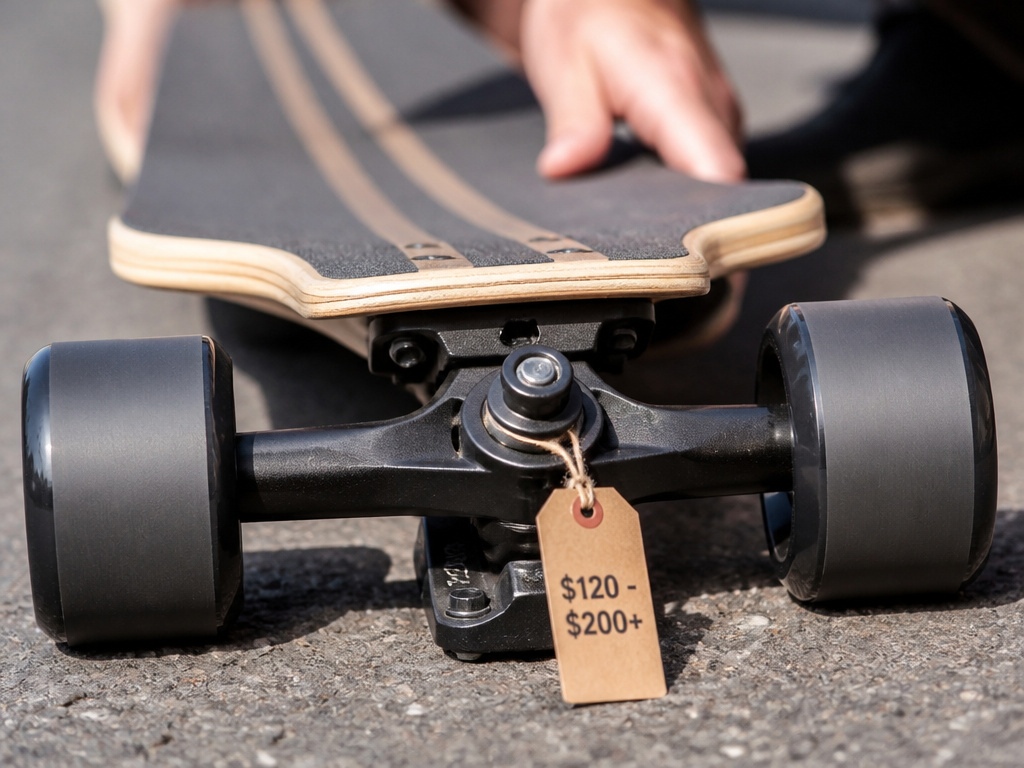
These are a different discipline entirely, focused on downhill speed or carving. They are longer, use specialized trucks, and often have flexible decks. Consequently, they cost more. A decent beginner longboard starts around $120 and can easily exceed $200. For a detailed look at that market, see our guide on the longboard cost spectrum.
Electric Skateboards
This is where prices and risks both spike. Basic electric skateboards start around $300, but high-performance models run into the thousands. More critically, there is a major safety dispute. The U.S. Consumer Product Safety Commission (CPSC) has issued a CPSC electric skateboard safety warning specifically for Onewheel models, citing ejection hazards linked to at least four deaths between 2019 and 2021. The manufacturer, Future Motion, states the boards are safe when used properly and refused a recall. This is a documented, ongoing disagreement between a federal safety agency and a manufacturer. If you’re considering an electric skateboard cost, this warning is the first line item.
Long-Term Cost of Ownership: Decks, Wheels, and Bearings Wear Out
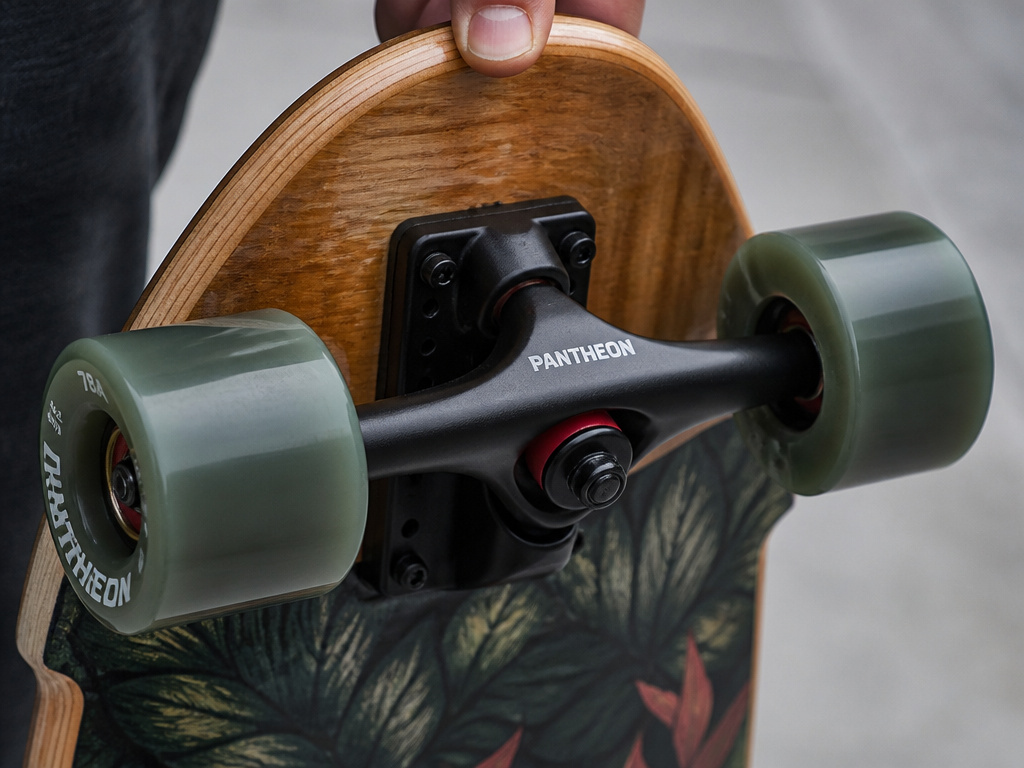
Buying the board is the first purchase. Maintaining it is the forever purchase. Skaters on forums are blunt about this.
A deck is a consumable. If you skate daily, practicing ollies and flip tricks, a deck might last you 3 months. Razor tail (the wearing down of the tail from scraping) and pressure cracks from landings are inevitable. Trucks can last for years, though the bushings inside will wear out and need a $10 replacement. Wheels flat-spot if you slide a lot, but a good set can last a year or more.
Bearings are a point of debate. A Reddit user reported bearings lasting 6 months with daily use. Cheap bearings fill with dust and grit faster, slowing down. Good bearings like Bones Reds can last longer with proper cleaning, but they’re not immortal.
Where this goes sideways: Assuming a “good” board will last for years. If you’re actually skating it, the deck will be replaced multiple times a year, and wheels and bearings are annual expenses at best.
This is the hidden math of skating. If you go through two $60 decks and one set of $40 wheels in a year, that’s $160 in annual maintenance, on top of your initial $150 setup. It’s why buying quality trucks upfront makes sense, they’re the one part you might never need to replace.
Where to Buy: Online Deals vs. Local Skate Shop Support
You can find a board in three places: a big-box store (Walmart, Target), an online retailer (Amazon, CCS, Skatewarehouse), or a local skate shop.
Big-Box Stores
They sell toy-grade boards and low-end completes, often in the $20–$50 range. The decks are often made from inferior wood (not 7-ply maple), with plastic trucks and sluggish bearings. They’re fine for a child to roll around the driveway a few times, but they will hinder learning actual tricks. They are the definition of “you get what you pay for.”
Online Retailers
Most of the price data here comes from online retailers. Selection is vast, prices are competitive, and sales are frequent. A Reddit user noted they “generally never pay more than £40 for a complete” by cycling through sites and hunting sales. The downside is you can’t stand on the deck or feel the truck tightness before you buy.
Local Skate Shops
This is where you pay a potential premium for expertise and community. A shop employee can help you pick your deck width, explain wheel durometers, and assemble your board perfectly. Many shops offer “shop board” completes with blank decks and solid components for $80–$100, which is fantastic value. Yes, a custom build in a shop might run you $200 after tax, as one Reddit user reported. But you’re also supporting a local hub, getting expert advice, and often getting free grip tape and assembly.
The choice depends on your confidence in answering how much do skateboards cost for your needs. If you know your specs, online is great. If you’re a beginner, the $20 extra at a shop for a proper setup and advice is some of the best money you’ll spend. It directly leads to a better experience than grabbing a random best beginner skateboards pick online and hoping it fits.
How much do specific skateboard brands cost?
Looking at specific brands gives a clear picture of the market. For example, a Yocaher Blank Complete 7.75″ Skateboard is priced at $59.99. It features a 7-ply maple deck, 54mm 95A wheels, and ABEC 7 chrome bearings. Similarly, a Cal 7 Complete Standard Skateboard is listed at $49.99, with a 7.75″ maple deck, 52mm 99A wheels, and ABEC 7 carbon bearings. For a plastic cruiser style, a Penny Skateboards Regulas 27” costs $79.99. These examples show that complete skateboards from known brands often start below the reported $100 average, especially for entry-level or cruiser models.
Frequently Asked Questions
What is the average price for a good skateboard?
The average retail price is $100. A “good” skateboard, one reliable for learning tricks, typically costs between $80 and $150. Below $80, you start compromising on component quality; above $150, you’re paying for premium or custom parts.
Is a $60 skateboard good?
It can be perfectly adequate for a beginner. Brands like Cal 7 and Yocaher offer completes around $60 with 7-ply maple decks and ABEC 7 bearings. They are functional and will let you learn the basics. However, the trucks and wheels will be lower quality than a $120 setup, which may limit progression or require earlier replacement.
How much does it cost to build a custom skateboard?
Building a custom skateboard with mid-tier, name-brand parts (e.g., a branded deck, Independent trucks, Bones wheels and Reds bearings) typically costs between $140 and $220 before tax. This price reflects picking each component at retail value for specific performance.
Why do some skateboards cost over $200?
Boards over $200 are usually high-end custom builds. The cost comes from premium materials: a $100+ flight deck (with carbon fiber layers), $70+ titanium or hollow trucks, $60 specialty wheels, and $50+ ceramic bearings. For most skaters, this is overkill. The performance difference between a $150 setup and a $250 setup is marginal compared to the jump from a $60 to a $150 setup.
What are the hidden costs of skateboarding?
The biggest hidden cost is part replacement. Decks wear out in months if skated aggressively. Wheels flat-spot. Bearings get dirty. You should also budget for skate shoes (grip tape destroys them), a skate tool ($10–$30), and protective gear like a helmet and wrist guards ($50–$100). Some skate parks also charge entry fees.
The Bottom Line
Here is the simplest rule: if you’re a total beginner and unsure if you’ll stick with it, a $50–$60 complete from Yocaher or Cal 7 is a responsible start. It works.
If you’ve been skating for a few months and know you’re committed, move into the $80–$120 range. This gets you a reliable complete from a reputable brand or a basic custom build with quality skateboard brands like Independent or Bones. The improvement in feel and durability is worth the jump.
Ignore anyone who says you must spend $200 to start. You don’t. But also ignore anyone who says a $30 board from a big-box store is just as good. It isn’t. The wood is softer, the trucks don’t turn right, and it will make learning harder.
Finally, if you’re looking at electric skateboards, pause. Read the CPSC warning first. Four deaths and a manufacturer refusing a recall is the single most important cost of an electric skateboard, a potential risk not printed on any price tag.
