How to Calibrate a Hoverboard: On Any Surface Safely
This post contains affiliate links. As an Amazon Associate, we earn from qualifying purchases.
To calibrate a hoverboard, you must hold the power button for a specific time while it’s powered off and level. The exact hold time and confirmation signal vary by brand: 3-5 seconds for most Jetson models (15 seconds for the Sphere), 15-20 seconds for Razor Hovertrax 2.0, 10 seconds for HOVERBOARD.com models, and an app is required for the Segway One S1.
This process resets the internal gyroscope sensors so the board knows what “level” feels like. If those sensors drift, the board tilts, beeps, or pulls to one side. Getting the timing right for your specific model is the difference between a quick fix and a failed attempt. The key is knowing how to calibrate a hoverboard correctly.
What follows: a breakdown of why calibration works, the universal steps, the critical brand-specific variations you must follow, and how to test if your fix actually held.
Key Takeaways
- Calibration timing is brand and model-specific; for example, Jetson recommends 3-5 seconds for most models (15 seconds for the Sphere), Razor recommends 15-20 seconds, and HOVERBOARD.com recommends 10 seconds.
- A successful calibration is confirmed by a model-specific signal such as beeps, a musical tune, a voice announcement, or flashing lights.
- The Segway One S1 requires calibration via the Ninebot App in the ‘Settings Menu’ > ‘Riding Settings’ > ‘Calibrate Balance Sensor’, not a button press.
- If calibration fails after multiple attempts, the issue may be physical damage, not sensor drift.
- Always perform a slow, controlled test ride in a clear area after calibrating.
What Calibration Actually Does (And When You Need It)
Your hoverboard isn’t magic. It’s a collection of gyroscopes, accelerometers, and a logic board working in concert. The gyroscopes tell the board its orientation in space. Calibration is the process of telling those sensors, “This flat, still position right here is your new zero point,” which is the core of how to calibrate a hoverboard.
When does that zero point drift? The usual suspects are a hard impact, a steep drop in battery voltage, or leaving the board stored on an uneven surface. The symptoms are unmistakable: the board tilts forward or backward when powered on, it spins in place, or it emits a continuous, annoying beep. It might also pull persistently to one side when you try to ride straight. These are your cues.
The part nobody mentions: A calibration only fixes sensor drift. It cannot repair a physically damaged gyroscope or a warped frame. If the board was dropped from a significant height or got wet, the problem is likely hardware, not software.
This distinction matters because repeatedly trying to calibrate a broken board is a waste of time, even if you know how to calibrate a hoverboard. It’s like trying to tune a guitar with a snapped string. The fix for an off-balance hoverboard from physical damage is different.
The Universal Calibration Steps (and Why They Work)
While brands differ on the details, the core sequence is the same. It’s a hard reset for the balance system.
Step 1: Power Down Completely. Turn the hoverboard off. For models with a remote or a sleep mode, make sure it’s fully off, not just asleep. This ensures the gyroscopes are ready for a fresh reading.
Step 2: Find a Perfectly Level Surface. A kitchen floor, garage concrete, or a sturdy table works. Use a small spirit level if you have one. This step is essential. If you calibrate on a slope, you’re teaching the board that “tilted” is “level,” guaranteeing a hoverboard shaking or unstable ride.
Step 3: Manually Level the Foot Pedals. Before you touch the power button, gently twist the board so both foot platforms are perfectly horizontal. The goal is to give the sensors a perfect target.
Step 4: The Button Hold. Brands differ in their methods, and the next section explains how. The universal move is to press and hold the power button. Do not lean on the board or have any weight on it. The board must be still.
Step 5: Wait for the Signal. Release the button only when you get the confirmation, beeps, flashing lights, or a voice announcement. Releasing too early cancels the process.
Step 6: Power Cycle. Turn the board off, then turn it back on. The platforms should now self-level. If they don’t, the calibration either failed or wasn’t needed.
| Step | Action | Why It’s Critical |
|---|---|---|
| 1. Power Off | Ensure board is completely off, not in sleep mode. | Resets the sensor system for a clean read. |
| 2. Level Surface | Use a flat, hard floor; check with a level if possible. | Establishes the true “zero” reference point. |
| 3. Level Pedals | Manually adjust the board so footbeds are horizontal. | Gives the gyroscopes a visual target to lock onto. |
| 4. Button Hold | Press and hold power button for brand-specific duration. | Triggers the sensor recalibration routine. |
| 5. Confirm Signal | Wait for beeps, lights, or voice before releasing. | Indicates the internal process is complete. |
| 6. Power Cycle | Turn off, then turn board back on. | Applies the new calibration and tests self-leveling. |
This sequence works because it forces the main logic board to take a fresh snapshot of the gyroscope readings in a known-good position. It’s the equivalent of a carpenter re-zeroing their digital level before starting a project.
Brand-Specific Variations: Timings and Signals
This is where most online guides fail. They give one time and one method, but manufacturers don’t agree. Following the wrong spec for your board will lead to frustration.
These numbers are taken directly from the service manuals. They come straight from the service manuals.
Jetson (Tru Ride Tech): For most models (like the Rumble or J-Beat), hold the power button for 3 to 5 seconds. For the Jetson Sphere Hoverboard, it’s 15 seconds. The confirmation signal also varies: models with a Bluetooth speaker (Hali X, Lumino) will play a tune and a voice saying “calibration successful.” Models without a speaker (Motokicks) will just beep or play a short tune.
Razor Hovertrax 2.0/DLX 2.0: The official service bulletin says to hold the power button for approximately 15-20 seconds until it beeps and the lights flash. This board has a useful feature: once calibrated, it will auto-level on power-up no matter what position it was in when turned off.
HOVERBOARD.com Models: Their official blog recommends a 10-second hold and advises repeating the entire process three times for a full calibration, while other brands have different recommendations. They also suggest making it a routine part of hoverboard maintenance.
Segway One S1: This is the outlier. There is no button-hold sequence. Calibration is performed via the Ninebot App in the Settings Menu under Riding Settings. The manual is explicit: the unit “must be held upright and must remain still (no movement) during calibration.”
Other Brands (SWAGTRON, V8 Sport): Manuals often just say “hold the power button.” Without a specific time, watch for the indicator lights to flash a specific pattern.
| Brand & Model | Power Button Hold Time | Confirmation Signal | Special Notes |
|---|---|---|---|
| Jetson (Most Models) | 3-5 seconds | Beeps/Tune | Voice on speaker-equipped models. |
| Jetson Sphere | 15 seconds | Beeps/Tune | Longer hold time is critical. |
| Razor Hovertrax 2.0 | 15-20 seconds | Beep + Light Flash | Auto-levels after calibration. |
| HOVERBOARD.com | 10 seconds | Not Specified | Repeat process 3 times. |
| Segway One S1 | N/A (Uses App) | App Notification | Requires Ninebot smartphone app. |
| SWAGTRON T1/V8 Sport | See manual | See manual | Refer to model’s manual for calibration instructions. |
Troubleshooting a Failed Calibration
You followed the steps. You used the right time. The board still tilts or beeps. Now what?
First, try the process again. The Jetson guide says it can take up to three recalibration attempts to get everything aligned. Ensure you are on a genuinely level surface each time.
If three attempts fail, the problem is likely not calibration. Here’s a quick diagnostic flow:
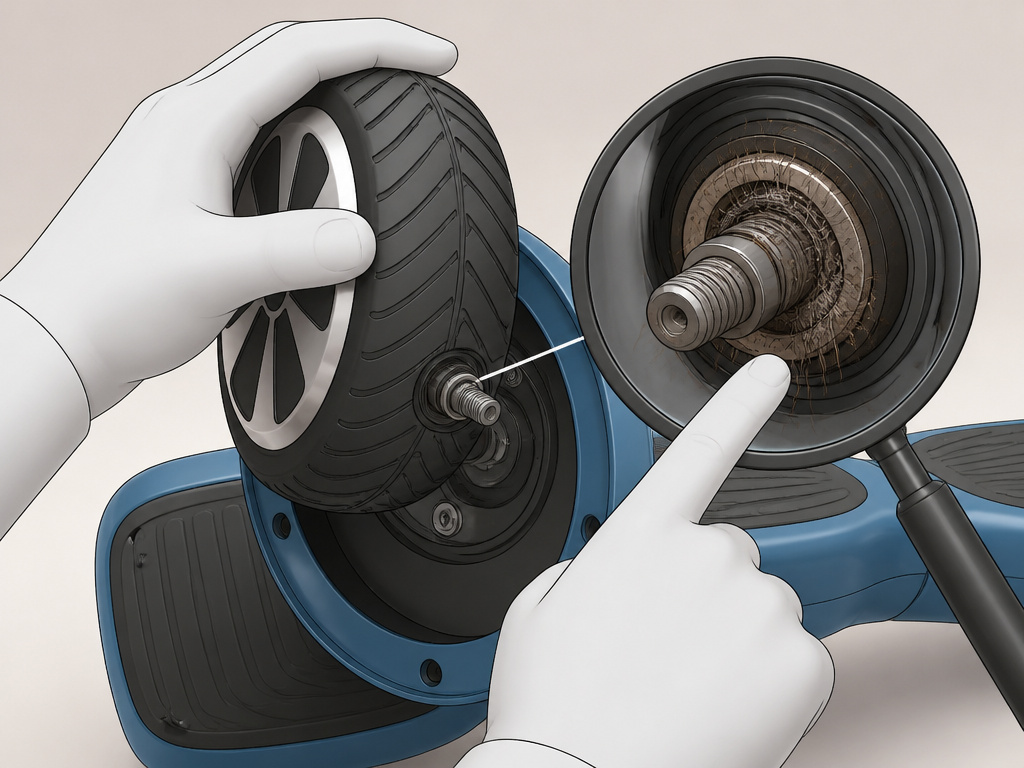
- Check the Wheels: Are they both spinning freely? A seized motor or tangled hair/debris in one wheel can cause pulling.
- Listen for Grinding: Power on and lift the board (one wheel at a time). Does one motor sound gritty or strained compared to the other? That points to a mechanical, not sensor, issue.
- Inspect for Physical Damage: Look for cracks in the plastic shell near the wheels or a visibly warped frame. This often requires professional repair or replacement.
- Battery Check: A severely unbalanced or failing battery pack can cause weird board behavior. If the board dies extremely quickly or acts up only at low charge, the battery might be the culprit.
At this point, you are no longer just recalibrating; you need to fix a hoverboard with a deeper issue. For brand-specific problems, a guide like the one for the Swagtron T580 can be invaluable.
Safety and Post-Calibration Testing
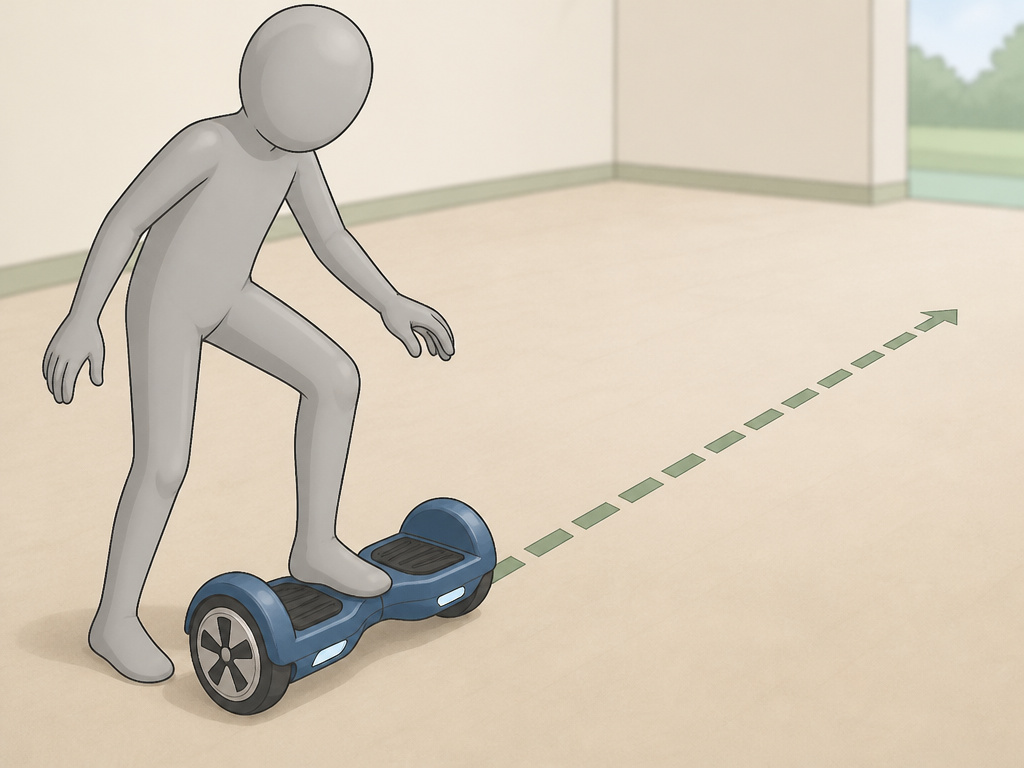
Before you start: The board must remain still during calibration. Leaning on it teaches the sensors the wrong zero point. Also, ensure the area is clear for a test ride, as a failed calibration could cause unexpected movement.
Once you get the confirmation signal and power cycle, don’t just hop on and gun it. Perform a controlled test.
- Visual Check: Power on. Do the foot platforms self-level and stay level?
- Stationary Test: Step on carefully, one foot at a time. Does it feel stable underfoot, or does it want to creep forward/backward?
- Slow Ride: In a clear, open area, ride slowly in a straight line for 10 feet. Does it pull left or right?
- Gentle Turns: Make slow, wide turns. Does it respond smoothly?
If it passes these tests, your calibration was successful. If not, circle back to the troubleshooting section. Understanding how hoverboards work, the interplay between gyroscopes, motors, and the logic board, helps you diagnose whether the issue is persistent sensor failure or something else.
Powering Off: Button vs. Remote or Sleep Mode
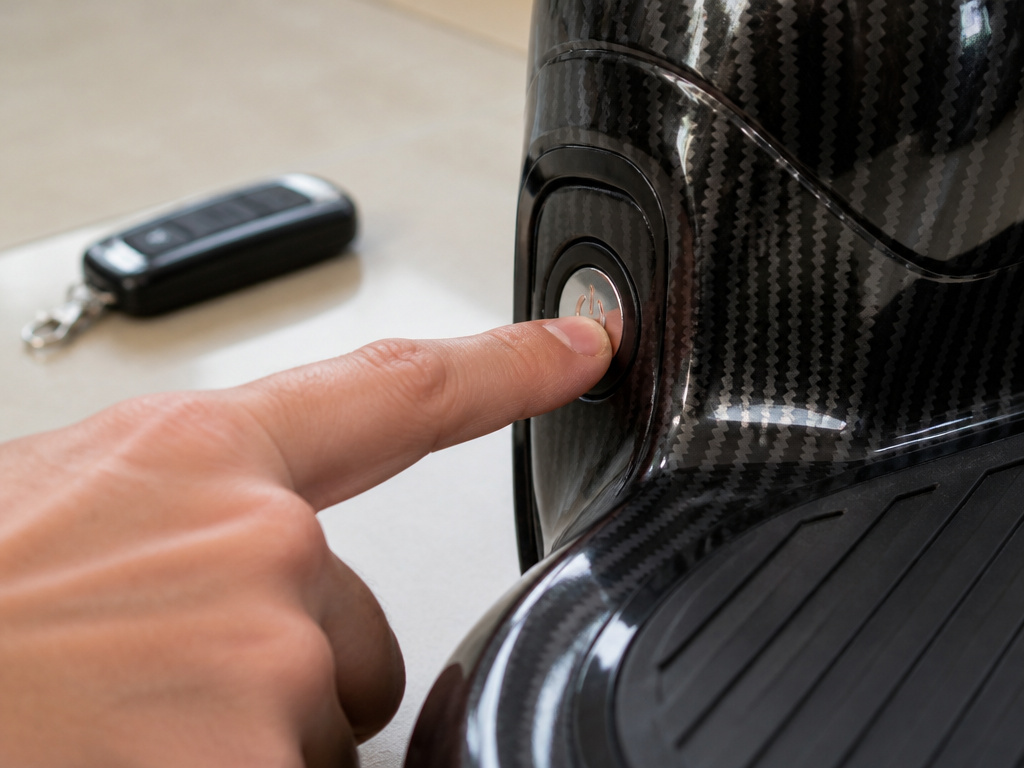
Using the physical power button on the hoverboard is the definitive way to shut it down completely. This action fully powers off the logic board and sensors. In contrast, some models may enter a low-power sleep mode via a remote control or an app command, which keeps some systems in a standby state. A complete power cycle, achieved by using the button, is often required to clear sensor errors or restore function after a significant event. For example, on the SWAGTRON T1, if the board flips over more than 180 degrees, motor function is disabled; the proper fix is to power it off completely and then power it back on.
How to Calibrate a Bluetooth-Enabled Hoverboard
Models with Bluetooth connectivity often require a companion mobile app for calibration. The process typically involves navigating the app’s settings menu to find a specific calibration command for the balance sensor. During this process, you must hold the hoverboard perfectly upright and keep it completely still. The board itself will provide feedback. Some Bluetooth-enabled models with speakers will announce ‘calibration successful’ with a voice, while others will signal completion with a series of beeps or a short tune. If the calibration isn’t successful on the first try, you may need to repeat the process.
Frequently Asked Questions
How do I recalibrate my hoverboard?
Turn the board off, place it on a level surface, and manually level the foot pedals. Hold the power button for your brand’s specified time (anywhere from 3 to 20 seconds) until you hear beeps or see flashing lights. Release, then power the board off and back on to complete the process.
How do I reset the balance on a hoverboard?
“Resetting balance” typically means calibration. However, a full factory reset (which often clears paired Bluetooth devices and other settings) is a different, more involved process usually involving a pinhole button on the board. Always try calibration first.
Why is my hoverboard beeping after I calibrated it?
Continuous beeping after calibration usually means the calibration failed or the board still detects an imbalance. This could be due to an incorrect procedure, a non-level surface during calibration, or a physically damaged gyroscope that calibration cannot fix.
Can I calibrate my hoverboard without a remote?
Yes, calibration is almost always done using the physical power button on the hoverboard itself. The remote is irrelevant to the sensor calibration process. The only common exception is the Segway One S1, which uses a smartphone app instead.
The Bottom Line
Calibrating a hoverboard is simple in theory but specific in practice. The universal steps are easy, but the victory is in the details: your brand’s exact button-hold time and its unique confirmation signal. Get those right on a level surface, and you’ll solve most tilt and beep issues in under a minute.
If you go through the correct process three times and the problem persists, stop. You’re likely dealing with physical damage, a bent axle, a damaged gyro, or a failing motor, that a sensor reset can’t touch. At that point, knowing the difference saves you hours of frustration and points you toward the real repair.
