How to Start an Electric Scooter Rental Business
This post contains affiliate links. As an Amazon Associate, we earn from qualifying purchases.
To start an electric scooter rental business, you need a four-part plan: hardware (IoT-enabled scooters), software (a rental platform), operations (staff and logistics), and a permit from the city where you want to operate. The process is defined by local regulations, not by a universal checklist, and missing a single municipal requirement, like Portland’s Life Cycle Analysis or New York’s 100-pound weight limit, can stop your launch before you order your first scooter.
The difference between a pilot program and a permanent license decides your entire first year. Portland’s pilot ends June 30, 2024, after which existing permittees must cease operations and remove vehicles from the public right-of-way within 14 calendar days. That’s not a suggestion; it’s the rule. Your business plan must account for these fixed deadlines and the specific, often numeric, demands cities print in their codes, which is a crucial part of learning how to start an electric scooter rental business.
What follows: the six essential steps to launch, the real lifespan and rebalancing math from operator data, and the regulatory traps that catch new entrants every time. By the end, you’ll know exactly which document to pull for your target city and why the scooter you choose matters less than the permit you secure.
Key Takeaways
- Secure a local permit first, cities like Portland and New York have binding, numeric rules (e.g., 72-hour notice for changes) that override any generic business plan.
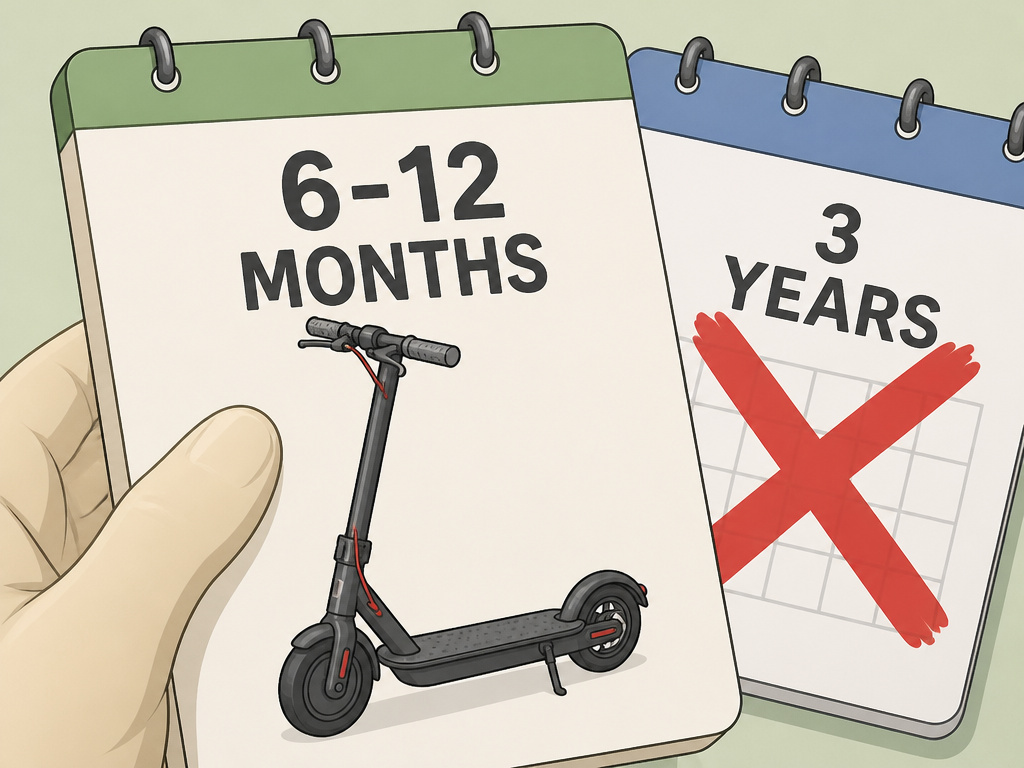
- Plan for a 6- to 12-month scooter lifespan per industry data; your maintenance and replacement budget hinges on this number, not the warranty.
- Use large trucks or vans for rebalancing to maximize collection per trip, as Joyride’s commercial guide advises; consider electric vehicles to cut the carbon footprint of this nightly chore.
- Require a Life Cycle Analysis (LCA) if targeting Portland, it’s a unique mandate tied to the ISO 14040/14044 standards that competitors in other cities might not face.
- Educate riders on local laws and helmet use, it’s not just good practice; Portland’s permit explicitly makes it the operator’s duty, not the city’s.
The 6-Step Launch Sequence (and the One Rule Everyone Forgets)
Most guides on how to start an electric scooter rental business give you a tidy 10-step plan. They’re not wrong, but they miss the sequence that actually matters. You don’t start by buying scooters. You start by reading your target city’s transportation department website. The hardware is the easiest part to change later; the regulatory approval is the gate that either opens or stays shut.
Here’s the order that works because it’s the order cities enforce.
Step 1: Decode Your Local Regulations
This isn’t about “checking for permits.” It’s about finding the specific administrative rule, like Portland’s TRN 15.01 or New York City’s micromobility inspection checklist, and reading the definitions. New York, for instance, prohibits motorized scooters but creates an exception for “an e-scooter that weighs less than 100 pounds and has a maximum speed of 20 mph.” Buy a scooter that’s 101 pounds, and your business is illegal before it starts. Portland requires a Life Cycle Analysis (LCA) consistent with ISO 14040/14044 Standards for all scooter models you propose. You can’t just submit a spec sheet.
Common mistake: Assuming regulations are similar everywhere. Portland’s LCA mandate, Dunedin’s 6-device cluster limit, and New York’s 100-pound rule are not interchangeable. You comply with the city you’re in, not the industry average.
Step 2: Model Your Financials Around Hardware Lifespan
Industry data from Joyride states an operator should anticipate a six- to 12-month lifespan per scooter. That’s your core financial metric. If you finance 100 scooters expecting them to last three years, your cash flow will be obliterated by month 13 when you need to replace the entire fleet. Your pricing, depreciation schedule, and maintenance reserve must be built on this 6–12 month clock, not on the manufacturer’s marketing.
Step 3: Choose a Software Platform That Scales
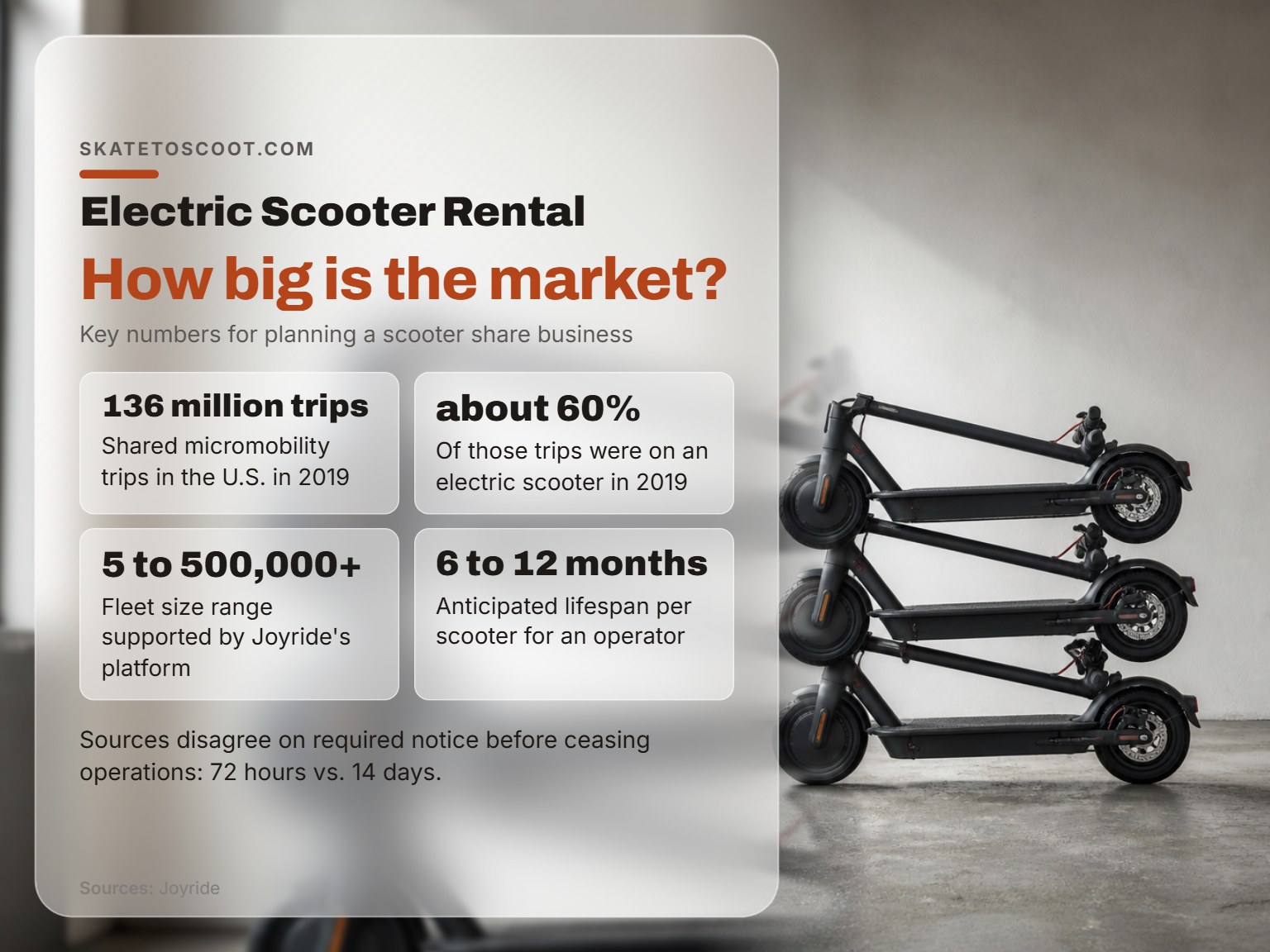
Your rental software is your operations center. It needs to handle geofencing, payments, user apps, and fleet tracking. Joyride’s platform, for example, supports fleets ranging from five to 500,000+ vehicles. The right choice isn’t the cheapest; it’s the one that won’t buckle when you go from 50 to 500 scooters. It should also integrate with the specific IoT devices on your chosen hardware.
Step 4: Secure a Storage and Maintenance Facility

This is often an afterthought. It shouldn’t be. Many cities require a storage unit with electricity for scooters being repaired or charged as a condition for an operating license. You need a secure warehouse space with enough power outlets for your charging racks. The sound of 50 scooters charging overnight is a low hum; the smell of a lithium-ion battery venting because it was stored in a hot, unventilated shed is sharp and acrid. That smell means you’ve already failed.
Step 5: Build an Operations Team for Rebalancing
Rebalancing, collecting scooters from low-demand areas and moving them to high-demand zones, is a nightly physical job. Joyride recommends using large trucks or vans to collect as many scooters as possible per trip. You’ll need drivers and logistics staff. The work happens in the dark, often in the rain, and it’s where your scooters get the most physical wear. A rushed team will break more plastic panels than they fix.
Step 6: Apply for the Permit with a Complete Packet
Now you go back to step one with your specifics. Your application packet must include your business plan, scooter details (with that LCA if needed), your maintenance schedule, and your hours of operation. Portland requires permittees to notify PBOT 72 hours in advance of any changes to operations, including plans to not make scooters available. Your application should demonstrate you understand these ongoing duties, not just the launch.
Hardware, Software, Operations, Regulations: The Four Domains You Can’t Ignore
Joyride’s commercial guide breaks the business into four equal domains. Treating one as more important than another is how fleets fail. A perfect scooter with no permit is a paperweight. A brilliant permit with unreliable software means stranded riders and zero revenue.
| Domain | Core Components | The Real-World Consequence If You Neglect It |
|---|---|---|
| Hardware | IoT-enabled scooters, swappable batteries, durable frames. | Scooters break down within weeks, not months. A model without a good IoT module can’t be tracked or disabled, leading to theft and “ghost” fleet costs. |
| Software | Rider app, operator dashboard, payment processing, geofencing. | Riders can’t find or unlock scooters. You can’t track revenue or fleet health. Scaling past 100 units becomes manual chaos. |
| Operations | Staff, rebalancing vehicles, storage warehouse, repair bench. | Scooters pile up in dead zones, revenue drops, broken units aren’t fixed, and the city fines you for sidewalk clutter. |
| Regulations | Municipal permit, insurance, safety certifications, user education. | The city impounds your fleet, fines you per vehicle per day, and revokes your permit. Your business ends overnight. |
We must be realistic about hardware. You need a scooter that’s built for sharing, not for a single owner. It needs a built-in IoT lock, a battery that can be swapped by your team in under two minutes, and tires that can handle curbs. The Consumer Product Safety Commission (CPSC) sets the baseline safety standards, and any scooter you buy must be certified by Underwriters Laboratories (UL) or an equivalent safety rating agency, as recommended by the NACTO shared micromobility guidelines.
Your software choice dictates your daily life. A platform should show you a real-time map of every scooter, its battery level, and whether it’s moving. A bad one makes you guess.
The Municipal Permit Maze: Portland, NYC, and What NACTO Recommends
Your local government isn’t a hurdle; it’s the entity that grants you the right to operate in the public right-of-way. Their rules are not suggestions. Here’s how three sources frame it.
Portland shared scooter policy document (TRN 15.01) states the operation of a Shared Scooter is a privilege, not a right. The city’s pilot program ends June 30, 2024. When it ends, existing permittees must cease operations and remove vehicles within 14 calendar days.
NACTO shared micromobility guidelines recommend cities limit permits to a fixed period like 6-12 months and require operators to provide written notice at least 14 days before ceasing operations.
Notice the disagreement? Portland demands 72 hours notice for changes, while NACTO recommends 14 days notice before ceasing ops entirely. This is where you must follow your specific permit, not the industry guideline. If you’re in Portland, 72 hours is your rule. If your city adopts NACTO’s framework, 14 days is your rule.
New York City adds another layer. Its micromobility inspection checklist explicitly prohibits selling, leasing, or renting motorized scooters, with an exception for devices under 100 pounds and 20 mph. It also requires retailers to post safety tips conspicuously where devices are sold. For a rental business, this means your user app and pickup points must include those safety warnings verbatim.
The permit application itself is often a Request for Proposal (RFP). You’re competing for a limited number of slots. Your submission must detail your plan for equitable access, safety, and how you’ll handle complaints.
Fleet Management: Charging, Repair, and the 6–12 Month Clock
Managing a fleet is a logistics game played on a timer. You have two main models: battery swap or warehouse charging.
Battery Swap: Teams drive swap vans, replace dead batteries with charged ones in the field, and bring the dead ones back to a central hub. It’s faster for getting scooters back on the street, but it requires more sophisticated (and expensive) hardware that supports quick-swap battery packs.
Warehouse Charging: Teams collect low-battery scooters every night, truck them to a warehouse, charge them overnight, and redeploy them in the morning. It’s simpler but requires more vehicles and labor.
Joyride’s guide suggests using large trucks or vans for rebalancing to maximize efficiency and to consider electric vehicles to reduce your carbon footprint. The physical act of loading scooters into a van takes time and labor for a practiced crew. A single scooter has a significant weight; lifting hundreds of them each night is a real job with real fatigue.
Your repair bench is where the 6–12 month lifespan becomes visible. A scooter with a wobbly stem after four months isn’t defective; it’s wearing out. You’ll learn to listen for the specific whine of a failing motor bearing and spot the crack in a deck plate before it fully fails. This is where your scooter repair budget lives. Partnering with a local shop for major repairs can be smarter than hiring a full-time mechanic on day one.
Charging scooter batteries is a fire safety issue first, a logistics issue second. You need a well-ventilated space with proper electrical circuits, not a tangled mess of extension cords. A single faulty charger can overheat and damage a battery pack, costing you hundreds of dollars and creating a liability.
Building Your Rider Base and Managing Risk
You have the scooters and the permit. Now you need riders. Marketing a scooter share isn’t about flashy ads; it’s about utility. People rent scooters to get from point A to point B quickly and cheaply.
Partner with local hotels, universities, and business districts. Offer a first-ride discount. Make the process of renting a scooter dead simple: download app, scan QR code, go. A complicated sign-up loses people in 30 seconds.
Risk management is built into your operations. You must educate users regarding laws applicable to riding and operating a Shared Scooter and to instruct users to wear helmets, as Portland’s rule puts it. This isn’t just a disclaimer buried in your app’s terms. It’s proactive safety messaging.
Theft and vandalism are costs, not surprises. A good scooter lock integrated into the hardware helps, but you still need a plan to prevent theft through geofencing and remote disable features. A scooter that goes offline for 48 hours is probably in someone’s garage, not just out of battery.
Insurance is mandatory. You need liability coverage for rider injuries and property damage. Your permit won’t be issued without proof of insurance.
Business Model Options for Your Scooter Rental
Your first choice is who your customer will be. The most common path is B2C, renting directly to the public in high-foot-traffic areas like downtowns or campuses. This model relies on high trip volume, with industry data showing a significant portion of shared micromobility rides are on scooters. Alternatively, a B2B model involves placing scooters at a corporate campus, hotel, or resort for their exclusive use, offering a more controlled fleet with predictable usage. Finally, you can purchase a franchise from an established brand, which provides a proven system and brand recognition but comes with its own fees and operating rules. Your local regulations will heavily influence which model is feasible.
Franchise vs Independent: Pros and Cons
Choosing between a franchise and an independent operation defines your launch path for how to start an electric scooter rental business. A franchise offers a turnkey system: a known brand, established software, and operational playbooks, which can reduce early-stage risk and speed up permitting. The trade-off is less control over your pricing, fleet choices, and service area, alongside ongoing royalty fees. Going independent means full creative and financial control, allowing you to tailor your service to local gaps. However, you must source your own software platform, navigate permits alone, and build brand recognition from scratch. The independent route requires more upfront legwork but can yield higher margins and flexibility.
Frequently Asked Questions
Is a scooter rental business profitable?
It can be, but not from day one. Profitability depends on your rental rates, utilization (how many hours per day each scooter is used), and how tightly you control costs like rebalancing labor and repairs. Industry data shows scooters last 6–12 months, so your replacement costs are high. The business becomes profitable when you achieve consistent rider demand and efficient operations that keep those scooters rolling.
How much does it cost to start an electric scooter business?
Startup costs vary wildly based on scale and location. The biggest expenses are the scooters themselves, the software platform, the deposit on a warehouse, vehicles for rebalancing, and insurance. A small launch requires significant initial capital for scooters, software, storage, vehicles, and insurance. This doesn’t include the rental costs of your storage space or the salaries for your first few staff members.
How do I get an e-scooter permit?
You apply directly to the city’s transportation or mobility department. There is no national permit. You must find your target city’s specific application process, which is often a Request for Proposal (RFP). Your application will need to include your business plan, scooter specifications, safety plan, community engagement strategy, and proof of insurance. Reading the specific permitting requirements for places like Portland or New York shows exactly what they demand.
How do they charge rental scooters?
There are two main systems. In a battery swap model, field crews replace depleted batteries with fully charged ones directly on the scooter. In a warehouse model, crews physically collect low-battery scooters each night, bring them to a central warehouse facility, plug them in, and redeploy them in the morning. The warehouse model is more common for smaller operators, while large companies use battery swaps for faster turnaround.
Before You Go
This isn’t a get-rich-quick scheme. It’s a logistics and municipal compliance business that happens to involve scooters. Your success hinges on a single, boring truth: know your city’s rules better than you know your scooter’s specs.
If you take one thing, let it be this. Before you spend a dollar on hardware, open the .pdf of your target city’s transportation code. Find the section on shared micromobility. The numbers there, 72 hours, 14 days, 100 pounds, ISO 14040, are the real blueprint. Everything else is just execution.
The scooter is the vehicle. The permit is the engine. You can’t drive the first without the second.
