How to Lock an Electric Scooter: The 5-Step Process
This post contains affiliate links. As an Amazon Associate, we earn from qualifying purchases.
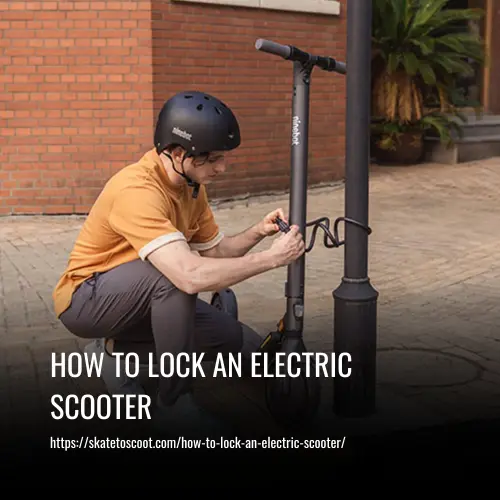
To lock an electric scooter, you need a physical lock, preferably a U-lock or a heavy-duty folding lock, threaded through a solid, non-removable part of the scooter’s frame and then around a permanent, immovable object. This is the essential method for how to lock an electric scooter. Electronic locks built into scooters from brands like Xiaomi, Apollo, and Jetson are useful for disabling the throttle but cannot prevent physical theft; they are a secondary layer, not a replacement for a physical lock. The core mistake is locking through a wheel or a plastic part that can be unscrewed or snapped off in seconds.
That gap between disabling a motor and stopping someone from picking up your scooter is where understanding how to lock an electric scooter matters most. A thief doesn’t need to ride it away. They just need a clear path to lift it into a van. Your lock’s job is to make theft loud, slow, and visibly complicated enough that a thief moves to an easier target.
What follows: a breakdown of why your scooter’s electronic lock is not enough, the five-step physical locking process that actually works, a head-to-head comparison of lock types by security and portability, and the model-specific quirks for Apollo, Xiaomi, and Jetson owners who need to know how to lock an electric scooter.
Key Takeaways
- Electronic locks are not universally considered anti-theft devices. Brands disagree on this: Xiaomi states its function “cannot prevent theft,” while Apollo markets its ‘P’ Mode as an “electronic anti-theft lock.”
- Lock through the main frame or deck latch. Avoid wheels, stems, or any part secured by a single Allen bolt. On an Apollo City, the deck latch/handle is a manufacturer-recommended secure point.
- A U-lock or folding lock is the default pick. They offer the best balance of defeat time and portability for daily commuters. Cable locks are easily cut and should only be a secondary lock.
- Two locks cut your theft risk dramatically. Thieves target the least-secured scooter. Adding a disc brake lock with an alarm or a second U-lock changes you from a target to a problem.
- Location is a force multiplier. A well-lit, busy spot next to a bike rack is safer than a dark corner next to a chain-link fence, even with the same lock.
Why Your Scooter’s Electronic Lock Isn’t Enough
Your scooter’s screen says “locked.” The throttle is dead. You might even get a phone alert if it’s jostled. This feels like security. It is not.
Xiaomi’s own support FAQ is blunt: the electronic motor lock function “cannot prevent the scooter from being stolen.” It advises securing the scooter physically. The scooter will auto-shutoff after 24 hours to save battery, but the primary warning is clear: this is not an anti-theft feature. Apollo takes a different stance, calling its Park ‘P’ Mode an “electronic anti-theft lock,” while Xiaomi states its electronic motor lock “cannot prevent the scooter from being stolen.” It disables the throttle and, if the scooter is marked stolen in the app, will activate ‘P’ Mode on the next Bluetooth connection attempt.
Common mistake: Relying solely on an electronic lock. The consequence is simple: someone picks up your 30-pound scooter and walks away. It happens quickly, and no alarm will stop a determined thief with a van.
The disagreement between manufacturers highlights the core issue. An electronic lock secures the function of the scooter, not the physical object. It’s like locking your car’s ignition but leaving the doors wide open. For a thief with tools, it’s irrelevant. For a thief with a vehicle, it’s a minor inconvenience. Your first layer of defense must be a physical barrier that attaches your scooter to the Earth.
The 5-Step Locking Process (and the One Mistake That Destroys It)
Locking a scooter depends on a sequence that denies a thief every easy option. Skip a step, and you’re gambling.
Step 1: Find a Secure Anchor Point. Look for a permanent fixture made of thick, anchored steel or concrete, a dedicated bike rack, a street sign post sunk deep into concrete, or a sturdy railing. Avoid chain-link fences, wooden posts, or anything that can be unbolted from the ground. The anchor should be as secure as the lock itself.
Step 2: Identify a Secure Locking Point on Your Scooter. This is the most common error. You need a solid, structural member of the main frame. On many Apollo scooters, the deck latch/handle at the rear is a perfect, manufacturer-suggested point. Avoid the front or rear wheel (often quick-release), the stem (usually attached by a single clamp), or any plastic fairing. The rule from Apollo’s guide is direct: make sure the lock isn’t through a part “that can be unscrewed or snapped or broken off.”
Step 3: Thread the Lock Through Both Points Snugly. Leave minimal slack. A U-lock should fit tightly around the scooter’s frame and the anchor. Excess space gives a thief the force needed to attack the lock or insert a jack. A folding lock should wrap neatly without loose links.
Step 4: Engage the Lock and Double-Check. Give the scooter a firm tug. It should not slide free or have any play that would allow the lock to be slipped off. If using a combination lock, scramble the dials after setting them.
Step 5: Activate Secondary Security. If your scooter has an electronic lock, enable it now. Arm a separate motion alarm if you have one. This adds a time-consuming, noisy layer a thief must now deal with.
The one mistake that destroys all this? Locking through a removable wheel. It takes a simple tool to defeat a lock if it’s secured through a removable part. The physical act of locking is simple. The mental checklist of what not to lock is what saves your scooter.
Choosing Your Lock: U-Lock vs. Chain vs. Folding vs. Cable
Not all locks are equal for scooter duty. Portability, weight, and resistance to attack differ wildly. This isn’t about buying the “best” lock in a vacuum; it’s about matching the lock to your daily reality.
| Lock Type | Best For | Defeat Time & Method | Portability & Weight |
|---|---|---|---|
| U-Lock (D-Lock) | Maximum security for short stops. | High: Requires an angle grinder, which is loud, slow, and draws attention. | Poor: Heavy, mounts poorly to scooters. Often carried in a backpack. |
| Heavy Chain & Padlock | Long-term parking in higher-risk areas. | Very High: Requires large bolt cutters or an angle grinder (must cut twice). | Very Poor: Extremely heavy. Not practical for daily commuting. |
| Folding Lock | Daily commuters needing a balance. | Medium-High: Hardened steel links resist bolt cutters but can be attacked with an angle grinder. | Good: Folds compactly, often includes a frame mount. |
| Cable Lock | Secondary lock only, for extra deterrence. | Very Low: Can be cut with handheld cable cutters in under 30 seconds. | Excellent: Lightweight and flexible. |
Apollo’s blog advice mirrors what you’ll hear in forums: folding locks offer a balance of security and portability for electric scooters. U-locks are supremely secure but a burden to carry. Cable locks are “easily cut through” and are not a primary lock, though they make a great secondary lock for extra security. Your choice hinges on your routine. A commuter stopping at cafes is best served by a folding lock or a small, tough U-lock. Someone leaving a scooter at a train station all day needs the heaviest chain they can manage.
Where this goes sideways: Choosing a lock based on price alone. A cheap cable lock isn’t a bargain; it’s a donation to the first thief with wire snips. The lock is part of your scooter’s cost of ownership.
Model-Specific Electronic Locks: Apollo, Xiaomi, and Jetson
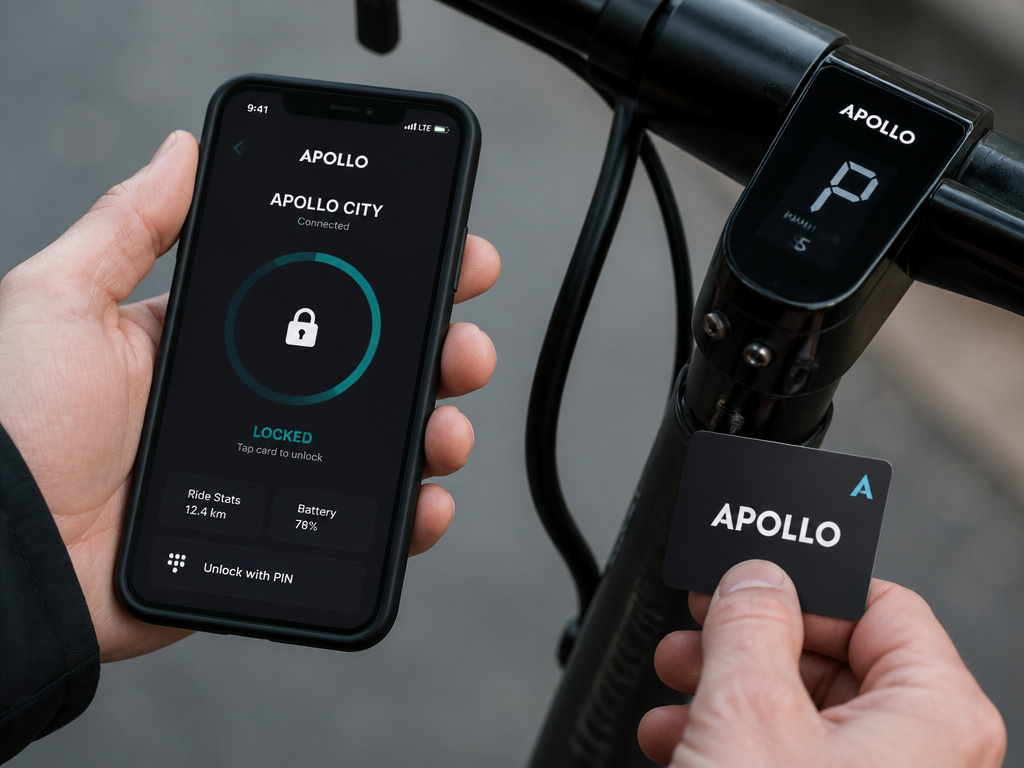
If you’re using a physical lock (and you are), your scooter’s built-in electronic lock becomes a useful extra step. The setup varies by brand, and getting it wrong can drain your battery or leave you stranded.
Apollo Scooters’ Park ‘P’ Mode: This locks the throttle and shows a “P” on the display. For pre-2023 models (Air 2022, City 2022), you activate it by pressing the power button 5 times quickly. For 2023+ models (Phantom V3/V4, City 2023+), you use the Apollo app or an NFC card; power button sequences are disabled. Always power the scooter on first before activating it. If marked stolen in the app, ‘P’ Mode engages on the scooter’s next Bluetooth connection attempt.
Xiaomi Scooter Electronic Lock: Activated via the Mi Home/Xiaomi Home app, it locks the motor and triggers an alarm if moved. After 24 hours, the scooter auto-powers off to conserve battery, though the motor stays locked upon restart. Critically, Xiaomi states locking the scooter “will consume the scooter’s power,” so use it wisely. Their primary warning stands: this function does not prevent theft.
Jetson Shield Ultra-Lock: This scooter arrives in lock mode and re-locks every time it’s powered off. You open it primarily by tapping a paired NFC tag to the sensor on the stem. To pair a new NFC tag, you power on, quick-press the power button 4 times, then tap the tag. If you lose the tags, a 3-digit passcode backup exists, the default is “333”, which you should change immediately by simultaneously holding an NFC tag to the sensor and holding the power button until you hear two beeps.
These systems are convenient. They are not a plan.
Advanced Security: Layering Locks, Alarms, and Trackers
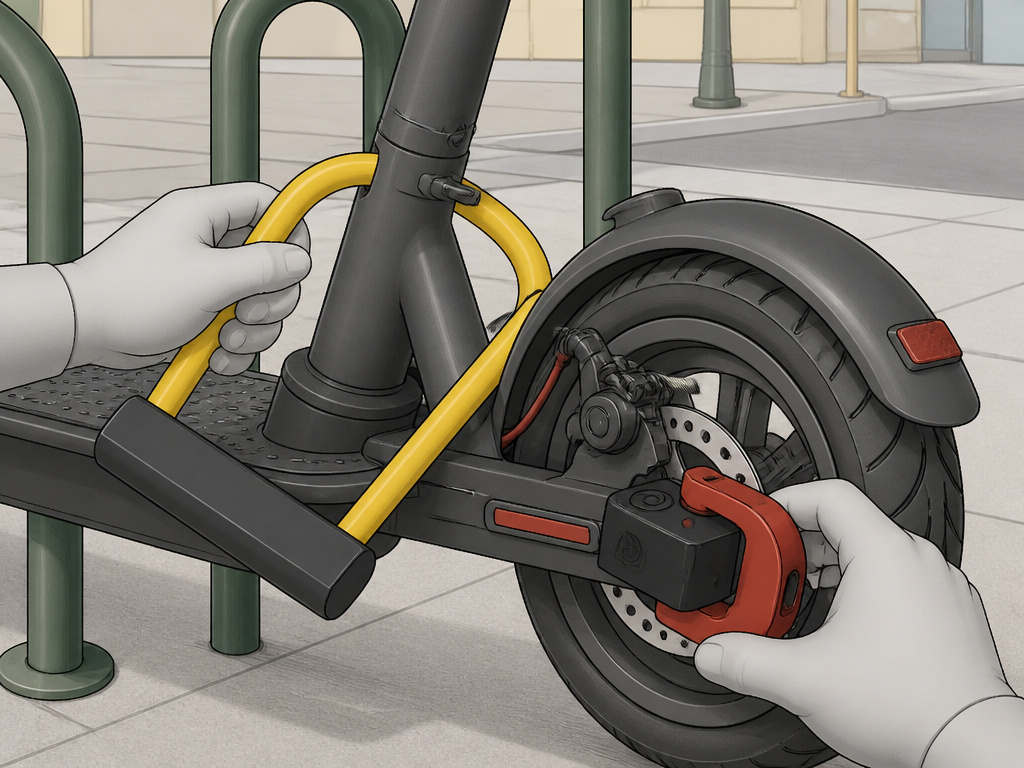
One lock meets the minimum. Two locks change the game. Security layers work on the principle of diminishing returns for a thief.
The Two-Lock Strategy: Combine two different types of locks. A common and effective pairing is a U-lock through the frame and a disc brake lock with a built-in motion alarm on the rear wheel. The U-lock requires power tools to break; the disc lock screams the moment the scooter is jostled. This addresses both the “smash-and-grab” thief and the “quiet cutter.”
GPS Trackers and AirTags: A hidden GPS tracker doesn’t prevent theft, but it drastically increases recovery chances. Thieves often stash stolen scooters for a day or two to see if they’re tracked. This is your last-ditch recovery layer, not a deterrent.
The Reality Check: Forums are filled with stories of scooters stolen despite “the best” single lock. The consensus from high-theft cities is universal: the more time and noise required, the safer your scooter is. High-security locks can resist angle grinders for a time, but given enough alone time, any lock fails. Your goal is to ensure your scooter isn’t the easiest target on the block.
What most people get wrong: Hiding their scooter in a secluded spot. Thieves love privacy. A well-lit, high-foot-traffic area next to a cafe window is safer than a dark alley behind a dumpster, even with a slightly weaker lock.
How does insurance and registration prevent scooter theft?
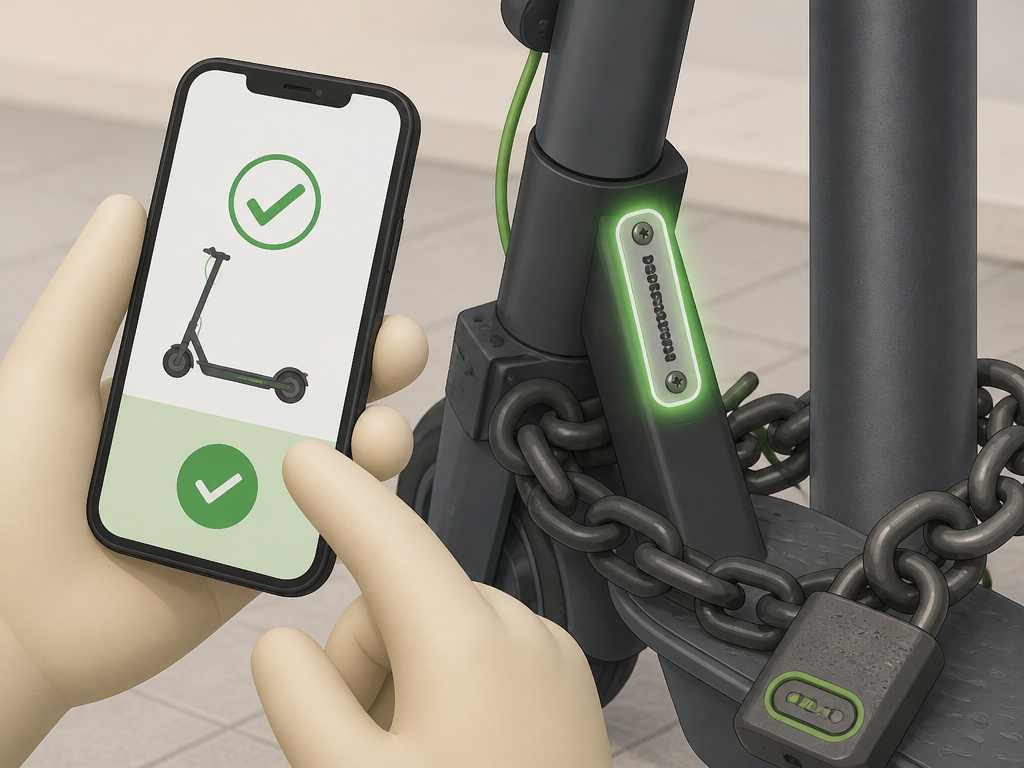
Electronic locks and physical chains are your first line of defense, but they cannot prevent a determined thief from physically picking up your scooter. This is where insurance and registration become critical. Insurance provides financial recovery if your scooter is stolen, but its real power as a deterrent comes from requiring you to register the scooter’s serial number with the police or a national database. A registered scooter is a marked item, making it harder for a thief to resell. This added layer of hassle makes your scooter a less attractive target compared to an unregistered one. Think of it as making the scooter toxic to the second-hand market, which is often the thief’s end goal.
Frequently Asked Questions
Can I use just a cable lock for my electric scooter?
No. Cable locks are easily cut with cheap, handheld tools in under a minute. Apollo’s guide explicitly states they are “not the best primary lock.” Use a cable lock only as a secondary lock to secure a wheel or add visual deterrence alongside a U-lock or chain.
How do I lock my scooter if there’s no bike rack?
Look for other permanent, public infrastructure. A sturdy street sign pole set in concrete is an option. Avoid anything that can be easily unbolted (like some parking meters) or cut (like wooden posts). The goal is to anchor to something a thief would need power tools to defeat.
Are disc brake locks good for electric scooters?
Disc brake locks are effective only if your scooter has disc brakes (many Apollo models use drum brakes). They are excellent as a secondary lock because they are small, loud (if alarmed), and prevent the wheel from rolling. They do not anchor the scooter to a fixed object, so they should always be paired with another lock.
Should I lock my scooter through the frame or the wheel?
Always the frame. Wheels are often removable with a single quick-release lever or Allen key. Locking through only a wheel is a guaranteed way to return to a lone wheel locked to a rack. The frame is the scooter’s core structure and the hardest part to separate.
Do electronic locks drain the scooter battery?
Yes. Xiaomi notes that locking the scooter “will consume the scooter’s power.” Apollo’s Park ‘P’ Mode keeps the scooter powered on. For long-term parking, a physical lock is essential because electronic features drain the battery, leaving the scooter vulnerable.
Before You Go
Your scooter’s security is a system you build around the reality of theft. That reality is simple: given enough time and privacy, a dedicated thief will win. Your job is to make the effort outweigh the reward.
Start with a folding lock or a U-lock as your daily driver. Thread it through a solid part of the frame, not a wheel, and a permanent anchor. Add your electronic lock as a second step. If you’re parking for more than an hour, or in any area with even a whisper of risk, add a second, different type of lock. That’s the threshold where your chances flip from “maybe” to “probably not.”
The one concession I’ll make to the “no lock is safe” crowd is this: if you’re in a known high-theft zone and you can’t bring your scooter inside, sometimes the right decision is to go home. An expensive lock can’t replace a valuable scooter, and no guide can outthink a thief with nothing to lose. Secure the fundamentals first. Everything else is a bonus.
