How Much Is a Scooter: Price Ranges by Type and Use
This post contains affiliate links. As an Amazon Associate, we earn from qualifying purchases.
A scooter’s price depends entirely on its type, battery capacity, and intended use. You can spend under $100 for a basic kick scooter, over $6,000 for a high-end mobility device, or around $4,300 for a gas-powered motor scooter. The gap isn’t about quality; it’s about solving different problems.
That price range is the first thing you need to get right. A “scooter” can be a kid’s toy, a daily commuter, or a medical mobility aid, and the budgets for each are worlds apart. The core question is how much is a scooter for your specific use. Getting the type wrong means either overspending on power you don’t need or buying something that can’t handle your daily life.
What follows: a breakdown of the three main scooter types with real manufacturer prices, the specs that drive costs, and where you can expect to see price tags that don’t match the official MSRP.
Key Takeaways
- The three main scooter types have completely different price brackets: mobility scooters ($800–$6,730+), electric kick scooters ($150–$3,300+), and gas motor scooters ($4,200–$5,000+).
- For mobility scooters, the HCPCS code on the order form (like K0800 or K0899) is a key spec to check.
- A higher battery capacity (Ah) always increases the scooter’s price and range, but the payoff depends entirely on how far you need to go daily.
- Manufacturer MSRP and retailer prices can differ dramatically—the Drive Medical Ventura 4-Wheel Standard lists for $3,330.50 MSRP but retails for $1,325 at Marx Medical Equipment.
- The medical device classification matters: most Pride Mobility scooters are FDA Class II Medical Devices, while the BAJA Raptor 2 explicitly is not, affecting its intended use and possibly insurance.
The 3 Main Scooter Types and What They Cost

You can’t compare prices until you know what you’re buying. The word “scooter” covers three distinct machines, each built for a different job with a matching budget, which is why the how much is a scooter question has no single answer.
A mobility scooter is an electric vehicle designed for seated operation, often with a tiller for steering. An electric kick scooter is a stand-up, platform-based vehicle popular for short urban trips. A gas motor scooter, like the Honda PCX, is a licensed road vehicle with an internal combustion engine. Confusing them is how you end up with a toy when you needed a tool, or a medical device when you just wanted a fun ride.
The Pride Mobility Revo 2.0 3-Wheel Scooter (Part S66) carries an MSRP of $2,765, a 400 lb weight capacity, and uses two U-1 AGM batteries with a 3.5-amp off-board charger. Its HCPCS code is K0899.
| Scooter Type | Primary Use | Typical Price Range | Key Cost Driver |
|---|---|---|---|
| Mobility Scooter | Medical mobility aid, daily errands | $800 – $6,730+ | Battery capacity, weight rating, suspension, medical features |
| Electric Kick Scooter | Urban commuting, last-mile transport | $150 – $3,300+ | Motor power, range, portability, brand |
| Gas Motor Scooter | Licensed road commuting, recreation | $4,200 – $5,000+ | Engine size (cc), brand, features (ABS, storage) |
The table shows the brackets, but the real price sits inside a specific model’s specs. We begin with the most regulated category.
Mobility Scooters: Medical Devices vs. Recreational Rides
This category has the widest price spread because it serves two different masters: regulated medical necessity and unregulated personal recreation. The paperwork tells you which is which.
Pride Mobility’s order forms show most of their scooters, like the Revo 2.0 and PX4, are labeled FDA Class II Medical Devices. That classification means they are designed to aid individuals with mobility impairments and can be prescribed. The BAJA Raptor 2 order form, however, states clearly: “Non-Medical Device This product is not a medical device…” That one line changes everything about its insurance eligibility and intended use.
Where MSRP and Street Price Diverge
Manufacturer prices are a starting point, not a final bill. The Drive Medical Ventura 4-Wheel Standard (Model VENTURA418FS) has an MSRP of $3,330.50. The Marx Medical Equipment price list shows the retail price for the same model is $1,325. That’s a difference of over two thousand dollars.
Why the gap? MSRP is a manufacturer’s suggested price for providers. Retailers like Marx Medical buy in volume and sell at a competitive market rate. This is why shopping around matters more than fixating on the first number you see. Always check authorized dealer price lists before assuming a scooter is out of your budget.
Common mistake: Assuming the MSRP is the price you’ll pay. For mobility scooters, authorized medical equipment retailers often sell significantly below MSRP. The Ventura 4-Wheel Standard’s $2,000+ price difference is a perfect example.
Battery Capacity: The Range vs. Cost Trade-Off
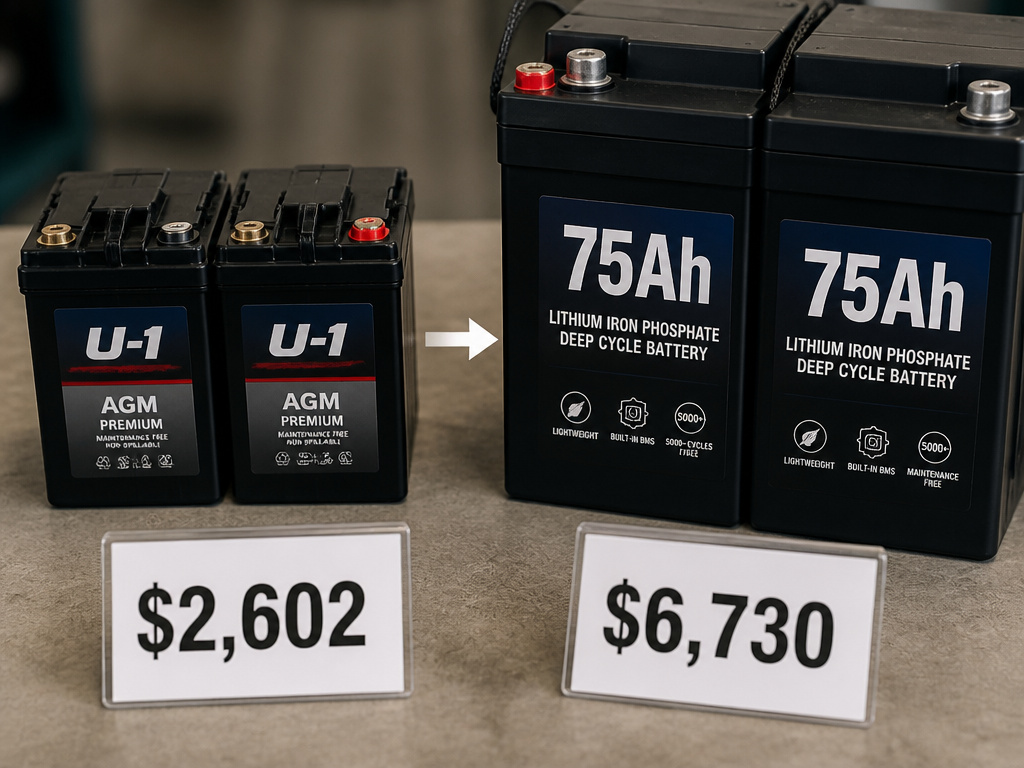
Battery size, measured in ampere-hours (Ah), is the single biggest factor in a mobility scooter’s range and price. The Pride Mobility Victory 9 uses two U-1 batteries. The PX4 uses two 75Ah batteries. The PX4’s MSRP is $6,730, more than double the Victory 9’s $2,602.
The payoff is distance. A larger battery bank increases your travel range between charges. This is vital for daily tasks like shopping, appointments, or seeing family. If you only need to putter around a small property or navigate a single-level home, the cheaper model with smaller batteries is the smarter buy. Paying for range you won’t use is the quickest way to overspend.
Electric Kick Scooters: From Budget Commuters to High-Speed Machines
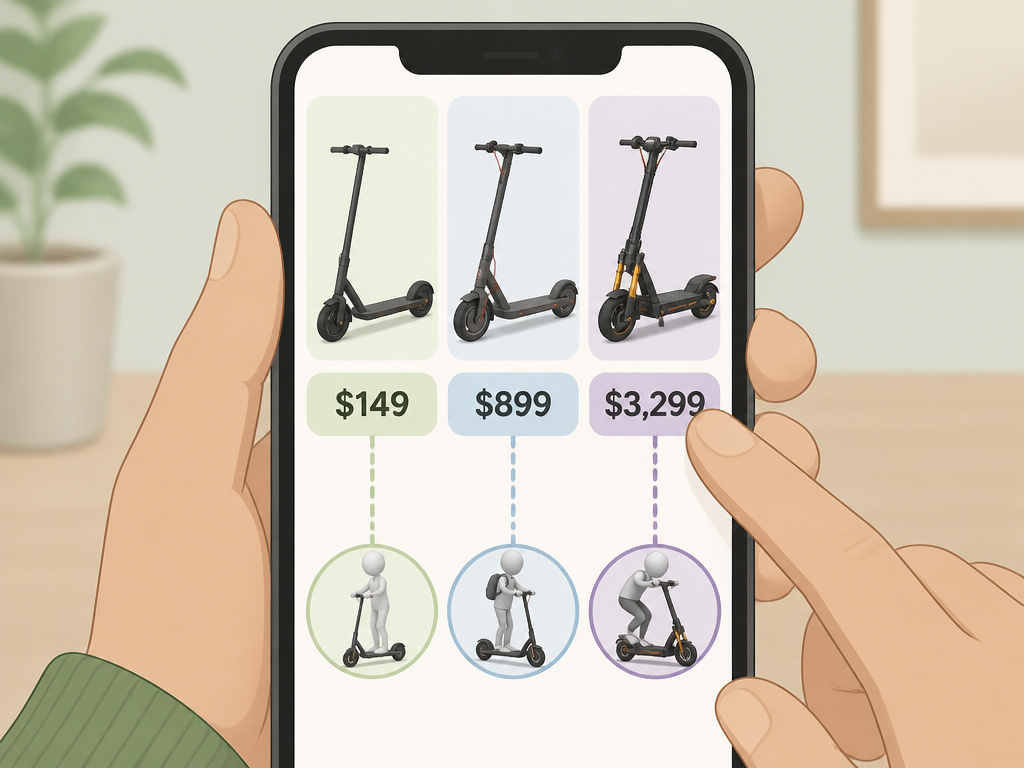
Reddit threads on electric scooters show users reporting spends from less than $150 to over $3,300. This range isn’t random; it maps directly to performance and durability. Electric kick scooter prices vary widely, with higher-priced models typically offering more power and features.
The community discussions highlight a key point: advertised range and real-world range are different. A scooter claiming a 20-mile range might only deliver 12 miles if you’re riding uphill, into the wind, or at top speed. Factor that in when comparing prices. A cheaper scooter with a slightly lower advertised range but a reputation for honest specs is often a better value than a hyped model that underdelivers.
The $2,000 Question: Is It Worth It?

In a Reddit post, a user with $2,000 saved wondered if spending it all on an electric scooter was wise. The answers were split. Some advocated for premium models, praising their build quality. Others championed budget picks in the $350–$450 range, boasting thousands of reliable miles.
Here’s the deciding factor: your route. If your commute is over three miles, involves hills, or uses rough bike paths, the premium scooter’s larger motor, better suspension, and bigger battery will pay off in comfort and reliability. For a sub-two-mile flat commute on city sidewalks, a budget scooter is not just adequate; it’s the financially sensible choice. Don’t let enthusiast forums convince you to buy racing specs for a grocery run.
Gas Motor Scooters: The Upfront Cost of Freedom from Charging
For a gas scooter like the Honda PCX, the price is more transparent but carries extra fees. The 2026 Honda PCX (Model PCX160A) has a base MSRP of $4,349, plus a $600 destination charge, bringing the total to $4,949 before taxes, registration, and insurance. The 2025 model starts at $4,249, showing how model year affects price.
You’re not just buying a vehicle; you’re buying into an ecosystem. The PCX has a 2.1-gallon fuel tank and a curb weight of 291 lbs. The cost-per-mile is low, and you never wait for a battery to charge. But you must budget for licensing, insurance, safety gear (a helmet is essential), and periodic maintenance like oil changes and tire replacements.
When a Gas Scooter Makes Financial Sense
Compare the Honda PCX’s near-$5,000 out-the-door cost to a high-end electric kick scooter at $3,300. For an extra $1,700, you get a vehicle that can legally use all roads, travel much farther on a “fill-up,” and doesn’t tether you to an outlet. If your daily commute is beyond reliable electric scooter range (say, over 15 miles), or if you need to use highways, the gas scooter isn’t a luxury—it’s the only tool for the job.
Worth knowing before you start: The “destination charge” on a new motor scooter is a standard fee, not a dealer markup. On the 2026 Honda PCX, it’s a fixed $600 added to the MSRP. Your negotiation starts after that number.
Hidden Costs and Long-Term Value
The purchase price is the first of several costs. Forgetting the others is how a low purchase price turns into a money pit.
For mobility scooters, the long-term cost includes battery replacement. AGM batteries like those in the Revo 2.0 must be replaced as a set. Warranties matter intensely here; a one-year warranty might cover a manufacturing defect but won’t help when the batteries naturally degrade.
For electric kick scooters, tire wear is a long-term cost. Solid tires last longer but give a harsh ride; pneumatic tires are more comfortable but can puncture. A repair you can’t do yourself means a trip to a specialist shop, which adds labor to the part cost.
For gas scooters, insurance and registration are annual recurring costs. For gas scooters, insurance and registration are annual recurring costs. Always get an insurance quote before committing to a specific engine size.
Warranty as a Value Indicator
A longer, detailed warranty often signals a manufacturer’s confidence in their product. It also protects your investment. Pride Mobility scooters, as medical devices, have specific warranty terms. Read the warranty details before buying. A scooter that’s $200 cheaper but has a 90-day warranty is almost always a worse long-term value than a slightly more expensive model with a one-year full-coverage warranty.
How to Choose Within Your Real Budget
Start with the distance you need to cover reliably, today, not the dream distance. Then work backward to the scooter type that meets it.
- Map your daily travel. How many miles? What’s the terrain (hills, gravel, perfect pavement)? Are there stairs or curbs?
- Match the type to the trip. Under 3 miles on flat ground? An electric kick scooter or a basic mobility scooter works. Over 5 miles or need road access? A gas scooter or a high-capacity mobility scooter is the answer.
- Check the real specs, not the marketing. For electric models, find the battery capacity in Ah (like the PX4’s 75Ah). For gas, note the fuel capacity (the PCX’s 2.1 gallons). These numbers predict range better than any “up to” claim.
- Factor in the total cost of ownership. Add the cost of annual maintenance, insurance (if needed), and expected battery/tire replacements to the purchase price.
- Get a dealer quote. For mobility scooters, contact authorized medical equipment retailers like Marx Medical for their price, not the MSRP. For motor scooters, get an out-the-door price from a Honda Powersports dealer including all fees.
This process stops you from buying a scooter that’s powerful enough for a cross-town trip when you only go to the corner store. It also prevents you from underbuying and getting stranded with a dead battery halfway home.
Buying a Used Scooter
Looking at a used scooter can save money, but requires careful inspection. Since prices can vary widely, comparing the asking price to the original manufacturer’s suggested retail price gives you a starting point for the how much is a scooter negotiation. Check the physical condition thoroughly, especially the battery compartment and wiring. Ask for a demonstration to ensure all controls, lights, and the drive system work smoothly. Inquire about the scooter’s history, including any past repairs or accidents, and try to get any original manuals or paperwork. A test drive will reveal issues with steering, braking, and overall stability that aren’t obvious from a static look.
Frequently Asked Questions
What is the average cost of a scooter?
There is no single “average” because the types are so different. A reasonable average for a basic adult electric kick scooter is $300-$600. For a new mobility scooter that can handle daily errands, plan for $1,500-$2,500. For a new, road-ready gas scooter like the Honda PCX, expect $4,500-$5,000 out the door.
What is a reasonable price for a scooter?
Reasonableness depends on use. For a reliable electric commuter scooter for a 2-mile flat commute, $400 is reasonable. For a mobility scooter to navigate a large supermarket, $2,000 is reasonable. For a gas scooter for a 10-mile highway commute, $5,000 is reasonable. Paying more than these benchmarks requires specific performance needs (extreme range, off-road, heavy payload).
How much does a scooter cost at Walmart?
Walmart sells primarily kick scooters and some budget electric ride-ons. YouTube haul videos show clearance prices as low as $60 for basic Razor models, with regular prices for adult kick scooters ranging from $30 to $150. They do not typically sell medical mobility scooters or gas-powered motor scooters.
Is it worth it to buy a scooter?
It is worth it if it reliably solves a specific transportation problem for less money or hassle than the alternative (car, bus, walking). For a last-mile commute from a train station, a $400 electric scooter that saves you a 15-minute walk is worth it. For someone with mobility challenges, a $2,000 scooter that enables independent grocery shopping is absolutely worth it. For a commuter facing parking fees, a $5,000 gas scooter that cuts their commute time and cost can be worth it. It’s an investment in time, independence, or money saved—calculate which one applies to you.
Before You Go
Ignore the highest and lowest prices you see. The sub-$100 toy and the over-$6,000 medical powerhouse are outliers for most buyers.
The one spec that matters more than any other is the battery capacity in Ah for electric models. It’s the closest thing to a truth-in-advertising number for how far you can really go. Double-check the HCPCS code on any mobility scooter paperwork—it’s a dry piece of bureaucratic text, but K0899 versus K0800 can be the difference between an insurance claim sailing through or getting denied.
Finally, the price on the manufacturer’s website is often an opening bid. A retailer like Marx Medical Equipment can sell the same Drive Medical Ventura scooter for $1,325 against an MSRP of $3,330.50. Your first step after choosing a model isn’t to pull out your wallet; it’s to find the authorized dealers and ask for their price list.
