Are Converse Good for Longboarding? The Verdict Explained
This post contains affiliate links. As an Amazon Associate, we earn from qualifying purchases.
Converse shoes can work for longboarding, but they come with a clear trade-off: you get excellent board feel and classic style at the cost of durability and cushioning compared to dedicated longboarding or skate shoes. The flat, grippy sole of a CONS model is the main draw, while the suede upper and insole tech determine how many miles you’ll get before they wear out.
That trade-off isn’t a flaw, it’s a design choice central to the are converse good for longboarding question. Converse official specs imply their tech is optimized for street/park skating, while an anecdotal blog suggests they may fail for longboarding tricks and slides due to lack of necessary grip and stability.
What follows is a breakdown of that mismatch. We’ll look at the specific technologies Converse packs into its skate shoes, where they hold up, where they fail according to wear tests, and which models might, or might not, be worth your money when you compare a are converse good for longboarding scenario.
Key Takeaways
- The CONS Traction Rubber Sole offers superior grip over classic vulcanized rubber, but longboarding’s sustained foot braking can wear through it faster than technical street skating.
- Suede and nubuck uppers on models like the AS-1 Pro or Louie Lopez Pro are durable for skateboarding, but an anecdotal wear test shows blowouts for the AS-1 Pro can occur in as few as 10 skating sessions.
- Cushioning systems like Zoom Air or Lunarlon add impact protection, but they can dampen the precise board feel many longboarders prioritize for control.
- For pure longboarding, a shoe built for extended comfort and abrasion resistance will almost always outlast a Converse, even from their performance line.
- Sizing recommendations vary: standard retail advice is to purchase your typical size, while a professional wear tester for the Louie Lopez Pro chose a half size down, noting Converse notoriously run a little big.
What Makes a Good Longboarding Shoe?
Street skating rewards a shoe that flickers easily and provides tactile feedback through the sole. Longboarding is a different sport. You’re covering ground, not spots. The primary demands shift to enduring repeated push strokes, surviving the abrasive drag of foot braking, and maintaining comfort when you’re on the board for an hour or more.
A shoe that excels here has three essential traits. First, a flat, grippy outsole you can trust when placing your foot for a heelside slide or bailing at speed. Second, abrasion-resistant materials at high-wear zones: the toe from pushing, the sidewall from board contact, and the sole from braking. Third, targeted cushioning, enough to save your knees and heels over miles, but not so much that you lose connection with your deck.
Where this goes sideways: Prioritizing board feel over cushioning for long-distance pushes. Your feet will ache within a few miles, and that fatigue leads to sloppy technique and increased risk of injury.
Converse‘s entire design philosophy, even in their tech-heavy CONS line, leans heavily into the first trait (board feel) at the potential expense of the second and third. That’s the core of the evaluation.
Converse Skate Shoe Tech: Built for Street, Not Distance
Converse doesn’t just slap their classic Chuck Taylor onto skaters. The CONS line incorporates specific, named technologies aimed at improving performance for street and park skating. Understanding what these do, and what they don’t do, is key to judging them for longboarding.
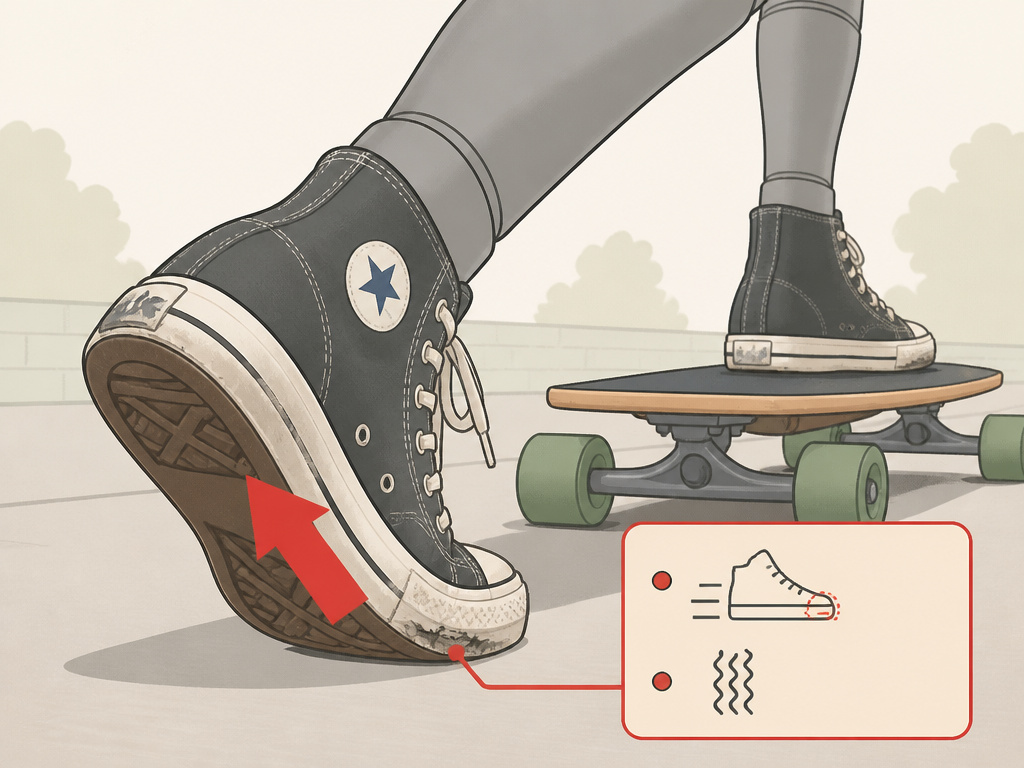
CONS Traction Rubber Sole: This is a completely different rubber compound from the classic vulcanized rubber on Chucks. According to Converse, it offers increased traction in the forefoot. The midsole is also treated with a high-grip texture. For a longboarder, this means better initial grip when placing your foot, which is a safety plus. However, the softer, grippier compound may also wear down faster under the sustained, dragging friction of foot braking compared to a harder, more abrasion-resistant rubber used in some dedicated skate shoes.
REACT SK Insole: Found in their Japanese SPEC line, this is a high-density foam insole combined with an E.V.A. Heel cup for shock absorption and hold. It’s a nod toward comfort, but it’s not the plush, all-day cushioning of a running shoe or some premium skate shoes designed for ramps and big drops.
TRICK PROTECTOR & THICK TAPE: These are durability features. TRICK PROTECTOR reinforces high-contact areas during tricks with suede or rubber patches. THICK TAPE uses a thick single-tape structure to maintain flexibility while reducing wear on edges. In theory, these should help a shoe last longer. In practice, a longboarding wear pattern is different from an ollie or kickflip pattern. The reinforcement might not be in the exact spot your longboard deck or pavement grinds away.
| Technology | Intended Benefit (Street Skating) | Relevance to Longboarding |
|---|---|---|
| CONS Traction Rubber | Enhanced flick grip and board feel. | Provides good initial footing grip, but may wear quickly from foot braking. |
| REACT SK Insole | Shock absorption for landing tricks. | Offers basic impact protection for pushing, but not maximal long-distance comfort. |
| TRICK PROTECTOR | Prevents wear from ollie/kickflip contact. | Reinforcements may not align with longboarding’s push-and-brake wear zones. |
| Stable Last (Low Toe Spring) | Improves ground feel for board control. | Excellent for precise foot placement, a definite plus for technical longboarding. |
The Durability Question: What Wear Tests Actually Show
Manufacturer specs promise one thing; the pavement tells the real story. An anecdotal wear test for the Converse AS-1 Pro reported it provided exceptional 10 sessions of durable skating before tearing and blowouts. In that same test, after three sessions, the AS-1 Pro double-stitched toe panel stitching started ripping. The test also noted that after ten hours of skating, the AS-1 Pro suede upper would absorb too much sweat and could change form.
The Louie Lopez Pro 2 shows a similar disconnect. Despite a one-piece toe panel with an asymmetrical suede overlay, a wear test found the most visible wear appeared where the toe panel meets the midfoot, leading to a blowout within a few sessions. An anecdotal wear test on the original Louie Lopez Pro reported that after two weeks of skating, the tester noted obvious wear on the toe and ollie area but no holes, projecting another 3-4 weeks of life.
The part nobody mentions: Sweat absorption. Suede is durable until it’s soaked. A long summer push session can turn a supportive upper into a soggy, shape-shifting bag, killing board feel and stability.
Here’s the mechanical truth these tests highlight: reinforced panels defend against focused, high-impact abrasion (like griptape). Longboarding applies a broader, sustained abrasion (like pavement). The materials might be tough, but the construction seams and material junctions become failure points under a different type of stress. If you’re logging miles, not tricks, that 10-session lifespan might arrive faster than you think.
Longboarding vs. Skateboarding: A Shoe Needs Comparison
This is the heart of the issue. Choosing a shoe means matching its design priorities to your activity’s demands. We can compare them directly.
| Demand | Street/Park Skateboarding | Longboarding (Distance/Downhill) | Best Converse Match? |
|---|---|---|---|
| Primary Wear | Ollie/kickflip points (toe, side). | Pushing toe, foot-braking sole, whole foot from vibration. | Partial (toe). |
| Cushioning Priority | High-impact landings from jumps. | Repetitive impact from pushing, vibration damping. | Moderate (REACT SK, Lunarlon). |
| Board Feel Priority | Extremely high for flip trick precision. | High for precise foot placement, but some dampening is welcome for comfort. | Very High (Converse’s strength). |
| Ankle Support | Low-top for flexibility. | Varies; high-tops offer stability for downhill. | Available in hi-top CONS models. |
| Breathability | Moderate. | High – long sessions generate more heat and sweat. | Low-Moderate (suede/nubuck can trap heat). |
The table shows a mismatch. Converse’s tech suite is optimized for the left column. If your longboarding style leans toward technical sliding and precise footwork, the board feel of a CONS shoe is a legitimate advantage. If you’re into distance pushing, cruising, or downhill, you’re asking the shoe to perform outside its design center. The cushioning might be insufficient, the breathability lacking, and the wear patterns misaligned.
Breaking Down Key Converse Skate Models
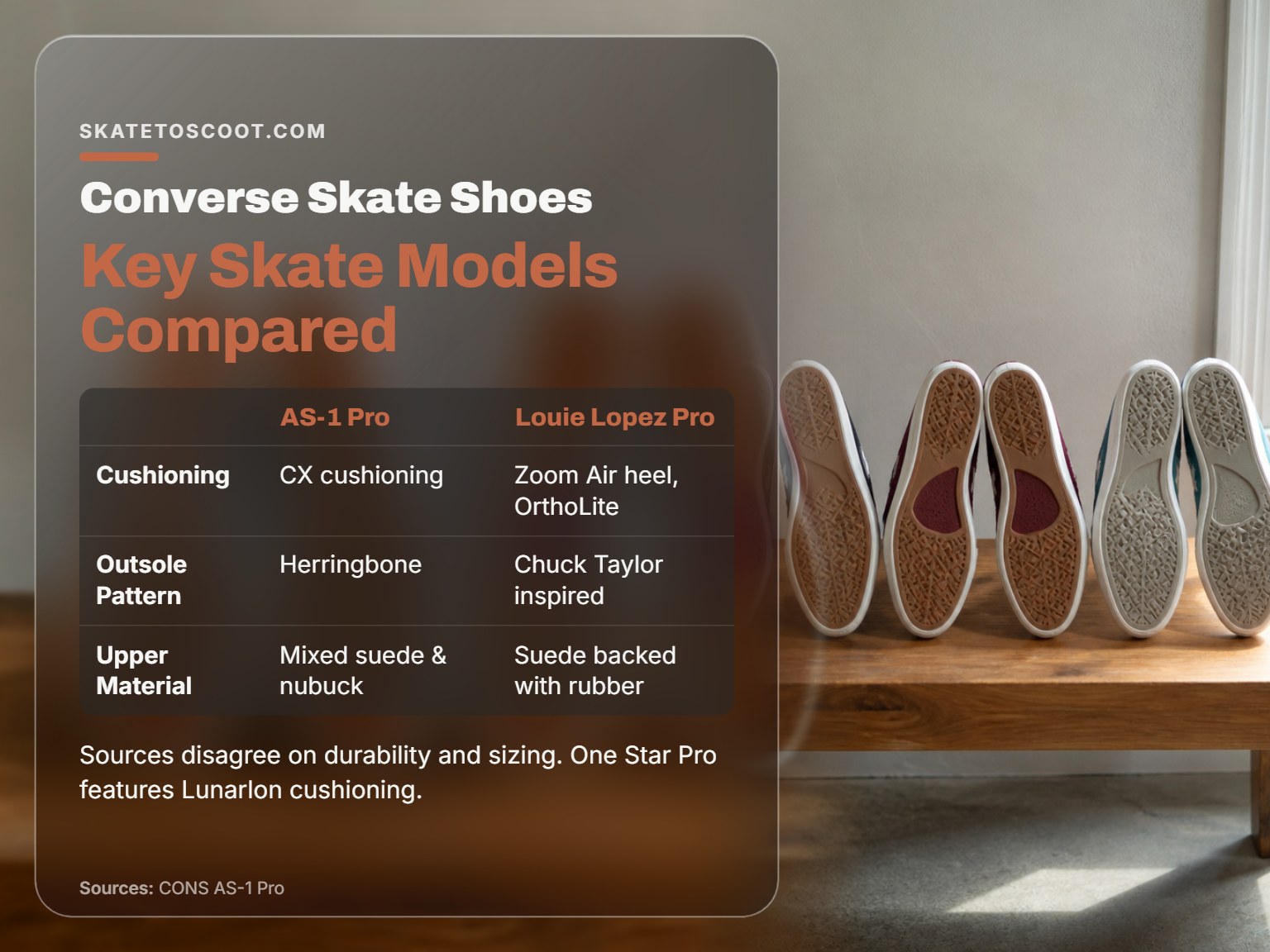
Not all Converse skate shoes are the same. Their three main pro models, the AS-1 Pro, Louie Lopez Pro, and Cons One Star Pro, offer different takes on the formula. Here’s how they stack up for longboarding considerations.
CONS AS-1 Pro (A06806C)
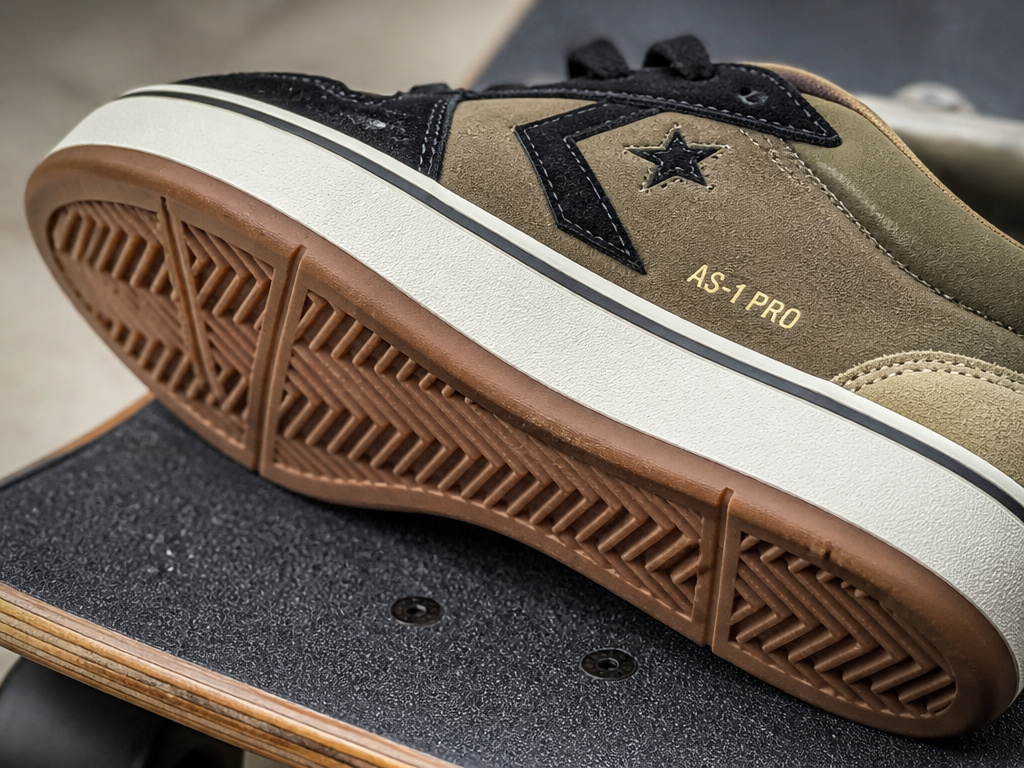
This cupsole model features a new coring system and CX cushioning, with a herringbone outsole pattern and a mixed-material suede and nubuck upper. The cupsole construction generally offers better impact protection and longevity than vulcanized soles. The herringbone tread is a classic, proven grip pattern. For longboarding, the AS-1 Pro’s potential weakness is the same as its strength: the structured cupsole and coring system might slightly reduce the ultra-thin board feel some purists love, but it provides more support for all-day wear. Its durability, as noted in the wear test, is good but not exceptional.
Converse Louie Lopez Pro
This model uses vulcanized construction and a durable suede upper backed with rubber. It features an OrthoLite insole with a Zoom Air unit in the heel and softer foam in the forefoot, and uses the original CONS traction pattern. The vulcanized construction offers that legendary, flexible board feel. The Zoom Air heel is a nice touch for cushioning push strokes. However, the vulnerability at the toe/midfoot junction, as seen in the Pro 2 model, is a concern for longboarders whose wear might concentrate there from a different foot posture.
Converse Cons One Star Pro
This revival features Nike’s Lunarlon cushioning, a double-stitched toebox, and a relatively small and pointy toebox. In a 10-hour wear test, the all-suede upper lasted with no holes appearing, a strong result. The Lunarlon cushioning is a major comfort upgrade, but testers noted it affects the shape of the shoe and board feel “isn’t as great as your slim insole hard sole combo.” For a longboarder prioritizing comfort over absolute board feel, this might be the best trade-off Converse offers.
Common mistake: Choosing a model for its cushioning without considering board feel loss. The plush Lunarlon in the One Star Pro is great for your feet, but if you need to feel every micro-adjustment of your deck, it can feel disconnected.
So, Are Converse Good for Longboarding? The Verdict
It depends on your style and priorities. If you are a technical rider who values board feel above all else, and you mostly do short, intense sessions focused on slides and precise control, a Converse CONS shoe, particularly a vulcanized model like the Louie Lopez Pro, can be a great choice. The grip is excellent, and the feel is unmatched.
If your longboarding is defined by distance pushing, commuting, or long freeride sessions where foot braking and comfort are king, the answer tilts toward no. You will wear through the soles and uppers faster than a shoe designed for that purpose, and the cushioning, while improved, still lags behind dedicated options. The sweat absorption issue with suede is a real performance killer on long, hot days.
My recommendation: For most longboarders, a shoe from a brand that specifically engineers for endurance skating will be a better investment. The Converse Cons One Star Pro is the best compromise within the Converse lineup if you’re set on the brand, thanks to its Lunarlon cushioning and proven 10-hour durability. Otherwise, look for shoes built with longer-wearing rubber compounds, more breathable or synthetic uppers, and cushioning systems focused on repetitive impact, not just high landings.
Frequently Asked Questions
What are the best shoes for longboarding?
The best shoes balance flat grip, abrasion resistance, and cushioning. Brands like Etnies, Vans Pro Skate (specifically the wafflecup or popcush models), and New Balance Numeric often feature durable cupsole constructions, impact-absorbing insoles, and materials designed to withstand foot braking. The specific “best” model depends on your foot shape and riding discipline.
Can I wear classic Converse Chuck Taylors for longboarding?
You can, but you shouldn’t expect them to last. The classic vulcanized rubber sole lacks the grip of the CONS compound and will wear through quickly with foot braking. The canvas upper provides almost no abrasion resistance and will shred on griptape or pavement. They offer minimal cushioning. They are a fashion shoe, not a performance tool.
Why do some skaters swear by Converse for skating?
The reason is board feel. The combination of a flat sole, flexible construction (in vulcanized models), and a low-to-the-ground profile gives an unmatched sense of connection to the skateboard. For street skaters where that tactile feedback is crucial for trick precision, it’s a worthy trade-off for reduced durability. This cult following is rooted in performance, not just style.
Are high-top or low-top Converse better for longboarding?
For downhill or aggressive freeride where ankle support is a safety concern, a high-top CONS model can provide valuable stability. For most other longboarding styles, especially those involving a lot of pushing, a low-top is less restrictive and allows for a fuller range of ankle motion. It’s a personal preference heavily influenced by your riding style.
How should Converse skate shoes fit for longboarding?
They should fit snugly, like a performance athletic shoe. Due to the materials stretching and forming to your foot, and the fact that Converse notoriously runs a little big, many professional wear testers recommend sizing down a half size from your usual measurement. A loose skate shoe is a hazard, reducing control and increasing the chance of blisters.
