Are Double Blade Ice Skates Easier?
This post contains affiliate links. As an Amazon Associate, we earn from qualifying purchases.
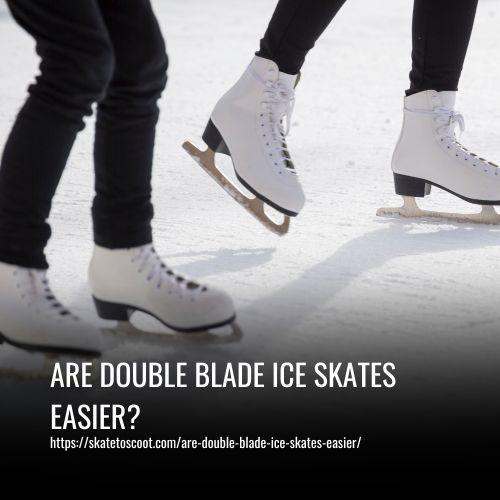
Double-blade ice skates are easier for standing still and taking first shuffling steps because they provide a wider, more stable base. They are not easier for learning to actually skate, gliding, turning, or stopping, because they prevent you from using the inside and outside edges of a single blade, which is the fundamental skill of ice skating. They are a short-term stability aid, best suited for toddlers (ages 2-4) or absolute beginners, for about 6-12 hours of practice before transitioning, though some sources suggest they can work for adults while others strongly advise against it.
That “easier for standing, harder for skating” distinction is the whole debate. The wider base and lower stanchions increase lateral stability, which feels safer. But ice skating isn’t about not falling over. It’s about controlling a fall, redirecting momentum, and using a thin, rockered piece of steel to interact with the ice. A double blade replaces that interaction with a passive, flat platform. A common question is: are double blade ice skates easier?
The rest of this guide walks through the specific physics, the real age and skill recommendations (backed by patent data and coach consensus) for the are double blade ice skates easier debate, and a concrete plan for moving from double blades to single blades, or for skipping them entirely.
Key Takeaways
- Double blades provide initial stability through a 3.6 cm blade separation and 40-60% lower stanchions, but they create more friction and prevent edge work.
- They are appropriate for training beginning ice skaters, including toddlers (ages 2-4) or absolute beginners, for a short 6-12 hour practice window before transitioning.
- Some skating coaches and learn-to-skate programs, as noted in community discussions, explicitly ban double blades because they believe they teach incorrect balance and delay skill development.
- Some sources argue the most common cause of beginner difficulty is dull, ill-fitting rental skates, while others point to a lack of balance and stability which double blades aim to solve.
- If you’re an adult beginner, consider a single-blade skate with a 7-foot rocker and a cross cut toe pick for a more forgiving learning curve.
The Core Physics of Double vs. Single Blades
Forget marketing. The difference isn’t about “easy” or “hard” when you ask are double blade ice skates easier. The blade assembly determines what you can do. A single blade is a tool. A double blade is a crutch.
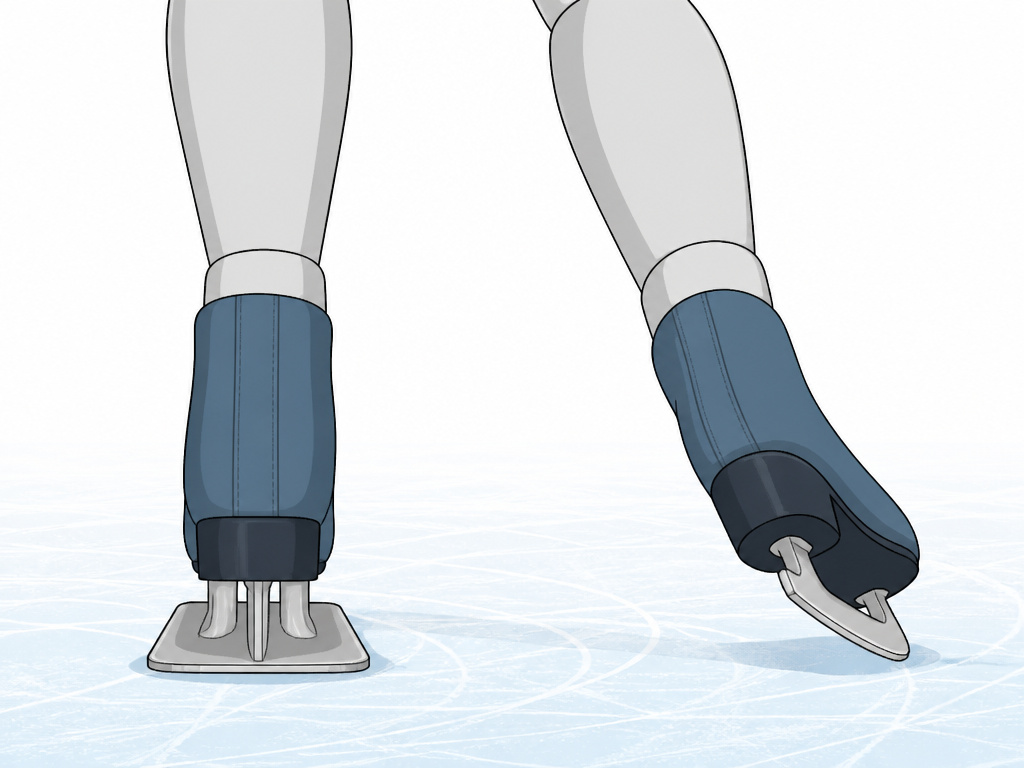
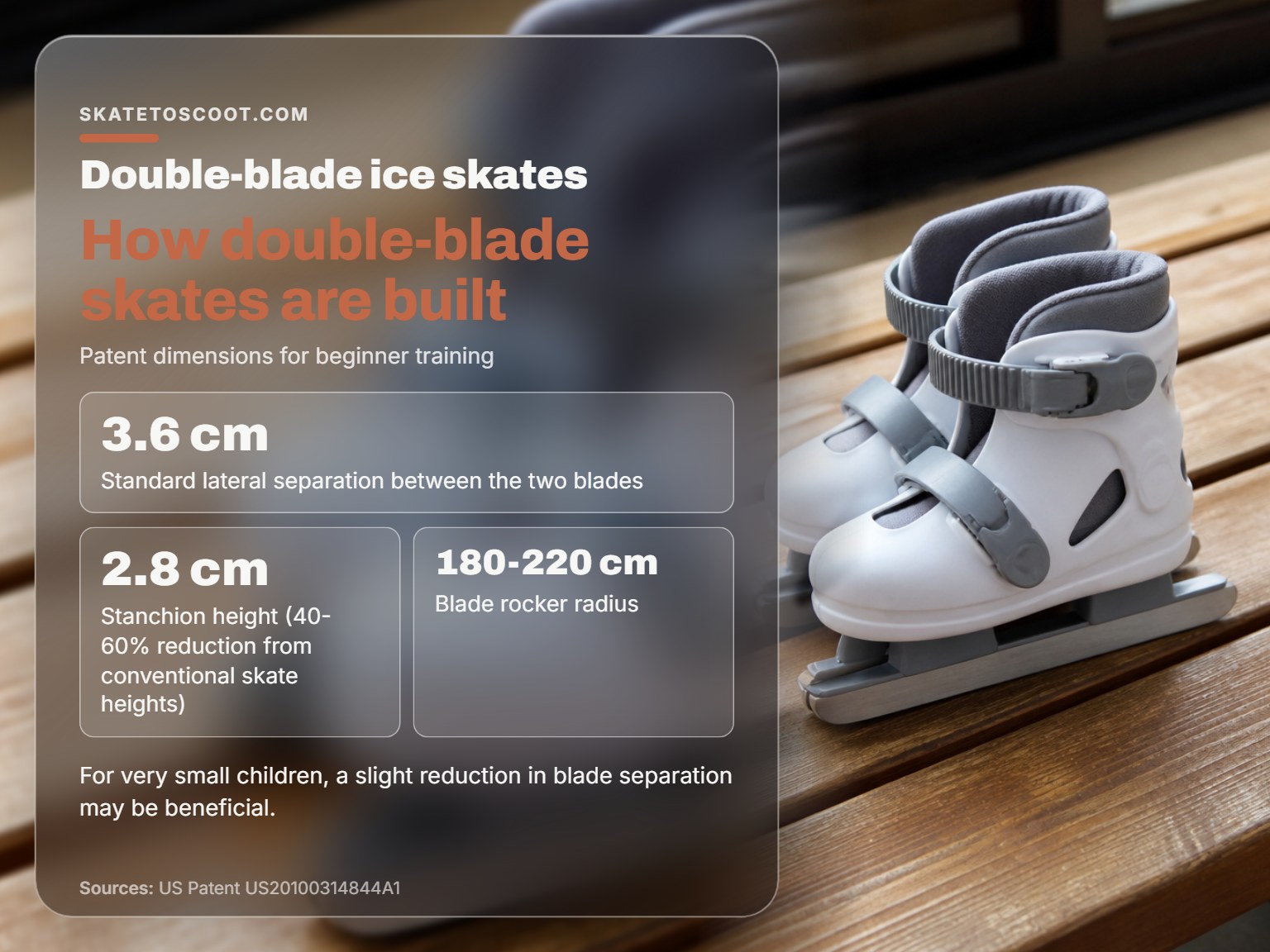
The patented double-blade design specifies a blade lateral separation (W) of approximately 3.6 cm and stanchion heights reduced 40-60% from conventional skate heights of about 5.5 cm. This wider, lower platform increases lateral stability but also increases friction and eliminates the ability to roll onto the blade’s inside or outside edge.
A single blade has a curved bottom profile called a rocker (a 7-foot radius is often recommended for beginners). You pivot and turn by shifting your weight along the blade and rolling onto its edges. Your balance is active, a constant micro-adjustment between the inside and outside edge. A double blade replaces that single, rockered piece of steel with two parallel blades, each also about 0.32 cm wide but separated by that 3.6 cm gap. You stand on two flat edges. The result is a platform that resists tipping sideways, which feels stable, but also resists the rolling motion needed to steer or stop. You can shuffle, but you can’t carve.
Why does this matter for learning? Because gliding isn’t about staying upright. It’s about pushing off one inside edge and gliding on another. Stopping isn’t about braking; it’s about digging an edge into the ice. A double blade physically blocks you from learning these sensations. You might not fall as much in the first hour, but you’ll hit a hard ceiling in skill development that a child on single blades will blow past in their second lesson.
The Friction Trade-Off
More blade surface on the ice means more friction. A peer-reviewed sports science analysis notes that at competitive speeds, the coefficient of friction for speed skating is typically ≈0.0046–0.009; for figure skating gliding, it’s estimated at ≈0.005–0.01. While double blades haven’t been specifically tested in such a scientific paper on ice friction, the principle is sound: two blades create more friction than one. In practical terms, this means double-blade skates feel slower and stickier. An adult may find it difficult to glide on double blades, as some sources suggest they dig into the ice.
When to Use Double Blades (And When to Avoid Them)
Recommendations vary widely between skate sellers and skating instructors.
The US Patent US20100314844A1 is clear: the design is for “training beginning ice skaters” and is “unlikely to find practical application to specialty skates like speed or dancing skates.” A commercial retailer blog suggests they can be for “adults too,” while acknowledging they are not for speed or advanced tricks. On the ice, many coaches hold a rigid view against them, though other sources see a use for beginners.
| Scenario | Double Blades Recommended? | Why | Better Alternative |
|---|---|---|---|
| Toddler (2-4 years old) | Yes, short-term. | Motor skills are developing; goal is exposure, not technique. | Double-blade strap-ons over boots for a short period. |
| Child (5+ years old) | No. | Delays edge control and ankle strength development. | A proper-fitting beginner single-blade skate. |
| Absolute Adult Beginner (terrified of falling) | Maybe, for 1-2 sessions. | Can build confidence to step onto the ice. | A skate trainer (walking aid) or lessons with a coach. |
| Adult wanting to learn actual skating | No. | Creates bad habits and an incorrect center of balance. | Beginner ice skates with a soft boot and a beginner-appropriate rocker blade. |
| Recovering from injury/balance issue | Consult a physiotherapist. | Stability may be medically necessary. | Often, off-ice therapy is safer than adapted skating. |
Where this goes sideways: Using double blades beyond the initial confidence phase. They become a crutch that teaches you to stand with your weight centered between two blades, a posture that must be completely unlearned to progress on a single blade. That transition often feels harder than starting on singles from day one.
I’ve seen this in rink-side coaching. A child comes in on double blades, shuffling along.
The Coach’s Perspective: Why Most Programs Ban Them
Ask at any certified learn-to-skate program. You’ll find that most, like the two organizations mentioned in community discussions, explicitly ban double blades. The reason is pedagogical, not purist.
Coaches aren’t trying to be harsh. They’re trying to be efficient. Learning to skate is about developing proprioception, your body’s sense of where it is in space, and specific muscle memory for edge control. A double blade gives false feedback. It tells your body that balance is static and wide, when on ice, balance is dynamic and narrow. You’re learning the wrong map.
- No Edge Awareness: You cannot feel the difference between an inside and outside edge, so you never learn to use them for turning or stopping.
- Delayed Ankle Strength: The stiff platform of two blades holds your ankle upright. On single blades, your ankle muscles work constantly to maintain balance, strengthening over time.
- Bad Posture: The design encourages a straight-legged, upright stance. Proper skating posture is knees bent, chest up, weight forward.
Common mistake: Blaming the skater’s ability when the real issue is the tool. Most people you see falling in rentals are struggling because the skates aren’t sharp, are too big, and aren’t laced properly. A sharp, well-fitted single-blade rental is often all a beginner needs.
If you’re an adult and truly fear the ice, invest in a single 30-minute lesson instead of a pair of double blades. A coach will teach you how to fall and get up safely, how to march in place, and how to find your balance, on the equipment you’ll actually use to progress.
A Practical Guide for Parents: Toddlers and Transitions
So your 3-year-old wants to skate. The goal here isn’t a triple axel. It’s fun, exposure, and maybe not carrying them the whole time. Double-blade strap-ons that fit over winter boots can be a valid tool for this microscopic niche.
The patent even notes an edge case: “a very small child’s size could benefit from a slight reduction in the value of W [blade separation].” The standard 3.6 cm gap might be slightly wide for the smallest boots.
If you go this route, treat it as a temporary playground slide, not a skating foundation. Limit use to 6-12 hours total, as the commercial blog suggests. The moment your child shows interest in moving beyond a shuffle, wanting to go faster, trying to turn, it’s time to transition. Here’s how:
- Switch to Single Blades: Get a properly fitted beginner skate. Beginner skates typically have soft, flexible boots for comfort.
- Use a Skate Trainer: This is a PVC frame with wheels that the child can push around the ice. It provides stability but doesn’t interfere with the single blade’s contact with the ice. It’s far better than double blades for learning the feel of a real skate.
- Focus on Games: Practice “marching” like a soldier, holding hands and “gliding” together, or kicking a soft puck. Keep it playful.
- Expect and Normalize Falls: Dress them in snow pants, a helmet, and gloves. Teach them how to fall onto their padding and how to get up. Falling is part of the process.
The sign they’re ready to ditch the trainer? When they can march confidently and take a few short, unassisted glides. That might happen in one session or five. The key is to follow their physical readiness, not a calendar.
Choosing Your First Real Skates: Single Blade Essentials
If you’re skipping double blades (and you should), choosing your first pair of single-blade skates is the real decision. Here’s what to look for, grounded in manufacturer specs and fitting guides.
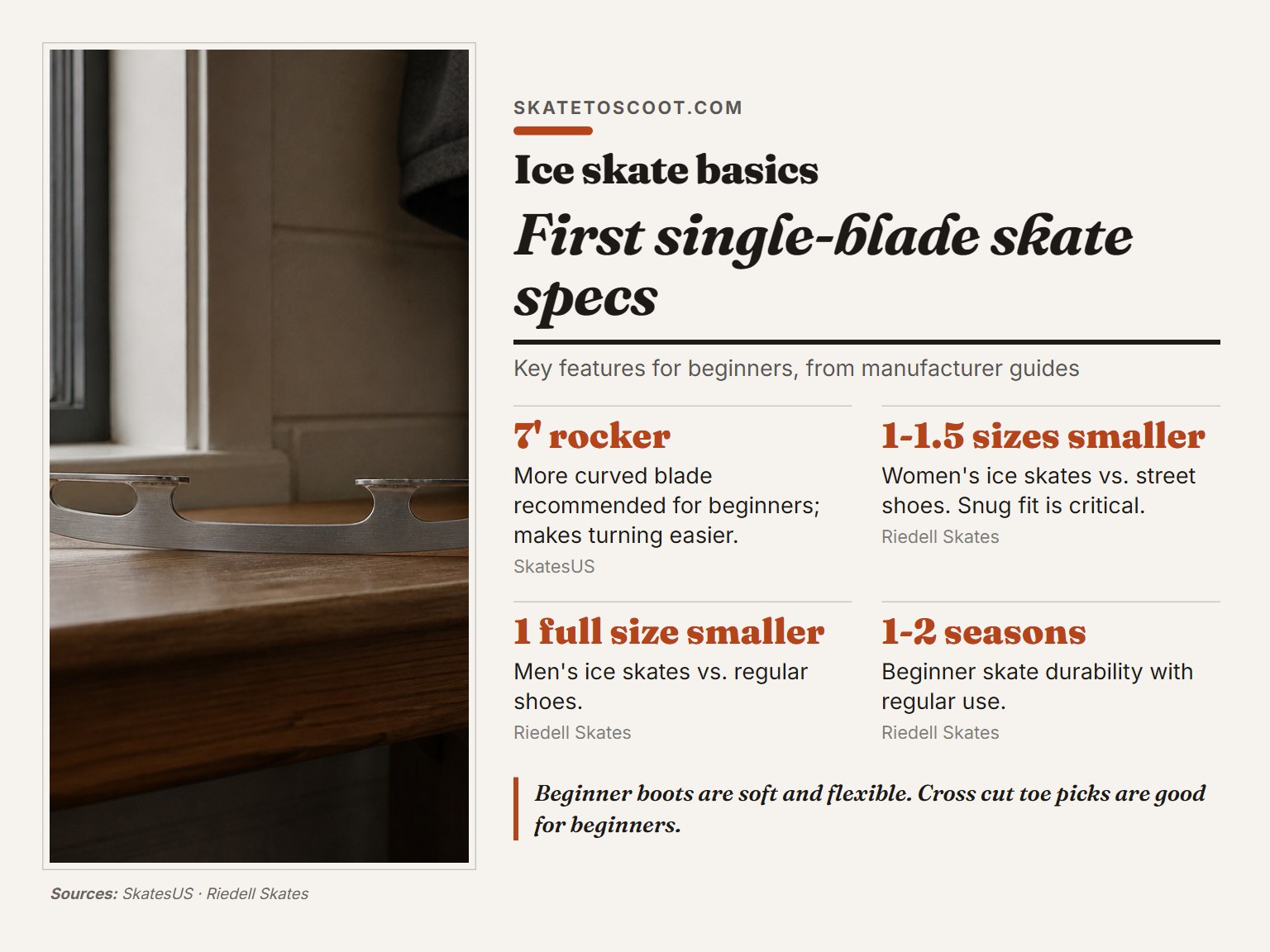
Boot Stiffness: Beginner skates are soft and flexible. This allows for knee bend and a broken-in feel from day one. Intermediate skates are stiffer for ankle support during jumps, you don’t need that yet.
Blade Features: Look for a 7-foot rocker. As SkatesUS notes, “It is generally recommended you start off with the more curved blade (7′ rocker) until confident in centering spins.” This curve is more forgiving and makes turning easier. Also, look for cross cut toe picks. These “are a wonderful feature for beginners to intermediates” as they provide grip without catching too aggressively.
Fit is Everything: Per Riedell’s sizing guide, skates should fit snugly. Women’s ice skates typically run 1-1.5 sizes smaller than street shoes. Men’s ice skates usually run 1 full size smaller. Your toes should just brush the end when standing straight, with a slight pull-back when you bend your knees. Ill-fitting skates are the #1 cause of foot pain and poor control. Our guide on why ice skates hurt dives deeper into this.
Durability & Cost: Expect beginner skates to last 1-2 seasons with regular use. The price range for entry-level recreational skates is typically $100-$200. This is a sensible investment to see if skating sticks. You can explore more in our detailed ice skate comparisons.
The Helmet Rule (Non-Negotiable)
Before any blade touches ice, read the safety notice from the Riedell owner’s manual: “It is recommended that you wear proper protective equipment, such as an ANSI, SNELL, CPSC, or ASTM approved helmet.” This is essential for children and strongly advised for beginners of any age. The manual also states this product is not suitable for children under the age of 5 without appropriate adult supervision. Safety isn’t about looking cool; it’s about staying in the game.
How Much Do Double-Blade Skates Cost?
Double-blade skates are a specialized training tool, and their cost should be weighed against their limited use. According to skate manufacturer guides, entry-level recreational single-blade skates typically cost between $100 and $200. Intermediate-level skates usually fall in the $150 to $300 range. Since double-blade skates are designed for beginning skaters, particularly young children or absolute beginners, their price may be comparable to beginner single-blade skates. However, their practical application is narrow; they are suitable for only about 6 to 12 hours of practice to build basic skills before a skater should transition. Therefore, you will need to purchase proper single-blade skates after the initial training period.
Frequently Asked Questions
What are the easiest ice skates to skate on?
The easiest skates for a true beginner are single-blade figure skates with a soft boot, a 7-foot rocker blade, and cross cut toe picks. They provide a stable, forgiving platform that teaches correct fundamentals. Double blades might feel easier for standing, but they make learning to actually skate harder.
Is ice skating easier if you can rollerblade?
Yes, significantly. Both activities require similar balance, edge control, and pushing mechanics. The main difference is the sliding surface (ice vs. Pavement) and the need to dig edges into ice to stop. If you’re comfortable on inlines, you’ll adapt quickly to ice skating. Starting with double-blade ice skates would actually undermine the skills you’ve already developed from rollerblading.
Do they still make double-bladed ice skates?
Yes, but primarily for the toddler market. Brands like Snowfeet market adult-sized versions, but they are niche products. Most major skate manufacturers like Riedell and Jackson focus on single-blade designs because that’s what is used in all instructional and competitive skating.
What is the hardest skill to do in ice skating?
For beginners, the hardest skill is often the one-foot glide. It requires balance, edge control, core strength, and trust in your skate blades. Double-blade skates make this skill virtually impossible to practice, as they prevent you from balancing on a single edge. Mastering the one-foot glide is a fundamental breakthrough.
The Bottom Line
Double-blade ice skates solve a problem that isn’t the real problem. The real barrier for beginners isn’t a lack of a second blade; it’s dull blades, loose fits, and fear of the unknown feeling of a single edge.
If you’re an adult, rent a pair of single-blade hockey or figure skates, lace them tight, and take a lesson. If you’re a parent of a toddler, double-blade strap-ons are a fine 2-hour toy, but swap them for real skates and a skate trainer as soon as your child shows curiosity, using our guide to beginner ice skates. And for everyone, the first piece of equipment isn’t a skate, it’s a certified helmet. The path to gliding isn’t through a wider base. It’s through a sharper ice skate blades, a properly broken in skate, and the willingness to feel wobbly for a session or two. That wobble is where the learning happens.
