How Long Does It Take to Learn to Roller Skate?
This post contains affiliate links. As an Amazon Associate, we earn from qualifying purchases.
Learning to roller skate timelines vary by source, but most adults can expect to feel steady within a few sessions, roll forward confidently within the first month, and master basic skills with consistent practice over weeks. For kids, developmental readiness starts around age 4 for quad skates and age 6 for inline skates, with structured lessons potentially accelerating skill acquisition.
That timeline is based on documented lesson plans, peer-reviewed studies on motor skill acquisition, and safety guidelines from pediatric hospitals. A common question is how long does it take to learn to roller skate. The difference between a frustrating month and a successful one comes down to matching your practice to what the evidence says works.
What follows is a breakdown of those evidence-based timelines, the factors that genuinely change your speed, and the concrete benchmarks, not vague feelings, that tell you’ve learned. We’ll also tackle the common plateaus and how to push past them, because progress in skating isn’t a straight line.
Key Takeaways
- Aim for short, frequent sessions. Skaters who practice three times a week for twenty minutes improve faster than those doing one long weekly session. Your nervous system needs regular, digestible bites.
- Define “learned” with a skill checklist. You haven’t learned to skate when you can move; you’ve learned when you can start, glide, turn, and stop reliably on your intended surface. Mastery is a different, longer game.
- Safety gear dictates your learning speed. Wearing wrist guards and a CPSC-certified helmet prevents the injuries that sideline beginners for 6-12 weeks. Gear isn’t just protection; it’s a progress accelerator.
- Your first skates matter more than their price. A well-fitting, stable quad skate teaches fundamentals faster than a poorly-fitting performance model. Spend on the boot, not the brand.
- Expect a plateau around week 3. Initial excitement fades as your brain integrates new balance patterns. This is normal. Shift focus to drilling one specific skill (like one-foot glides) for 15 minutes per session to break through.
The First Realistic Timeline (Your First 4 Weeks)
Forget “a few weeks.” We can be realistic about the first month’s hourly schedule. This isn’t theoretical; it’s the condensed pattern from instructor lesson plans and skater logs.
Most adult beginners following a plan like the one from RollerMagic roll forward confidently by their fourth session. The RollerMagic blog recommends four 20-minute sessions per week. That’s just over an hour of practice weekly. By the end of the first month, the goal is to stop, turn, and glide on one foot.
Here’s what a structured month could look like, synthesizing plans from GetRolling.com and commercial lesson frameworks:
| Week | Focus | You’re ready to move on when… |
|---|---|---|
| 1 | Standing, “ready position,” marching in place and forward. | You can march without grabbing a wall. |
| 2 | First V-strides, controlled toe-stop drags. | You can start and stop deliberately on flat ground. |
| 3 | Longer glides on one foot, plough stops, gentle turns. | You can glide on one skate and make wide, controlled turns. |
| 4 | Linking strides smoothly, maintaining speed control, sharper turns. | Skating feels more boring than frightening—you’re thinking about flow, not survival. |
This table serves as a map, not a rigid cage. If you nail week 2’s goals in three days, move on. If week 3’s glides take you two weeks, that’s fine. The map keeps you from wandering in circles.
Where this goes sideways: Practicing for one three-hour marathon session on a weekend. Your ankles and stabilizer muscles fatigue long before your motivation does. Technique degrades, you develop bad habits to compensate, and the resulting falls set back your confidence by a week. Sources disagree on the ideal session length: the ProSkaters Place blog recommends 30-45 minutes, while the Learning Corner lesson plan recommends 15-20 minutes for beginners.
The physical sensation after a session is a deep warmth in your shins and ankles, not sharp pain. If your feet go numb after ten minutes, that’s a fit issue, not a stamina one, it usually means you’ve cranked the laces too tight over the arch.
What “Learning” Actually Means (The Skill Benchmarks)
Asking “how long to learn” is the wrong question if we don’t agree on what “learned” means, which is why the how long does it take to learn to roller skate question needs a clear answer. A peer-reviewed autism skating intervention defined “on-task skating” as maintaining a circular path while maneuvering around cones for 3-minute trials. For recreational beginners, we can define it more broadly.
You have “learned” the basics when you can reliably execute the following in a safe, flat environment:
- Start: Move from a standstill into a stride without windmilling your arms.
- Glide: Maintain balance on one skate.
- Turn: Change direction predictably using weight shifts, not wild upper-body swings.
- Stop: Bring yourself to a complete halt using at least one method (toe drag or plough stop) without panic.
- Recover: Regain balance from a small wobble without falling or grabbing something.
These are control skills, not trick skills. They are your foundation. This is why spending time on how to roller skate without falling is an investment, not a detour. Falling happens, but controlled falling is a skill; uncontrolled falling is an accident.
A common mistake is chasing the feeling of “I can move!” and calling it learned. That’s like calling a car “drivable” because it can roll downhill. True control means you decide when, where, and how fast. Until you can stop as deliberately as you start, you’re still in the learning phase.
The Factors That Actually Change Your Timeline
Age, fitness, and prior experience get all the press. They matter, but not in the way most blogs claim. To clarify, being older does not mean you will learn more slowly. It means the stakes for a fall are higher and your recovery window is longer. According to the RollerMagic blog, an adult wrist fracture takes 6 to 12 weeks to heal; a child’s takes 4 to 6 weeks. That math alone should dictate your approach to safety gear.
The real factors that accelerate or brake your progress are more concrete:
- Practice Frequency vs. Duration: The RollerMagic blog states it plainly: skaters who practice three times a week for twenty minutes improve faster than those who practice once a week for two hours. Your brain consolidates movement patterns during rest. Frequent, short sessions feed it manageable chunks.
- Quality of Instruction: A professional instructor from GetRolling.com notes that habitually active adults can become “advanced beginners” in one lesson and work on stride technique after three. This isn’t magic; it’s expert feedback correcting your errors in real-time. Self-teaching works, but it’s often a slower, more iterative process of trial and error.
- Equipment Choice: This is essential. Quad skates (four wheels in a rectangle) provide a wider, more stable base for beginners. Inline skates demand more ankle strength and precise balance from day one. Your best skates for beginners should match your goal, but if pure ease of learning is the priority, quads win.
- Pre-Existing Balance: This is the wild card. If you have a history with cycling, ice skating, or skiing, your balance systems have a head start. A Seattle Children’s skate safety guide uses developmental milestones: by age 4, kids often have the balance for quad skates; by age 6, for inline skates. Adults bring a different kind of balance, one of patience and analytical focus.
Common mistake: Choosing inline skates because they look “cooler” or more athletic, then struggling for weeks with ankle rolls and frustration. Start with the tool that gives you early wins. You can always switch later.
The Right Gear Isn’t Optional (It’s a Timeline Multiplier)
Talk of timelines is fantasy if you’re under-geared. Safety gear isn’t about fear; it’s about enabling aggressive practice. When you know a fall means a skinned knee instead of a trip to the clinic, you’ll try that glide one more time. That extra attempt is where learning happens.
The Seattle Children’s Hospital guidelines are specific: look for a CPSC or Snell sticker inside the helmet. For any trick or aggressive skating, the helmet should meet the ASTM F1492 standard. This isn’t marketing. A certified helmet is tested to withstand multiple impacts at the forces typical in skating falls.
Your gear checklist, in order of importance:
- Wrist Guards: The most important piece. The majority of beginner injuries are wrist fractures or sprains. Guards turn a breaking fall into a slide.
- Helmet: See the standard above. It must fit snugly.
- Knee & Elbow Pads: These allow you to practice falling safely, a critical skill in its own right.
What you wear under the pads matters, too. Avoid loose pant legs that can catch wheels, and choose moisture-wicking fabrics. For a full breakdown, see our guide on what to wear to skate effectively and safely.
I’ve seen students progress twice as fast once they were fully padded up. The psychological freedom to fail safely is impossible to overstate. A beginner who isn’t flinching at every wobble is a beginner who’s learning.
How to Measure Progress When You Feel Stuck
You’ll hit a wall. It usually happens around week three or four. The initial “I’m doing it!” excitement wears off, and the next skills, like smoother transitions or backwards skating, feel miles away. This plateau is where most self-taught skaters quit.
The problem is often measurement. You’re no longer measuring by giant leaps (“I can stand!”). You need to measure by millimeters. Here’s how:
- Use a literal measuring tape. Mark a line on safe ground. How many strides does it take you to cover it smoothly? Next week, can you do it in fewer strides, with longer glides?
- Time your glides. Can you hold a one-foot glide for one second? Aim for two. Then three. The 2016 study in Behavior Analysis in Practice used maintaining a circular path as a measure of on-task skating. Your 3-second glide is the first step.
- Film yourself. Watch a 20-second clip from your first session and one from today. The difference you can’t feel in the moment will be obvious on screen.
When you’re truly stuck, change the variable. If you always practice in an empty parking lot, try a smooth tennis court. The new surface will expose subtle balance issues. If you always skate alone, join a casual beginner group. Watching others provides new movement models.
The part nobody mentions: The fear of looking foolish never fully goes away; it just shifts to more advanced skills. The skater doing graceful crossovers in the rink center is currently worried about looking clumsy trying a spin. Everyone is their own toughest critic. Keep your early videos. They’re the best remedy for this.
Kids vs. Adults: A Different Learning Curve
The timeline for children isn’t just a shortened adult timeline. Their learning is governed by developmental readiness and a different relationship with risk.
As noted, Seattle Children’s Hospital provides clear age guidelines: age 4 for quad skates, age 6 for inline skates. These aren’t arbitrary numbers; they’re tied to the development of balance and coordination systems. Pushing a child before they’re ready physically turns a fun activity into a frustrating struggle.
The teaching method is different, too. Where adults benefit from explicit verbal cues (“bend your knees,” “shift your weight”), young children learn better through mimicry and play. The commercial Learning Corner lesson plan recommends 15-20 minutes of focused practice for beginners.
For more on this, our article on the best age to start dives deeper into the signs of readiness.
The starkest difference is consequence. A child falls, gets up, and often laughs. An adult falls, gets up, and calculates the impact on next week’s work schedule. This is why the adult learning curve is often more cautious, more analytical, and in some ways, more rewarding when breakthroughs happen.
Structured Lessons vs. Self-Taught: The Time Trade-Off
This is the clearest fork in the road for your timeline. Sources disagree on the exact pace, and that disagreement is instructive.
A professional instructor (GetRolling.com) states that habitually active folks can become “advanced beginners in one lesson and work on stride technique after 3 lessons.” This is the structured path: direct feedback, corrected errors, and efficient skill stacking.
Conversely, the ProSkaters Place blog suggests most adults can “march, stride and stop on flat ground within two or three sessions of about half an hour” on their own. This is the self-directed path: cheaper, more flexible, but reliant on your own diagnosis of problems.
The trade-off is simple: lessons buy time with money; self-teaching buys money with time.
If you have the means, even two or three lessons at the start can shave weeks off your timeline by preventing deeply ingrained bad habits. The most common bad habit? Leaning back. It feels safe, but it makes your skates shoot forward. A coach spots and fixes that in five minutes. You might struggle with it for five sessions on your own.
Worth knowing before you start: If you go the self-taught route, commit to watching at least two reputable beginner tutorial videos before you lace up. Not just one. Different instructors emphasize different cues, and seeing multiple approaches will give you a fuller picture than any single source.
How to deal with fear and falling
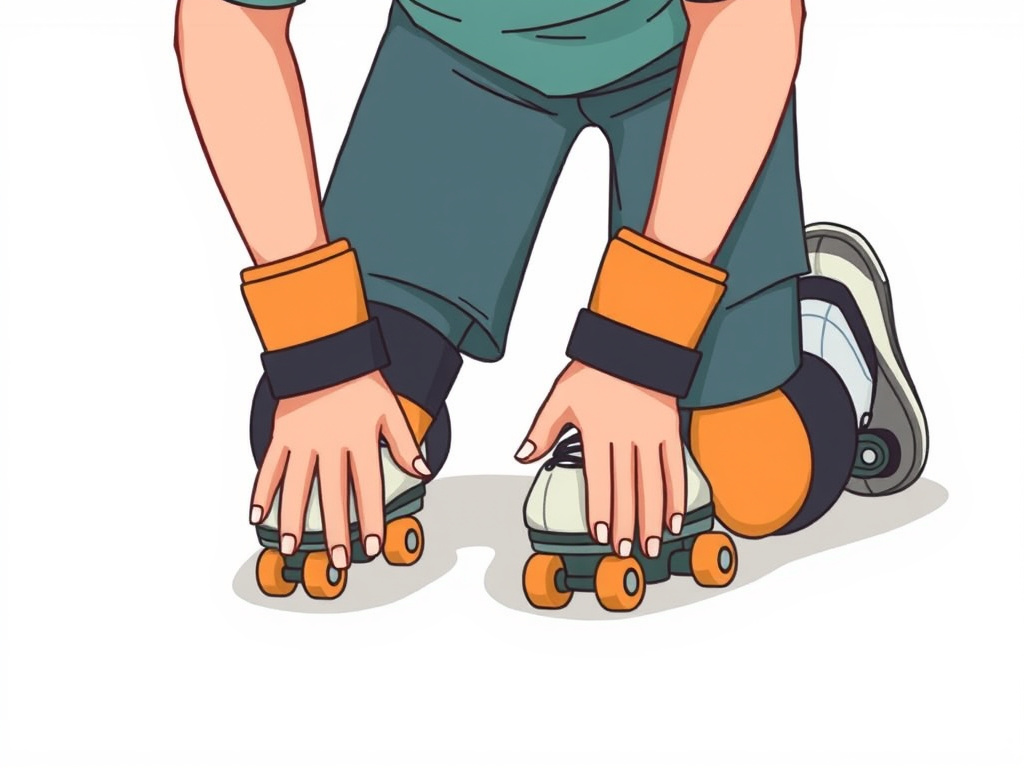
Falling is a normal part of learning to skate, and managing the fear of it is crucial for progress. The key is to practice falling safely in a controlled way from the very start. Always wear proper protective gear, including a helmet with a CPSC or Snell sticker inside. For more aggressive skating, use a multi-impact helmet that meets the ASTM F1492 standard. This protection reduces injury risk and builds confidence. Start by practicing a controlled fall onto your padded knees and hands while stationary. Short, frequent practice sessions, like the 20-minute sessions recommended by some plans, allow you to build skill without fatigue, which is a common cause of falls. Remember, even a child in a study learned on-task skating through repeated, short trials. Your focus should be on consistent, manageable practice where falling is just a step, not a setback.
Frequently Asked Questions
Is roller skating harder than ice skating?
For most beginners, the initial learning curve for roller skating is gentler. On roller skates, you’re on a grippy, predictable surface. Ice skates have a slippery, unforgiving blade that requires finer edge control from the first step. However, transitioning between the two is common once balance is established. We explore this in more detail in our ice skate comparison.
Are roller skates harder than rollerblades?
For pure stability in the first few sessions, yes, inline skates (rollerblades) are typically harder. The single line of wheels demands more ankle strength and precise lateral balance. Quad roller skates, with their wider wheelbase, offer more inherent stability for mastering initial balance and striding. The choice depends on your end goal, which we break down in our guide on quad vs inline skates.
How often should a beginner practice?
Aim for frequency over duration. Three 20-minute sessions per week will produce faster progress than one 60-minute session. Your muscles and nervous system need regular, manageable repetition to build the new movement patterns. The RollerMagic plan specifically recommends four 20-minute sessions per week.
What if my skates hurt my feet?
This is almost always a fit issue, not a breaking-in issue. Your skates should be snug but not painfully tight, with no heel lift. The proper fit is more important than the brand. If pain persists after checking the fit, you may need to look into the specific breaking in process for your boot type, but never skate through sharp pain or numbness.
Can I learn if I’m over 40?
Absolutely. Adult learners bring patience and focus that kids often lack. The key is respecting the longer injury recovery time and gearing up accordingly. Start on a forgiving surface, commit to short, frequent practices, and celebrate small wins. The timeline might be similar to a younger adult’s, but the path will be more deliberate.
Before You Go
One rule most guides skip: if you haven’t skated in over two weeks, your first session back should be a 15-minute review of fundamentals, marching, ready stance, stopping, not an attempt to pick up where you left off. Skill decay is real, and rebuilding confidence is faster than rehabbing an injury from overconfidence.
The timeline you choose is yours. You can compress it with focused, frequent practice and maybe a lesson or two. You can stretch it out with casual weekend rolls. Neither is wrong. The only mistake is comparing your chapter 3 to someone else’s chapter 10.
Your goal is to reach the point where skating stops being a skill you practice and starts being an activity you enjoy, not to hit an arbitrary date on a calendar. That point comes when you stop thinking about your feet and start noticing the world rolling by.
