How to Hotwire a Lime Scooter: The Real Answer
This post contains affiliate links. As an Amazon Associate, we earn from qualifying purchases.
To “hotwire” a Lime scooter is to bypass its digital security to make it run without the app. It is not twisting two ignition wires. Modern Lime scooters use a Central Control Unit (CCU) that communicates with Lime’s servers via 4G, WiFi, and GPS. Bypassing it requires either advanced hardware hacking specific to the scooter model or completely replacing the CCU and motor controller with aftermarket parts. Both methods are technically complex, void warranties, carry fire risks, and are illegal unless you own the scooter outright.
The digital lock changes everything. On a basic scooter, you find the power and ground wires, connect them, and the motor spins. A Lime scooter’s brain, the CCU, sits between the battery and the motor. It checks in with a server before enabling the throttle. No handshake, no go. This isn’t a mechanical ignition switch you can jump; it’s a computer you must either trick or replace.
What follows is a breakdown of what “hotwiring” a Lime actually entails, including the core question of how to hotwire a lime scooter, the specific models involved, the tools you’d need, and the steep legal and safety cliffs you’d face. This isn’t a how-to. It’s a “what-is” and a “why-not.”
Key Takeaways
- Modern Lime scooters cannot be traditionally hotwired. The Central Control Unit (CCU) requires a digital handshake with Lime’s servers via 4G/WiFi; twisting power wires does nothing.
- Hacking feasibility is entirely model-dependent. Community resources like the ScooterHacking.org Lime wiki show methods only work on specific older models (e.g., SN1.0BLK, Sx2.5), while newer Gen 4.0+ scooters have no public bypass.
- Permanent conversion requires a full electronics swap. The only reliable way to make a Lime scooter your own is to strip out the proprietary CCU, controller, and sometimes the battery, and install standard scooter components, a complex, costly project.
- Lime’s documentation warns that modification voids warranties and that disassembling the lithium-ion battery is a fire risk, while the ScooterHacking.org wiki documents community methods to modify and override the locks on various models.
- Legal ownership is the absolute prerequisite. Attempting to bypass the security of a scooter that is still part of Lime’s active fleet is theft. Legitimate projects start with a scooter purchased at auction or obtained through a legal transfer of ownership.
The Two “Hotwire” Scenarios (and Why Neither Works)
People use “hotwire” to mean two different things. The first is the classic image from movies: locate two wires, twist them together, and the vehicle starts. The second is the digital-age version: hacking the software or firmware to bypass a digital lock. On a Lime scooter, both approaches hit a wall made of proprietary hardware and constant communication.
The classical wire-twist method assumes a simple circuit between the battery and the motor, interrupted by a mechanical switch. You close the circuit, power flows. Lime’s specifications list a 42V, 9.6Ah battery pack powering a 300W front-wheel-drive motor. The wires are there. But between them sits the CCU. If the CCU doesn’t get the correct digital signal, it won’t close the internal relay that sends power to the motor controller. You can twist the thick red and black wires all day; the scooter won’t budge.
Where this goes sideways: Assuming a Lime has a simple ignition circuit. The CCU acts as a digital gatekeeper. Even with full battery voltage at the terminals, the motor receives zero commands without the CCU’s approval, which is tied to a 4G/WiFi connection and GPS.
The digital bypass method targets the CCU itself. This is what the scooter hacking community researches. Success depends entirely on the scooter’s hardware generation. For example, the community wiki notes that Ninebot SN1.0BLK scooters might be made operational using standard Ninebot procedures, and unpatched Sx2.5 models might be hacked with an Arduino. For Lime-S 3.0, M1.1, and X1.3, a specific software dump might work. But for the “4.0 series,” the wiki states there was “no data regarding” hacking methods. If your scooter is a newer Lime-S 4.0 or Gen 4 (Jump), there’s no public playbook.
| Lime Model | Community Hack Status | Core Challenge |
|---|---|---|
| Ninebot SN1.0BLK | Potentially unlocked via SNSC tools | Requires specific software & hardware interface |
| Sx2.5 (Unpatched) | Arduino-based hack possible | Finding an unpatched unit is rare |
| Lime-S 3.0 / M1.1 / X1.3 | May require a specific firmware dump | Dump files are model-specific and not always available |
| Gen 4.0+ (Lime-S 4.0, Jump) | No public method available | Newer CCU & security protocols |
The mechanical reality is that these scooters are not designed to be opened. Cases are sealed with proprietary screws, and connectors are often glued. The Lime 4.1 CCU manual shows it has a backup battery (3.3-4.2VDC, 1250mAh), which means it can maintain GPS and communication even if you disconnect the main battery. You can’t just pull the plug.
Tools and the Reality of Access
If you have a legally-owned, older Lime model with a known hack. The tool list for the how to hotwire a lime scooter problem shifts from simple wire strippers to a digital workbench. Forget the screwdriver method. You’re looking at a multimeter, a soldering iron, a logic analyzer, and perhaps a UART-to-USB adapter to communicate with the CCU’s serial port.
The first physical hurdle is getting inside. The plastics are tough, and the fasteners are often security Torx or tri-wing screws. You’ll need the specific bits. Once inside, you’re greeted not by a simple wiring harness with color-coded wires, but by a dense ecosystem of bundled cables leading to sealed connectors.
A digital multimeter is essential, but not for finding ignition wires. You’ll use it to identify the UART (Universal Asynchronous Receiver-Transmitter) port’s transmit and receive pins on the CCU, which is how you might send commands to it. Lime’s documentation for the 4.1 CCU confirms it has UART and CANBUS ports.
This is where most online guides stop. They’ll tell you to “locate the communication pins” but won’t say that on a Lime 4.1 CCU, those pins need a specific 3-second magnet hold on the induction sensor or a 2-second ground connection to the CHG_IN wire just to wake up the unit for programming, if you even have the firmware file. The community knowledge is fragmented across Discord servers and forum posts. What works for an Sx2.5 will brick a Lime-S 3.0.
The part nobody mentions: Even if you succeed in a software jailbreak, the scooter’s GPS and cellular modem are often still active and reporting its location to Lime. A hacked scooter moving around without paid rides could trigger a recovery flag in their system. True conversion means disabling or removing that hardware, which is integrated into the CCU.
The Permanent Conversion Path
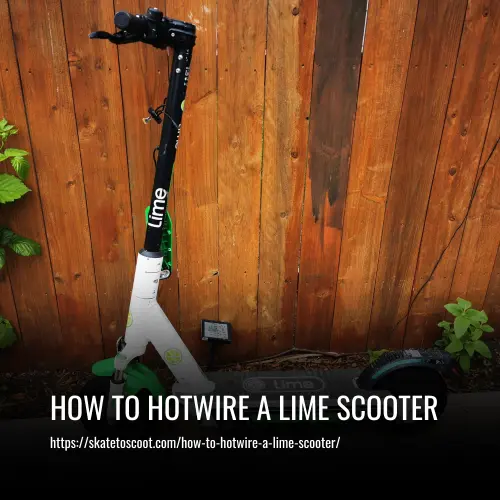
For those with a legally-obtained scooter who want a reliable personal vehicle, the only sane path is a full hardware conversion. This means stripping the Lime down to its frame, wheels, and maybe the battery, then installing standard, aftermarket scooter components. It’s not hotwiring; it’s rebuilding.
Here’s what a full conversion typically involves:
- Remove the proprietary electronics. This includes the CCU, the original motor controller, and any proprietary dashboard.
- Source a compatible motor controller. You need a generic brushless motor controller that matches your motor’s voltage (e.g., 42V for Gen 2.5) and power rating (300W+).
- Rewire the scooter. Connect the battery to the new controller, the controller to the motor, and add a simple throttle, on/off switch, and brake cut-offs. This is where knowledge of how to fix electric scooter wiring becomes practical, not theoretical.
- Address the battery. You may need to replace it or find a way to bypass its communication with the removed CCU.
This process is complex, requires electrical knowledge, and invalidates any remaining warranty. It also changes the scooter into a personal vehicle, solving the digital lock problem by removing it entirely. For a detailed project outline, our guide on how to make a Lime scooter your own walks through the trade-offs.
Legal and Safety Imperatives You Cannot Ignore
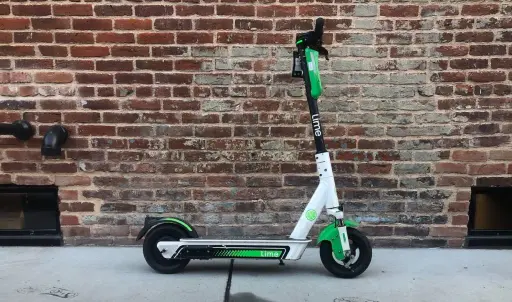
This isn’t scare talk. It’s the documented manufacturer stance and the law. Lime’s documentation states clearly: “Do not modify the scooter. Doing so will void any applicable warranties.” It follows with an even starker warning: “Do not attempt to disassemble the battery. This is a fire risk.”
Before you start: Lithium-ion battery packs store significant energy. Puncturing, shorting, or improperly disassembling them can cause rapid thermal runaway, leading to fires that are difficult to extinguish. The manual also warns not to charge the battery in temperatures below 0°C (32°F).
Legally, the line is bright. If the scooter is still part of Lime’s active rental fleet, it is their property. Tampering with it, whether to gain unauthorized access to a Lime scooter for a free ride or to dismantle it, constitutes theft, vandalism, and potentially computer fraud. The only ethical and legal starting point is verified ownership, such as a bill of sale from an auction or a direct transfer from Lime.
The community’s hobbyist reverse-engineering, documented on sites like ScooterHacking.org, exists in a gray area. It’s a collective effort to understand and repurpose hardware, often focused on scooters that have been abandoned or legally purchased. However, using that knowledge to steal service from active fleet scooters crosses the line from tinkering into crime.
Bypassing the modem/control board
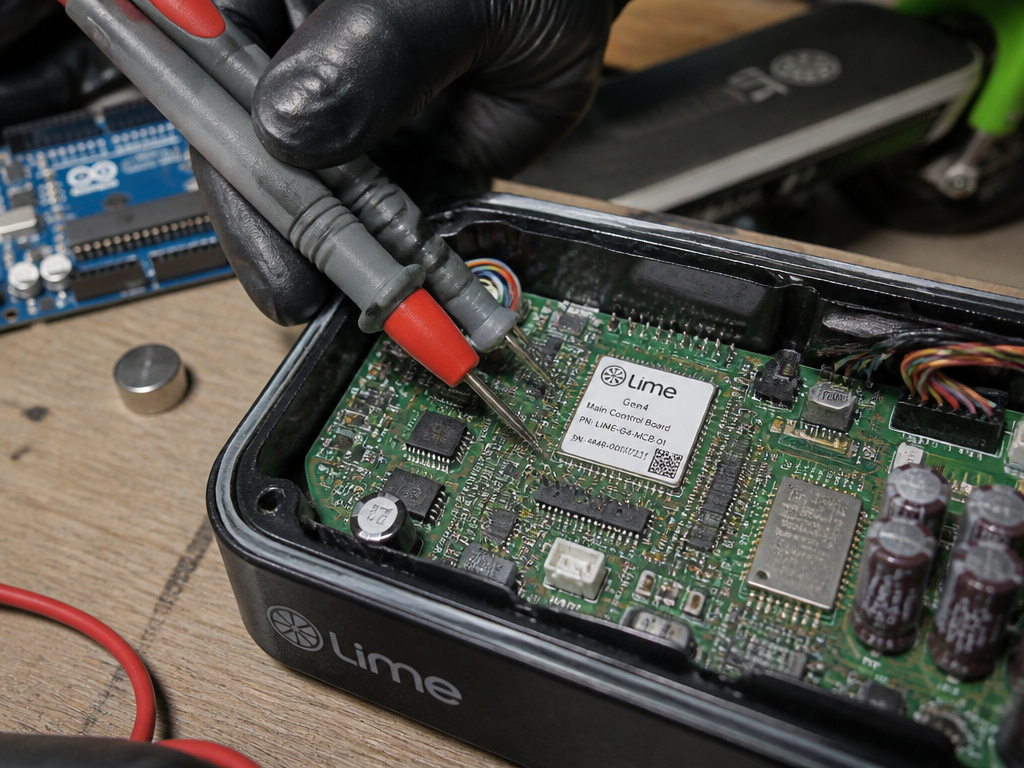
On a Lime scooter, the central control unit is the brain. It handles communication over 4G, WiFi, Bluetooth, and GPS. The board has specific ports like UART and CANBUS for internal diagnostics. For certain older models, community documentation suggests methods like using an Arduino with specific commands or applying a magnet to a sensor for a few seconds. However, newer models, particularly the 4.0 series, have no publicly known bypass methods. Any physical modification to this unit or its wiring is strongly discouraged by the manufacturer, voids all warranties, and poses significant safety risks, including potential fire hazards from battery tampering.
Frequently Asked Questions
Can you hotwire an electric scooter?
Yes, but only on basic, older models that use a simple mechanical ignition switch. These are typically personal scooters, not modern rental units like Lime or Bird. The process involves identifying and connecting the main power and ignition wires. Our article on how to hot-wire an electric scooter covers that generic process, which is irrelevant to Lime’s digital systems.
Is it possible to jailbreak a Lime scooter?
It depends on the specific model and hardware version. According to community resources, some older Lime models (like certain Sx2.5 or Lime-S 3.0) have known software vulnerabilities that could be exploited with specialized tools. Newer models (Gen 4.0 and later) have more robust security, and no public jailbreak methods exist.
How to get a free ride on a Lime scooter?
You don’t, legally. Promo codes and referral discounts offered by Lime are the only legitimate ways to reduce ride costs. Any method that bypasses the payment system to get a “free ride” is theft of service.
How to get a Lime scooter to start?
Legitimately, you use the Lime app to start and pay for a ride. If you own the scooter and it won’t start, check for error codes on the display. A common 02E error means a low battery; charge the scooter fully. Any other error code (01E, 03E, etc.) indicates a problem requiring support. The manual says not to ride and to contact Lime.
The Bottom Line
The idea of quickly bypassing the ignition switch on a Lime scooter with a paperclip is a fantasy. It is a locked-down computer on wheels. For the hobbyist with a legally-obtained unit, the project is an intensive study of reverse engineering or a full hardware transplant. For everyone else, it’s a non-starter.
If you find a Lime scooter abandoned or for sale, assume the digital lock is permanent unless you’re prepared for a major technical project. The most honest answer to “how to hotwire a Lime scooter” is this: you don’t. You either use it as Lime intended, or you embark on a complete conversion that replaces its brain. Anything in between is a fast track to a dead end, a voided warranty, or worse.
