How to Get a Free Electric Scooter: 7 Legitimate Paths
This post contains affiliate links. As an Amazon Associate, we earn from qualifying purchases.
You can get a free or deeply discounted electric scooter through low-income shared ride programs, government and utility rebates, adaptive vehicle programs for riders with disabilities, and by repairing abandoned scooters. The most direct path is Lime Access, which offers discounted rides to qualifying individuals, and Lime Assist, which provides free adaptive scooters.
The discount isn’t a blanket offer. It’s a series of local, hyper-specific programs with different eligibility proofs, payment methods, and even scooter models. Seattle’s discount looks nothing like Boise’s, and the phone number to start a scooter without a smartphone changes depending on which city’s website you read. This is why searching for ‘how to get a free electric scooter’ yields such different results.
What follows is a map of the legitimate paths. This guide explains the application paperwork for low-income programs, the cash-payment loophole for people without credit cards, the free adaptive scooters most riders never see, and the real math on repairing a discarded scooter versus buying new.
Key Takeaways
- Lime Access provides discounted rides to individuals who qualify via programs like SNAP, Medicaid, or subsidized housing — application is online and approval can be instant.
- Payment without a credit card is possible through PayNearMe; approved users get a code to pay in cash at participating retail locations.
- Free adaptive scooters are available via Lime Assist and Spin Access in cities like Phoenix and Boise, but vehicles are delivered on-demand and based on availability.
- Local discounts vary wildly; Seattle charges $0.75 to start and $0.01 per minute for Access users.
- Repairing an abandoned scooter is a project, not a free ride; you need basic electronics skills, a source for parts, and must assume the battery is dead.
Legitimate Low-Income Scooter Share Programs
Forget viral “free scooter” giveaways that promise to answer how to get a free electric scooter. The real, sustained discounts come from corporate equity programs baked into the rental systems you already see on city streets. Lime was the first to introduce discounted e-bike and e-scooter rides back in 2018, and its Lime Access program is now the benchmark.
Lime Access is our industry-leading affordability program that provides discounted rides to those who qualify. Lime was the first to introduce discounted e-bike and e-scooter rides, starting in 2018, with a goal of breaking down barriers to sustainable transportation to more communities.
That’s from Lime’s own site. It’s a corporate program, not a government handout, which means the application is digital and the approval can take minutes, not months. The discount isn’t a one-time coupon. It’s a permanent rate reduction attached to your account.
The Lime Access Application Process
You apply on the Lime Access website. The form asks for your name, city, and proof of eligibility. That proof is the only hurdle.
The list of qualifying programs is broad by design. Lime accepts:
- SNAP (Supplemental Nutrition Assistance Program)
- Medicaid
- A reduced-rate utility bill (like CARE in California)
- Free or reduced school lunch program (NSLP)
- A reduced transit fare program
- Social security supplemental income
- WIC (Special Supplemental Nutrition Program for Women, Infants, and Children)
- Federal, state, or local subsidized housing
- Being a Pell Grant Recipient
You upload a picture of your benefit card or a document like a utility bill. The system checks it, often automatically. One Reddit user in a college forum noted their Pell Grant verification was approved in seconds after they uploaded their financial aid notice. If your document is clear and current, you’ll get an email confirmation fast. Then, the discounted rates activate in the Lime app.
The catch is the discount isn’t standardized. Your city negotiates its own rate with Lime.
| City | Unlock Fee | Per-Minute Rate | Notes |
|---|---|---|---|
| Seattle, WA | $0.75 | $0.01 | $0.75 fee re-applies each hour after 60 minutes. |
| Bellevue, WA | $0.50 | $0.07 | Program launched with 500 devices in August 2026. |
| Standard Rate | ~$1.00 | ~$0.30+ | Varies by city and demand. |
This disparity means your savings depend on your zip code. A 20-minute ride in Seattle costs an Access user $0.95. That same ride at standard rates could easily cost $7 or $8. It’s not free, but it changes the scooter from a luxury to a practical transit link.
Payment Without a Smartphone or Credit Card
Here’s the part most guides miss: you don’t need a smartphone or a credit card. Lime built a workaround for both.
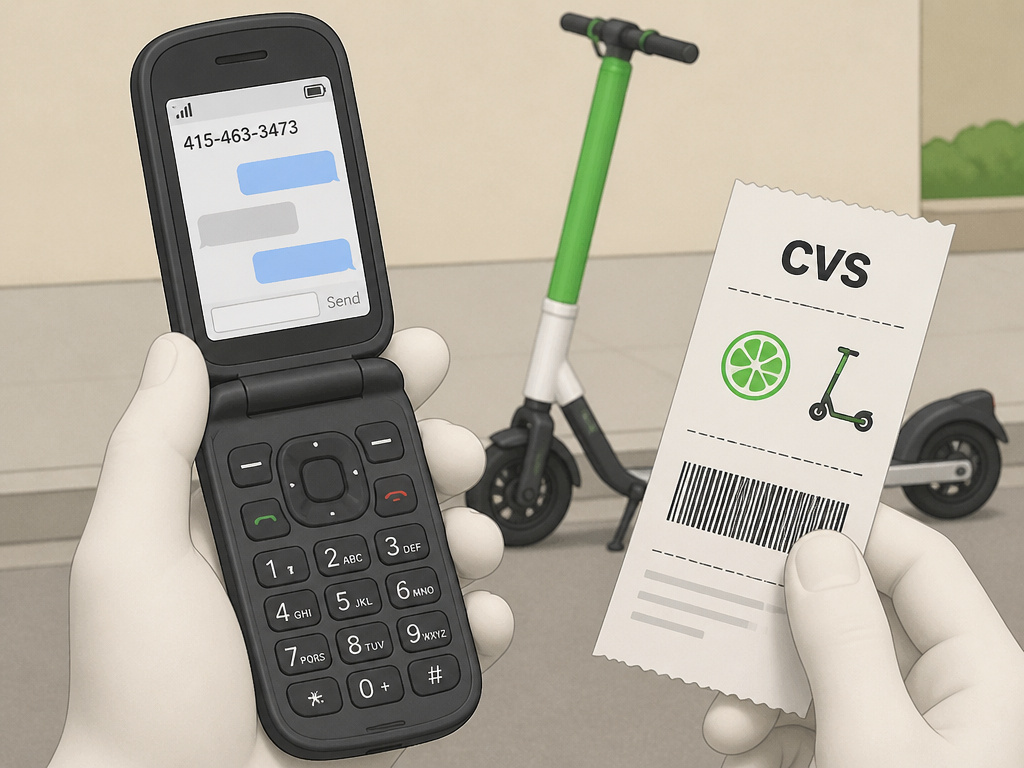
If you don’t have a smartphone, you text a number to start a scooter. This is where sources disagree. Lime’s national Access page says to text +1 (888) 495-5014. However, the official city websites for Seattle, Bellevue, and Lincoln, Nebraska, all instruct users to text 415-463-3473.
If you don’t have a credit card, Lime uses PayNearMe. Once approved for Lime Access, you get a payment code. You take that code to a participating retail location—CVS, 7-Eleven, and Family Dollar are common partners—hand the clerk cash, and they apply the funds to your Lime account. You keep the receipt as proof. The City of Lincoln’s guide explicitly lists this as the method for riders without credit cards.
It’s a clunky, extra step. But it means someone with only cash and a basic phone can still use the system. That’s the difference between a marketing discount and real access.
Government, Utility, and University Rebates
Low-income scooter share programs cover rentals. If you want to own a scooter for free or cheap, you need to look at purchase incentives. These are scattershot and hyper-local, which is why most aggregate articles on how to get a free electric scooter miss them.
City & State Rebates: Some states and municipalities offer vouchers or rebates for electric bicycle purchases, and a handful are expanding to include e-scooters. These are often tied to air quality or congestion reduction goals. You must usually apply, meet income qualifications, and buy from an approved retailer.
Utility Company Incentives: Electric utilities sometimes offer rebates for EVs and e-bikes to manage grid demand. It’s rare for scooters, but worth a search for “[Your Utility] + e-bike rebate.” The language might include “personal electric mobility devices.”
University Programs: Some campuses have free or discounted scooter-share memberships for students. More commonly, they offer discounted pricing for annual bike/scooter parking and charging lockers.
The process is always: find the program, confirm it includes e-scooters, gather your proof (ID, utility bill, student ID, tax return for income verification), and apply. Wait times can be weeks. These programs are the first to run out of funding, so acting fast matters.
Free Adaptive Scooters Through Lime Assist & Spin
This is the closest you get to a truly free scooter ride. It’s also the most specialized path.
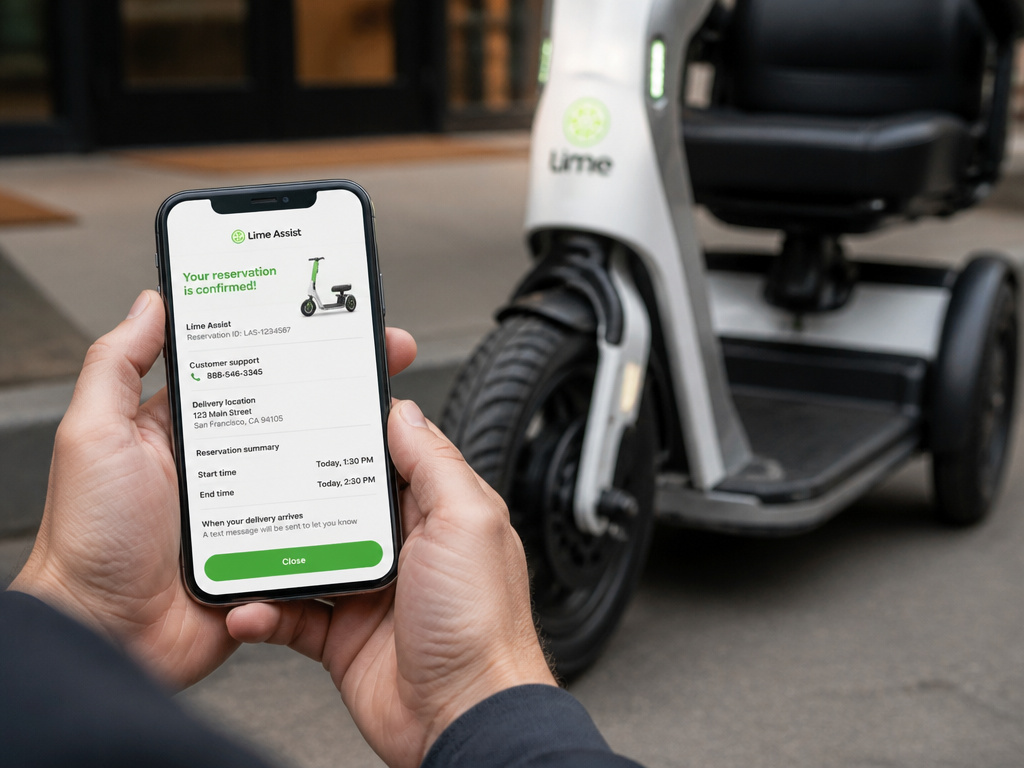
Lime Assist and Spin Access are programs that provide free, on-demand adaptive vehicles for riders with varying abilities. As the City of Phoenix’s shared micromobility program page states, these vehicles are “based on availability.” They aren’t part of the general fleet parked on street corners.
The City of Boise’s how-to guide is more specific: Lime offers an adaptive 4-wheel scooter at no cost to the rider. You reserve it through the Lime Assist program, and Lime delivers it to you. It’s a seated scooter with enhanced stability, designed for users who cannot comfortably ride a standard standing scooter.
Common mistake: Assuming adaptive scooters are parked with the regular fleet. You must reserve them in advance through the program website or app, and delivery isn’t instant.
The barrier is availability. There are far fewer adaptive vehicles, and they may only operate in certain service areas. Phoenix notes they are “custom-tailored,” which implies the process involves more than just tapping an app. If you need this accommodation, start by contacting Lime or Spin support directly through their official program pages. Be prepared for a longer setup process than a standard rental.
Hyperlocal Equity Discounts and Free Helmets
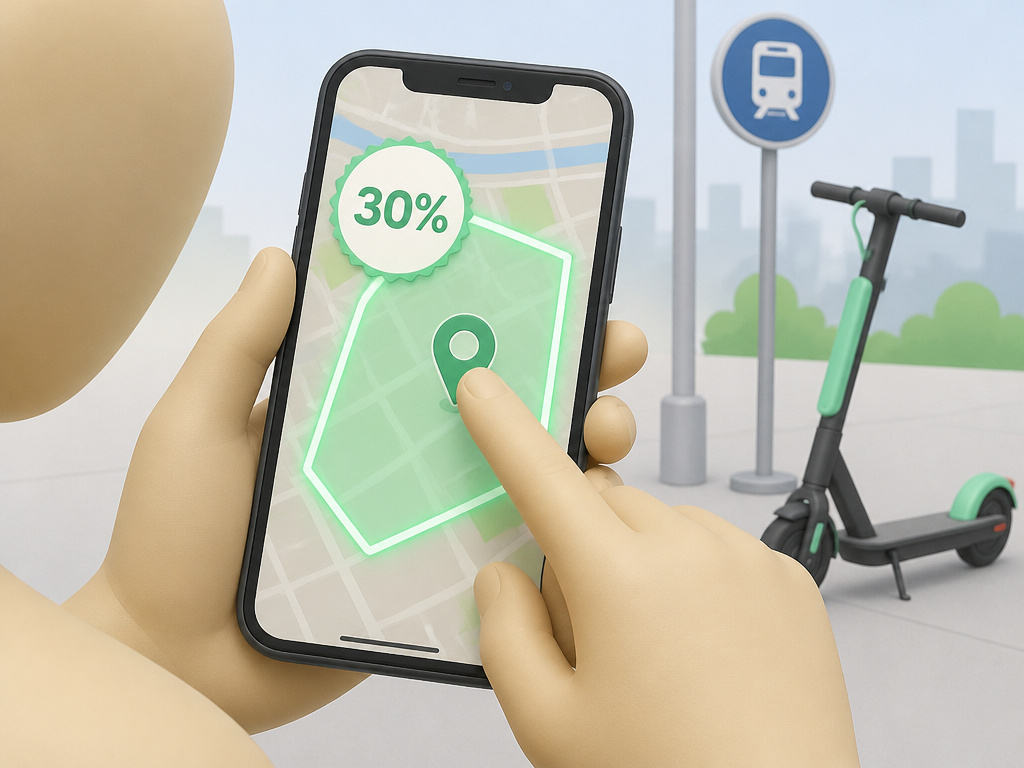
Your discount might depend on where your trip starts. Cities are geofencing equity discounts into specific neighborhoods.
The City of Phoenix offers a 30% discount on shared micromobility rides for recipients of Federal, State, or local support.
Seattle layers on a different perk: their Bike & Scoot to Transit Program gives you a free transit ticket if you ride a shared bike or scooter to a transit hub and park in a designated spot. It turns the scooter into a free last-mile connector.
Then there’s safety gear. Seattle gives away free adult helmets at six Seattle Customer Service Centers (limit one per adult). Boise does the same at community events and “on request” via email to Lime. Bellevue requires helmets for e-bike riders by city law. These are small costs, but removing them makes the overall cost of using a scooter effectively lower.
The “Free” Scooter in the Alley: Repair and Revival
You see the posts online: “I found a free scooter!” Usually, it’s a broken rental unit or a discarded personal scooter. Technically, the scooter is free. Making it run is not.
This path requires tools, time, and a willingness to learn. Most abandoned scooters have a dead battery, a broken controller, or both. The charger is always missing. As one Reddit user in r/ElectricScooters quipped, “lost the charger” is often code for a different origin story.
If you proceed, follow this sequence:
- Assume the battery is dead. A lithium battery left at zero charge for months is a paperweight. A replacement can cost more than a used, working scooter.
- Identify the model. Search for labels, serial numbers, or distinctive design features. You need the exact model to find the correct charger, firmware, and parts.
- Source a charger. Buy an official charger from the manufacturer or a certified electronics supplier. Using an incorrect charger can fry the battery management system (BMS) or cause a fire.
- Test systems slowly. With the correct charger, plug it in outdoors for a short period. Watch for heat, smoke, or strange sounds. If the dashboard lights up, you’ve cleared the first hurdle.
- Diagnose the drivetrain. If it powers on but doesn’t move, the problem is the motor, controller, or throttle. This is where projects often stall, as diagnostic tools are needed.
Where this goes sideways: Assuming a “free” scooter needs only a cheap charger. A user on r/EScooter described grafting a bench power supply to a scooter they were gifted; it worked, but they noted it was “slow af” because the controller was governed for rental speeds. You might revive a scooter only to find it’s software-locked to 10 mph.
Is it worth it? For a tinkerer with free time, maybe. For someone who needs reliable transport tomorrow, no. The $150 you might spend on a new battery and charger could instead fund months of deeply discounted rides through Lime Access.
Navigating Contests, Giveaways, and Scams
Brands do give away scooters. They hold contests on social media, partner with influencers, and run promotions. These are legitimate but are pure luck. Your odds are similar to winning a radio station call-in contest.
The scam ecosystem is larger. It preys on the “free” desire with tactics like:
- Phishing Surveys: “Enter to win a free scooter!” sites that harvest your email, phone number, and home address for spam lists.
- Fake Government Programs: Sites claiming to distribute free scooters via a federal “E-Scooter Grant.” No such national program exists.
- Advance-Fee Frauds: Requests for a “small shipping and handling fee” (e.g., $49.99) for a “free” high-value scooter. The scooter never arrives, and the fee is gone.
The rule is simple: you should never pay money to get something advertised as free. Legitimate giveaways from known brands (Lime, Segway, Unagi) will never ask for your credit card upfront. They might ask you to follow an account, tag a friend, or submit an email. That’s the extent of it.
Can you get a free scooter by charging, reviewing, or being an ambassador?
The short answer is no, not for a personal scooter you keep. The fact sheet contains no information about companies giving away scooters for these activities. Those roles typically exist for shared rental fleets, where you might earn money by charging scooters overnight or providing feedback, but you are paid for the service, not given permanent hardware. For a personal scooter, your path is different. Look to low-income access programs, potential employer benefits, or community mobility grants instead of gig-economy side hustles related to scooter sharing.
Frequently Asked Questions
How do I get a free Lime scooter with EBT?
You don’t get a free physical scooter. You get access to deeply discounted Lime scooter rides. If you have an EBT (SNAP) card, you qualify for Lime Access. Take a photo of your EBT card and a photo ID, apply on the Lime Access website, and once approved, you’ll pay reduced rates like $0.75 to start and $0.01 per minute in Seattle.
Can you get an electric scooter for free from the government?
There is no federal program that gives away free personal electric scooters. Some local government or utility rebate programs can significantly reduce the purchase price, but they are not widespread for scooters. The closest government-linked “free” access is through municipal partnerships with Lime Assist or Spin Access, which provide free adaptive scooter rides to qualified riders with disabilities.
What is the Spin Access program?
Spin Access is a program from the scooter company Spin, similar to Lime Access. It offers discounted rides to low-income individuals. Terms vary by city.
Is repairing a broken scooter worth it?
Only if you have technical aptitude and the scooter is a desirable model. The main costs are a replacement battery and a charger. You must also value your time diagnosing electrical faults.
The Bottom Line
Start with Lime Access if you have any form of low-income verification. The application is fast, and the discount turns a scooter from a novelty into a real tool. Check your local city transportation website for specific phone numbers and any extra equity discounts.
If you need an adaptive vehicle, contact Lime Assist or Spin Access directly. Don’t assume they are available everywhere; it’s a specialized service with limited inventory.
For everyone else, the “free” scooter is a mirage. The real value is in the drastic, ongoing discounts these access programs provide. A scooter that costs less than a dollar for a 20-minute ride might as well be free for the trips that matter. That’s the real win.
