How to Protect Your Hoverboard From Fire: Step-by-Step
This post contains affiliate links. As an Amazon Associate, we earn from qualifying purchases.
To protect your hoverboard from fire, follow the official CPSC guidelines: only use the supplied charger, never charge unattended or overnight, and keep the board away from flammables while charging or storing. The single most critical step is buying a model with a genuine UL 2272 certification for the entire unit, not just its components, and verifying it has the holographic label. Even then, compliance does not guarantee safety, so a strict charging and inspection routine is essential.
The gap between a certified label and a safe charging habit is where most fires start, which is why knowing how to protect your hoverboard from fire is critical. The CPSC knows of more than 250 fire-related incidents, with total property damage exceeding $4 million.
What follows is a breakdown of those basics, plus the municipal fire codes and official firefighting advice most guides skip when discussing how to protect your hoverboard from fire. By the end, you’ll have a weekly check, a charging protocol, and the exact warning signs that mean “stop using it now.”
Key Takeaways
- Look for the genuine UL 2272 holographic label on the product itself, a seller’s claim about “UL-certified batteries” is meaningless for fire safety of the whole unit.
- Charge on a hard, non-flammable surface and never leave the board charging unattended, especially overnight. Let it cool for an hour after riding before plugging in.
- Inspect the board weekly for physical damage, unusual heat, or a faint sweet smell, these are precursors to thermal runaway.
- Keep a 4-A:20-B:C rated fire extinguisher accessible where you charge. The New York Division of Homeland Security & Emergency Services states lithium-ion battery fires require ‘copious amounts of water’, while some anecdotal sources warn against using water on battery fires.
- Check the CPSC recall database before buying and periodically after. Models like the EVERCROSS EV5 are under active stop-use warnings due to fire hazards.
The UL 2272 Certification That Actually Matters
Be clear about certification. Every seller online slaps “UL Certified” somewhere in the listing. That phrase is often a lie, or at least a carefully worded dodge. The CPSC is explicit: many sellers claim to have UL-compliant battery packs or chargers, but this does not mean the hoverboard is UL 2272 compliant. The standard covers the entire electrical system.
UL 2272 evaluates the complete personal e-mobility device as a single system. Testing individual components like a battery pack (to UL 2271) or a charger is not enough, because safe parts can interact dangerously when combined in a poorly designed product.
A genuine UL 2272 certified hoverboard will have two specific marks. First, a certification mark for “self-balancing scooters” or “personal e-Mobility” on the front of the packaging. Second, and more important, a holographic certification label with the Enhanced Mark on the bottom of the product itself. If that holographic label isn’t there, you’re looking at a counterfeit or an uncertified board.
Here’s the sobering part from the CPSC’s own safety alert: “even UL 2272 compliance cannot guarantee that a hoverboard will not overheat or catch fire.” Certification is your best available filter, not a forcefield. If you bought your board before January 29, 2016, it is not UL 2272 compliant, full stop.
How Municipal Fire Codes Treat Your Hoverboard
Your local fire department has rules you’ve likely never seen. The 2022 San Francisco Fire Code, for instance, treats hoverboards as “Powered Mobility Devices” and dictates exactly how they should be charged in multi-unit buildings.
| Situation | Minimum Separation Distance | Key Condition |
|---|---|---|
| Charging hoverboards with attached batteries | 3 feet (914 mm) | Default rule for any device. |
| Reduced separation for certified units | 6 inches (152 mm) | Only if device is UL 2272 listed AND has a UL 2271 listed battery in a sealed, non-combustible compartment. |
| Charging detached battery packs (≤20 kWh aggregate) | 2 feet (610 mm) | Packs must be in the open, not stacked. |
| Charging detached battery packs (>20 kWh aggregate) | 3 feet (914 mm) | Total capacity in one fire area cannot exceed 50 kWh. |
The code is brutally specific for a reason. It also bans the use of extension cords and power strips for charging outright. In a multi-unit dwelling (Group R-2), you get an exception: up to four safety-certified devices for personal use can be stored or charged within a single unit without meeting all these separation rules. That’s the line between a professional charging station and your apartment.
Your Charging Routine is Everything
Okay, look. The charger that came in the box is the only charger you should ever use, a fundamental part of how to protect your hoverboard from fire. Full stop. Mismatched voltage or current is a direct path to overcharging a lithium-ion pack. The CPSC Chairman’s statement adds two critical timing rules: don’t charge overnight or when you can’t observe the board, and let the device cool for an hour after riding before you plug it in.
That last one is a physical reality, not bureaucracy. A battery pack warmed from use will start a charging cycle at a higher temperature, pushing its internal chemistry closer to a dangerous threshold. The manual for many boards is even stricter, instructing users to “disconnect as soon as it is done charging.” Follow that.
Common mistake: Charging on carpet or near a pile of laundry. The CPSC recommends keeping hoverboards away from flammable items while charging or even storing. A failure that starts with a small spark needs tinder to become a house fire.
Your charging location needs to be a hard, non-flammable surface like concrete, tile, or a bare floor. An open, dry area away from combustibles. If you’re giving a hoverboard as a gift, leave it in its partially charged state from the factory, don’t top it off and wrap it back up.
This is where your safe charging habits become muscle memory. It’s the same discipline as checking your skate hardware before a session: essential, quick, and it prevents the worst outcomes.
Recognizing the Warning Signs Before the Fire
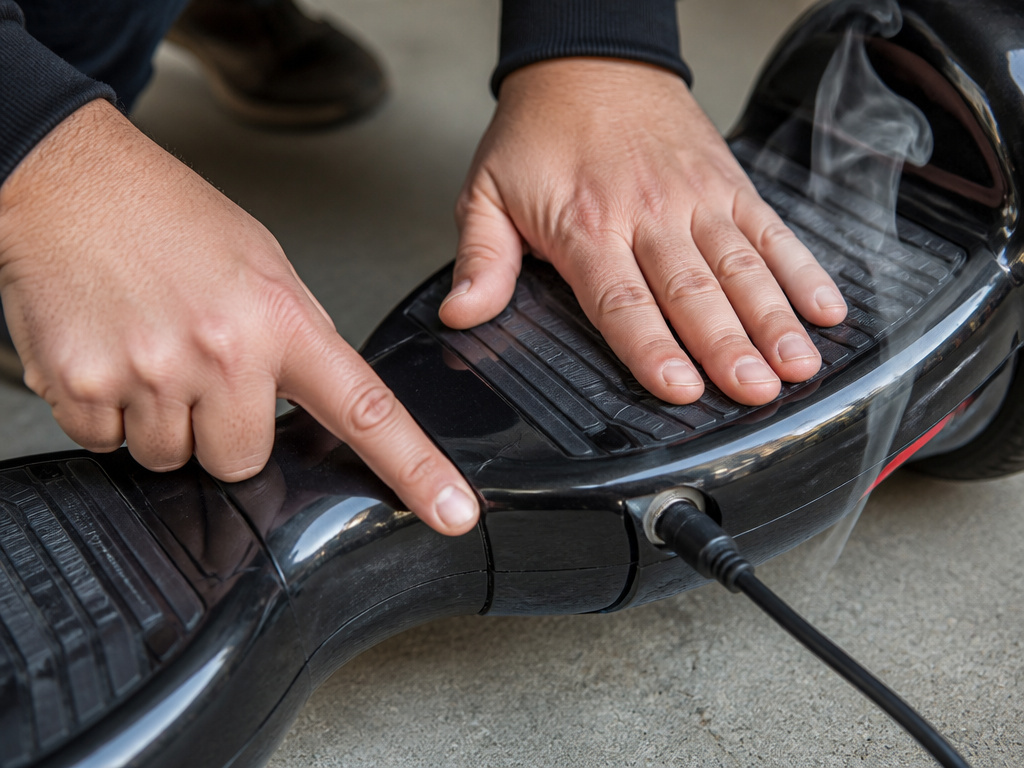
Lithium-ion battery failures usually announce themselves, but you have to know the language. It’s not always a dramatic pop and flame. The precursors are subtler.
First is heat. If the hoverboard’s deck feels unusually warm to the touch when it’s just sitting idle or shortly after charging, that’s a major red flag. Second is smell. A faint, sweet, almost fruity odor is a sign of electrolyte solvent leaking from a damaged cell, it often appears before the classic “electrical fire” smell of burning plastic. Third is physical change. A swollen battery compartment, a warped deck, or any sign of bulging means the internal cells are failing and producing gas.
Where this goes sideways: Ignoring a minor bump or drop. A sharp impact can damage the internal battery management system (BMS) or puncture a cell, creating a short circuit that takes days or weeks to develop into a thermal runaway.
Make a five-minute weekly inspection part of your routine. Power the board off. Run your hand over the deck and wheel hubs. Sniff the charging port area. Look for new scrapes or dents. This simple check is more valuable than any gadget.
If you notice any of these signs, stop using the board immediately. Don’t charge it. Move it to a safe, open outdoor area if possible. This is the moment to consult our guide on how to replace a hoverboard battery or, if the board is old or a recalled model, to initiate proper hoverboard disposal.
What to Do If a Fire Starts
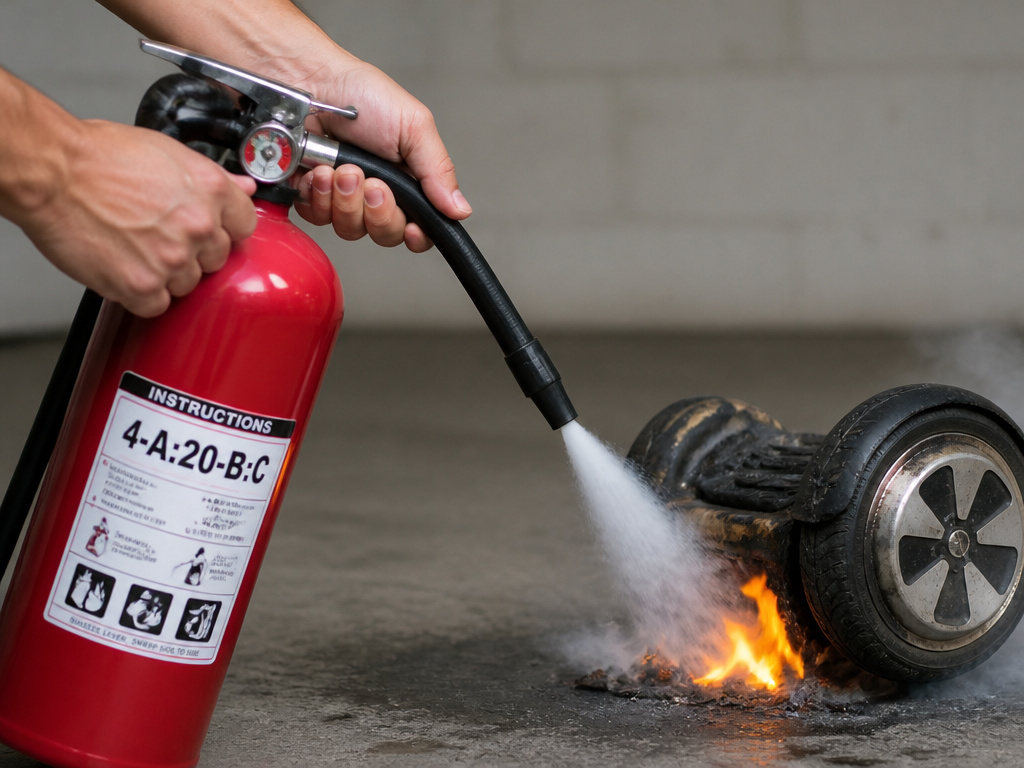
Your plan isn’t about heroics. It’s about containment and escape. The official firefighting guidance from the New York Division of Homeland Security & Emergency Services is clear: lithium-ion battery fires require “copious amounts of water” and water application should continue until conditions are “dormant”, meaning no more flame, gas, or smoke.
This contradicts a common myth that water makes lithium fires worse. For a homeowner, however, your goal is different. Your first step is to ensure everyone is evacuating and that you’ve called 911. Your second step is to attempt to prevent the fire from spreading using the correct tool.
The San Francisco Fire Code requires a portable fire extinguisher with a minimum 4-A:20-B:C rating in areas where these devices are charged. This is a multi-purpose extinguisher (Class A for ordinary combustibles, B for flammable liquids, C for electrical equipment). The San Francisco Fire Code requires a 4-A:20-B:C extinguisher, while an anecdotal source suggests a Class D extinguisher is needed for lithium fires.
| Fire Type | Correct Response | Homeowner Priority |
|---|---|---|
| Lithium-ion battery fire | Copious water (per fire service guidance). | Evacuate, call 911, use 4-A:20-B:C extinguisher on surrounding materials to contain spread. |
| Surrounding materials burning | 4-A:20-B:C fire extinguisher. | Direct extinguisher at base of flames on non-battery items. |
| Smoke or strong odor, no visible flame | Evacuate immediately. Do not investigate. | Assume fire is imminent within walls or inside device. Get out and call 911. |
Have your extinguisher mounted visibly, not buried in a cabinet. Everyone in the household should know its location. Pair this with the CPSC’s other mandatory recommendation: working smoke alarms on every level, outside sleeping areas, and inside each bedroom.
Navigating Recalls and High-Risk Models
The market isn’t static. New models with hidden flaws are sold every day, and recalls happen years after a product’s release. Being proactive means checking the government database yourself.
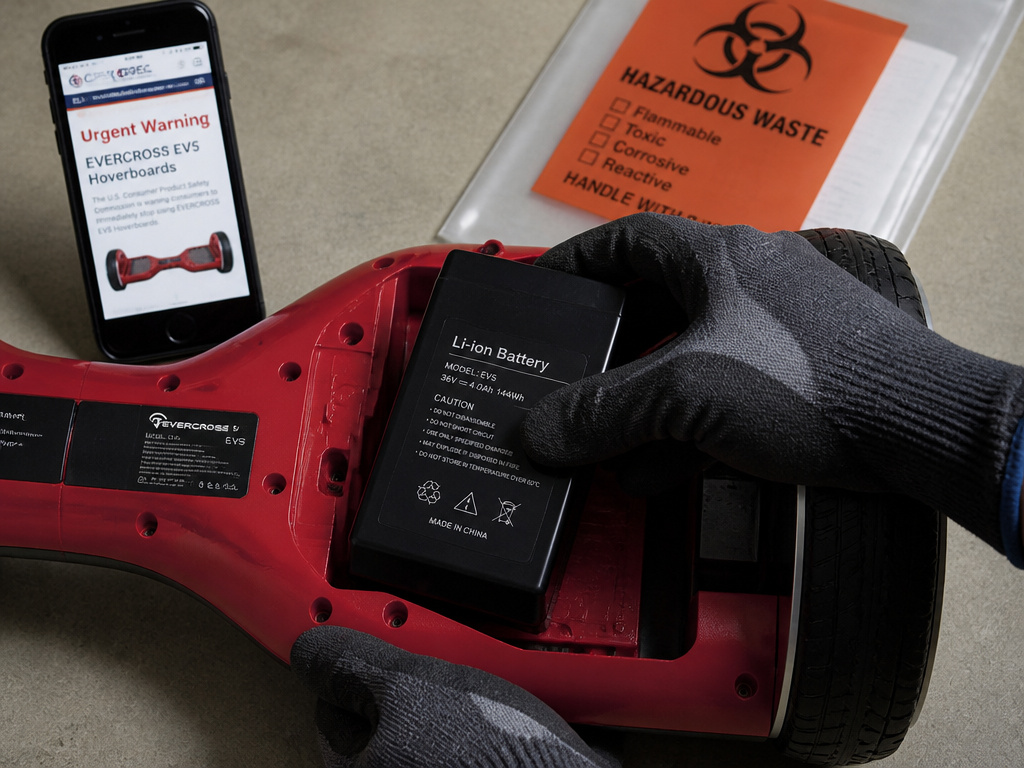
The most recent major warning is for the EVERCROSS EV5 hoverboard. In March 2024, the CPSC issued an urgent warning to immediately stop using these boards due to a fire hazard, linking them to a May 2023 fire in New York City that caused substantial property damage. The boards were sold from July 2021 onward on Amazon, Walmart, and other sites.
For EVERCROSS EV5 hoverboards, the CPSC urges consumers to immediately remove the battery packs and dispose of them following local hazardous waste disposal procedures. This is a stark example of a model that passed through major retail channels but lacked proper safety engineering. This is why you must check the official recall for hoverboards before purchase and periodically after.
This is a key part of broader hoverboard safety. A reputable brand is a start, but even known brands have specific faulty models. Your diligence is the final layer of defense. Bookmark the CPSC’s SaferProducts.gov site to report any incident involving overheating, smoking, or fire.
The Proactive Maintenance Schedule That Prevents Failures
Waiting for a warning sign is a reactive strategy. A proactive one builds health checks into the life of the device. Think of it like routine maintenance for a pair of aggressive skates, you don’t wait for a wheel to fall off mid-grind.
Here is a simple schedule derived from common failure points and manufacturer guidance:
After every ride:
- Let the board cool for one hour before charging.
- Visually check for new, deep impacts or cracks.
Weekly:
- Perform the full sensory inspection (heat, smell, swelling).
- Ensure charging port and cable are clean, dry, and undamaged.
- Verify the charger is the original one supplied with the board.
Every 6 months:
- Check the CPSC recall database for your model.
- Inspect tire tread and wheel bearings for excessive wear; vibration can stress internal wiring.
- Review the condition of your fire extinguisher and smoke alarm batteries.
When performance changes:
- A sudden drop in range or power is often a BMS or cell issue. Stop using and investigate.
- If the board won’t hold a charge, it’s likely a battery pack problem. This is the time for a battery replacement, not continued use.
This schedule takes minutes, not hours. It transforms you from a passive user into an informed owner, catching small issues before they escalate into the kind of incidents covered in our article on which hoverboards are catching fire.
Frequently Asked Questions
What causes hoverboards to catch fire?
The primary cause is thermal runaway in the lithium-ion battery pack. This can be triggered by physical damage (puncturing a cell), an internal short circuit from poor manufacturing, using an incorrect charger that overcharges the cells, or charging a battery that is already overheated from use. The risks of overcharging are particularly high with cheap, uncertified boards.
Are hoverboards a fire hazard?
Yes, they carry a known fire hazard. The U.S. Consumer Product Safety Commission (CPSC) is aware of more than 250 fire-related incidents and over $4 million in property damage specifically linked to hoverboards. This is why the agency publishes a dedicated government hoverboard fire warning. The hazard can be significantly mitigated by buying UL 2272 certified products and following strict charging protocols.
How many hoverboards have caught fire?
The CPSC does not give an exact count of units, but their data covers more than 250 incidents related to fires or overheating.
Which brand of hoverboards are catching fire?
Specific models are identified in recalls and warnings. The most recent prominent example is the EVERCROSS EV5, subject to a March 2024 CPSC stop-use warning. Historically, many fires have been linked to no-name or generic boards sold through third-party online sellers, kiosks, and without clear UL 2272 certification. Always check the CPSC recall database before purchasing any brand.
Can I leave my hoverboard charging overnight?
No. This is the most frequently violated and most dangerous rule. The CPSC Chairman explicitly recommends “do not charge a hoverboard overnight or when you are not able to observe the board.” Always charge during waking hours where you can periodically check on it and unplug it as soon as the indicator shows a full charge.
Before You Go
The final rule isn’t about your hoverboard; it’s about your home. The CPSC’s data shows property damage measured in the millions. That’s a liability question as much as a safety one. Check your homeowner’s or renter’s insurance policy to understand if it covers fires started by personal electronic mobility devices. Some policies have specific exclusions.
Then, take ten minutes today. Find your fire extinguisher and check its gauge. Test your smoke alarms. Look at the bottom of your hoverboard for that holographic UL 2272 label. If it’s not there, your risk profile just changed. Your next move isn’t to panic, it’s to implement every charging and inspection rule here with zero exceptions.
Safety and fun aren’t mutually exclusive. But safety always comes first. Now you know exactly what that means.
