Should I Buy a Hoverboard Protector Case: The Short List
This post contains affiliate links. As an Amazon Associate, we earn from qualifying purchases.
Buying a hoverboard protector case is a trade-off between cosmetic protection and potential safety risks. A silicone case shields against scratches and minor drops, but can trap heat around the battery compartment, which is a documented fire hazard. The decision hinges on your board’s value, its UL 2272 certification, and your charging habits.
That heat-trapping clause is where the standard “buy it for protection” advice flips. A case doesn’t just cover the board; it changes its thermal environment. Should I buy a hoverboard protector case? The answer depends on your priorities.
What follows: a breakdown of silicone cases versus skins and bags, the real-world data on fire incidents, and the one rule that decides whether a case is a smart upgrade or a risk you shouldn’t take.
Key Takeaways
- A silicone case protects against scratches and scuffs but can insulate the battery, a risk highlighted in government testing reports.
- For a UL 2272-certified hoverboard, a case is generally safe if you never charge with it on and follow all manufacturer charging rules.
- If your board was bought before January 29, 2016, it is not UL 2272 compliant; adding a case adds an unverified variable to an already risky system.
- The best protection for any hoverboard is following the CPSC’s charging guidelines and checking for recalls at www.CPSC.gov.
The #1 Reason to Skip a Case (It’s Not Price)
It’s ventilation. Or rather, the lack of it.
Government lab testing gets specific about this. In a CPSC-funded study, engineers tested materials meant to stop a single overheating battery cell from igniting its neighbors. They found that a 2 mm air gap and certain insulating cloths did nothing to prevent this “cell-to-cell propagation.” What did work in two out of two tests was a carbon fiber mat with a liquid phase change material.
A 2 mm air gap and a refractory cloth material were not found to prevent cell-to-cell propagation. In two of two cases, the carbon fiber and liquid phase change material prevented cell-to-cell propagation.
Your average silicone case acts as a snug, insulating blanket, not a tested phase change material. While it might save the plastic shell from a curb rash, it also seals in heat. If your board’s battery management system has a fault, and the Netherlands Food and Consumer Product Safety Authority (NVWA) found that 28 out of 29 boards they tested had faulty safety circuits that didn’t stop charging when full, you’ve just made a potential problem worse.
I treat cases the same way I treat modifying skate bearings: if you don’t understand the system’s tolerances, adding your own part can change pressures in ways you didn’t intend. A hoverboard’s battery compartment needs to shed heat. A case fights that.
| Scenario | Case On? | Why |
|---|---|---|
| Charging | Never | Maximizes heat dissipation; eliminates a variable. |
| Riding on a hot day | Maybe, but monitor board temp | If the board feels unusually warm to the touch while riding, the case may be insulating too much. |
| Storage/Transport | Ideal | This is a case’s best use—guarding against scrapes in a closet or car. |
| Board is old/pre-2016 | No | These boards lack modern safety certifications; do not add any accessory that affects heat. |
Silicone Cases vs Skins vs Bags: What Actually Protects What?
Not all “protectors” are created equal. A shopper sees three options, but they defend against different threats.
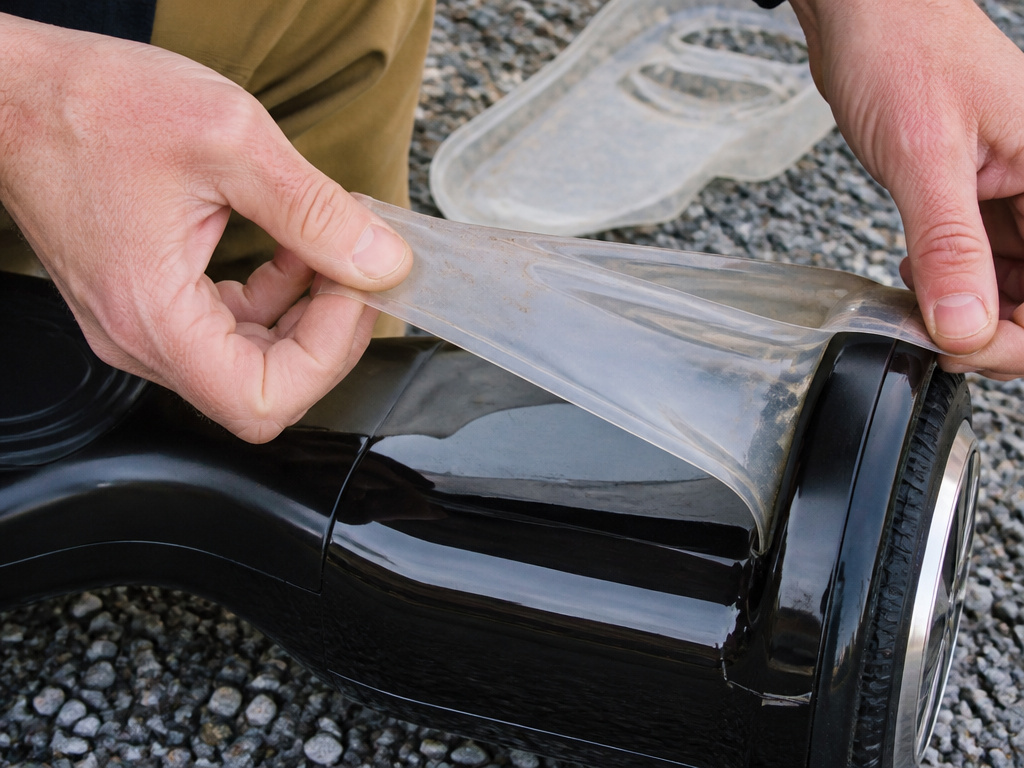
A silicone case is a slip-on sheath. It’s thick enough to cushion a light tumble and will absolutely prevent scratches. It’s also the most invasive, covering the entire board and potentially covering vents.
A decal skin or sticker kit is purely cosmetic, which is one method of hoverboard customization. It protects the finish from light scuffs, offers zero impact protection, and doesn’t affect thermals. It’s for looks.
A carry bag is for portability and storage. It protects against dings when you’re not riding and makes the board easier to carry. It offers no protection while in use.
So the should i buy a hoverboard protector case question comes down to your primary fear.
- Fear of cosmetic damage from daily use? A skin is sufficient and safest.
- Fear of impact damage from drops? A silicone case helps, but know the thermal trade-off.
- Need to carry your board on public transit? A bag is essential, and you should remove any case before storing the board in it to let it cool.
Where this goes sideways: Putting a hoverboard straight into a carry bag after riding. The Denver HBO-6620 manual states the board “must cool down for at least 1 hour before being packed.” A silicone case extends that cooldown time.
Fire Safety: The Data You Can’t Ignore
This is the documented outcome of a specific engineering failure meeting real-world conditions.
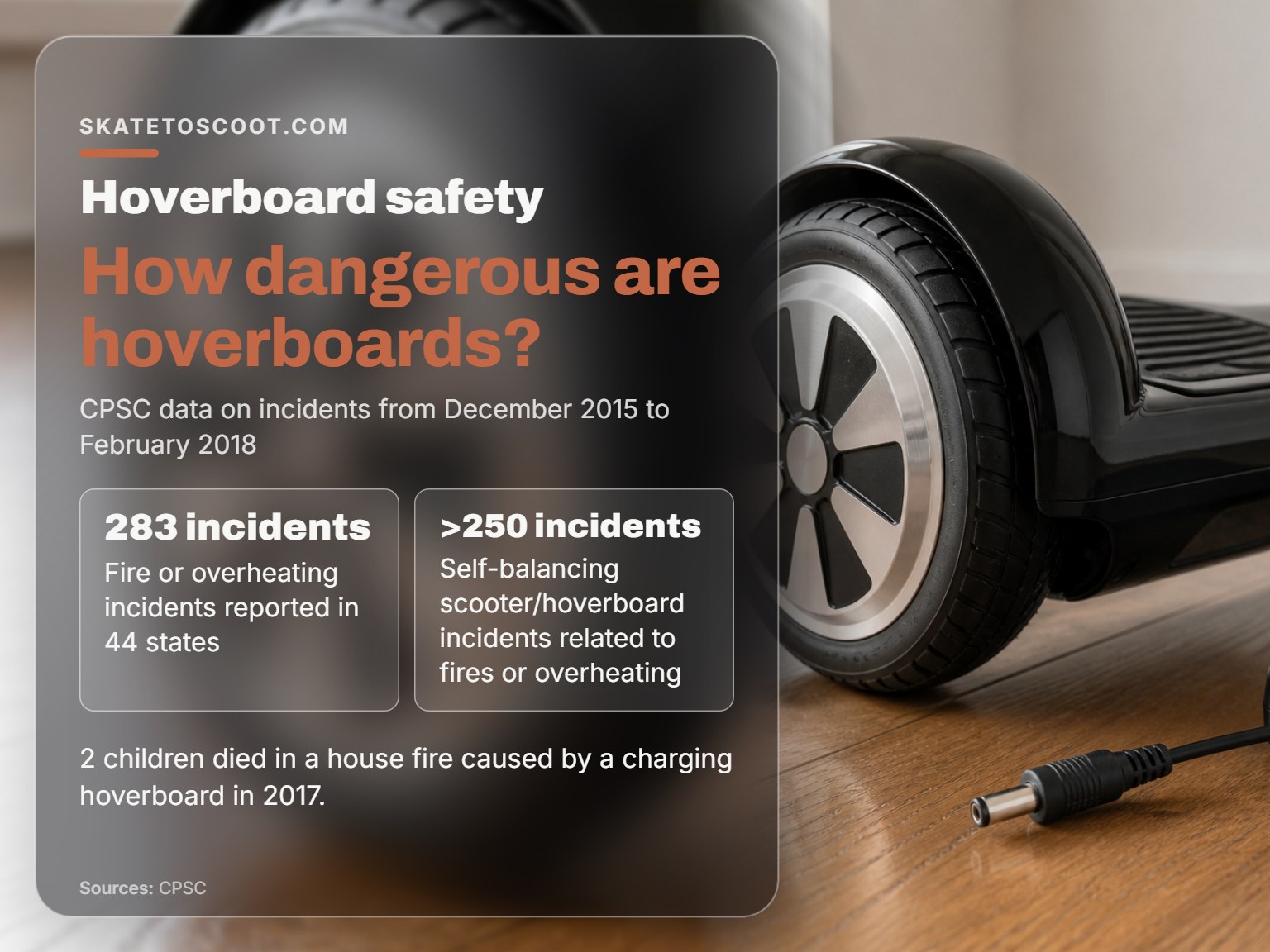
From December 1, 2015, to February 2, 2018, the U.S. Consumer Product Safety Commission (CPSC) received reports of 283 hoverboard fire or overheating incidents across 44 states, resulting in 15 burn injuries, 7 smoke inhalation injuries, and over $9 million in property damage, including six homes and two cars destroyed. An earlier CPSC alert also reported more than 250 incidents resulting in 13 burn injuries, 3 smoke inhalation injuries, and more than $4 million in property damage.
In March 2017, two children died in a house fire in Harrisburg, Pennsylvania, ignited by a charging hoverboard.
The CPSC’s core recommendation is that hoverboards should be compliant with the UL 2272 safety standard; you can explore the broader hoverboard safety discussion. The version of UL 2272 referenced by the CPSC is dated November 21, 2016. The critical point for case buyers is this: even UL 2272 compliance cannot guarantee a hoverboard will not overheat or catch fire. The standard reduces risk; it doesn’t eliminate it.
When you add a case, you are adding a component that was not part of the certification testing. You are, in effect, running an experiment. For a board with a clean bill of health (UL 2272 certified, never recalled), the experiment is probably low-risk if you follow the rules. For any other board, you are stacking unknowns.
When a Case Is Actually Worth It (The Short List)
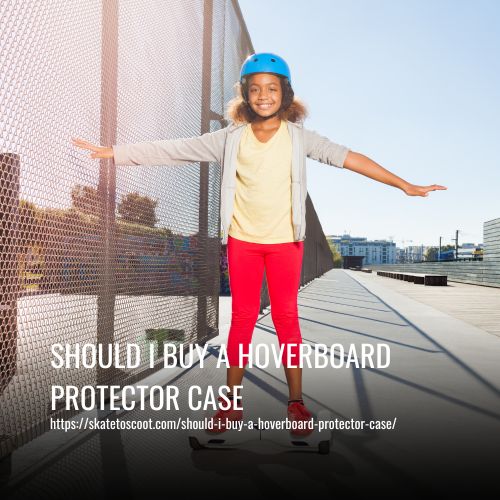
I’m not against cases; I’m against uninformed should i buy a hoverboard protector case decisions. Here are the specific situations where a silicone case justifies its cost and the minor thermal trade-off.
- You own a modern, certified board and treat it like a showpiece. If you’ve invested in a high-end model and its aesthetics matter to you, a case preserves resale value. The key is ritual: always remove the case before charging and after a long ride to let the board breathe.
- Your riding environment is brutal on finishes. Think gravel driveways, asphalt playgrounds, or anywhere the board is likely to get scraped along walls. The case takes the abrasion.
- You need to transport it frequently among other gear. Throwing a board in a trunk with skateboards or other equipment will chip it. A case is cheaper than a new shell.
If you view the board as a utilitarian tool that gets beat up, save the money. A few scratches won’t affect its ride.
Compatibility and Installation: Getting the Right Fit
If you’ve decided a case is for you, getting the right one is a five-minute process that prevents frustration.
Measure Your Wheel Diameter: This is the only number that matters. Cases are sold by wheel size, not board model. Use a ruler or tape measure across the center of one wheel. Cases are sold by wheel size; measure your wheel diameter to find the correct fit. A case that’s too small won’t fit; one that’s too large will be loose and could interfere with the wheel well.
Installation is straightforward:
- Ensure the board is cool and powered off.
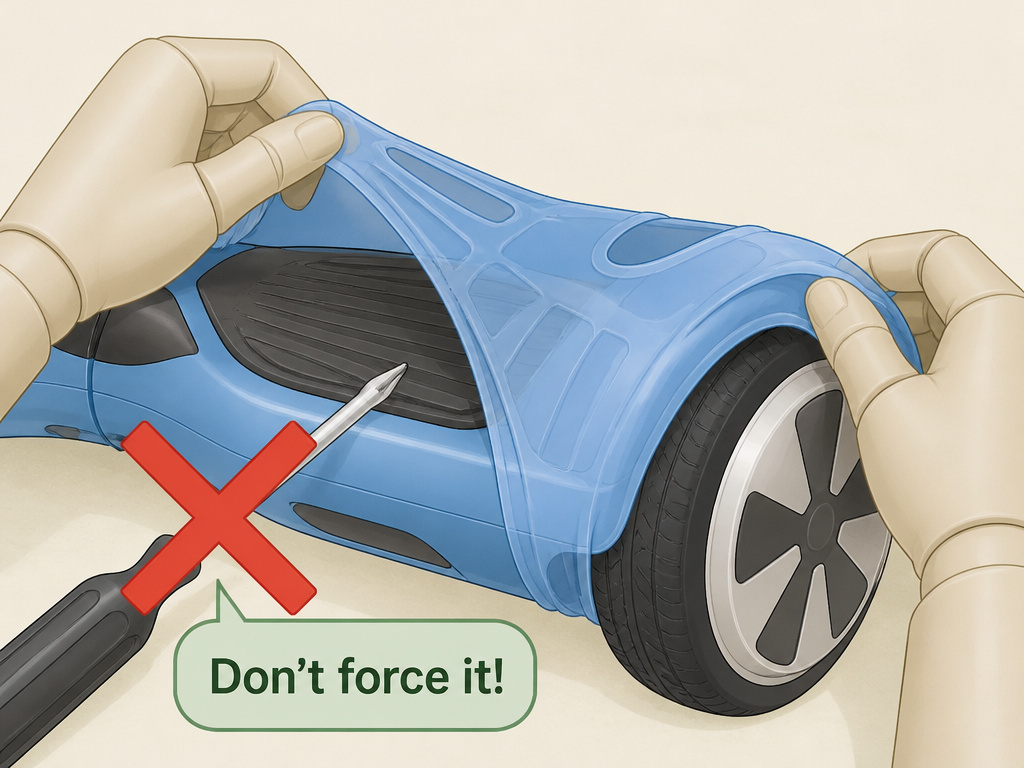
- Start by stretching the case opening over one wheel, working it around the hub.
- Gradually stretch and smooth the silicone over the board’s deck, aligning any pre-cut holes for lights or buttons.
- Repeat for the second wheel. The material should be snug, not straining.
Common mistake: Forcing a case that’s clearly too small. Stretching silicone to its limit weakens it and creates constant tension that can warp the case or put pressure on the board’s shell. If it doesn’t fit with moderate hand pressure, it’s the wrong size.
Don’t use a metal screwdriver, it can tear the silicone.
Cleaning and Care of the Protector Itself
A dirty case is a gritty case, and that grit can scratch the very surface it’s meant to protect; proper cleaning your hoverboard is essential. Maintenance is simple but essential.
For Silicone Cases:
- Remove the case from the hoverboard.
- Wash with mild soap and lukewarm water using a soft cloth or your hands.
- Rinse thoroughly and air-dry completely before putting it back on the board. Any trapped moisture can promote corrosion on metal contacts.
For Decal Skins:
- Wipe gently with a damp cloth. Avoid abrasive cleaners or excessive rubbing, which can fade or peel the graphics.
For Carry Bags:
- Check the tag for material instructions. Most polyester bags can be spot-cleaned with a damp cloth and mild detergent.
A clean protector lasts longer and does its job better. The moment you see grit embedded in the silicone, it’s time for a wash.
The One Rule for Charging With (or Without) a Case
This overrides everything else. The CPSC and many OEM manuals agree on core safety points, and your case decision must work within these guardrails. For example, the CPSC advises not to charge unattended, while the Denver HBO-6620 manual explicitly says to disconnect the charger after 4 hours.
- Use only the charger supplied with the hoverboard. No third-party chargers, ever.
- Only charge when you are present and awake. Do not charge unattended, and never charge overnight.
- Charge in an open, dry area away from anything flammable. This means not on a bed, couch, or pile of laundry.
- Disconnect the charger once the battery is full. The Denver HBO-6620 manual explicitly says to “disconnect the charger from the hoverboard and the power supply after 4 hours.”
Given these rules, the safest protocol is crystal clear: Always remove the case before charging. It takes only a moment. It eliminates the insulation variable during the most risk-prone activity. It’s the single most important habit you can adopt if you choose to use a case.
Are there specific hoverboard protector brands you recommend?
We don’t recommend specific brands. Instead, focus on the critical safety standard for the hoverboard itself: UL 2272. The Consumer Product Safety Commission (CPSC) states you should never buy from a kiosk, secondhand seller, or online retailer without proof of this compliance. They warn that sellers may claim to have UL-compliant components, but that does not mean the full unit is safe. Check for recalls on the CPSC website. If your board is recalled, like certain iLive or Powerboard models, stop using it immediately and seek a certified replacement, not just a case.
Frequently Asked Questions
Which hoverboards are catching fire?
The CPSC has records of incidents involving many brands, but specific recalls provide names. The iLive models GSB56BC, GSB56RC, GSB65BUC, GSB56WC, and GSB56GDC were recalled in November 2017 (about 8,700 units) for battery packs overheating and smoking. The Powerboard model #PB was recalled in 2016 after 27 reports of overheating. Incidents are overwhelmingly linked to boards that do not comply with the UL 2272 safety standard.
What is the lifespan of a hoverboard?
With proper care, a quality, certified hoverboard’s lifespan depends on factors like battery cycle count and usage. The lithium-ion battery is the limiting factor, as its capacity degrades over time and with use. Lifespan plummets with abuse: frequent crashes, exposure to water, improper charging, or storage in extreme temperatures. A case protects the exterior from scratches but does not affect the battery’s internal performance.
Is 7 mph fast for a hoverboard?
Yes, for most riders and environments. A pediatric study notes hoverboards can reach 5-15 mph. Seven mph is at the lower end of that range but is still faster than a brisk walk. For children, especially in confined spaces, 7 mph is sufficient speed for significant injury in a fall. Speed should always be matched to the rider’s skill and the environment’s openness.
Does a case affect the hoverboard’s warranty?
It shouldn’t, if the case is installed correctly and doesn’t cause damage. However, if a manufacturer can argue that a third-party case contributed to an overheating failure, they may deny a warranty claim. Your best protection is a board that is UL 2272 certified from the start.
Before You Go
Be realistic about the goal. You want your hoverboard to last and look good. A silicone case can help with the second part, but it introduces a variable the safety engineers didn’t account for.
The math is straightforward. If your board is UL 2272 certified, you are diligent about never charging with the case on, and cosmetic preservation is a priority, then a silicone case may be an option. Measure your wheels, order the size, and make case-off charging as routine as putting on a helmet.
If your board is older, uncertified, or a budget model, skip the case. The money for a case might be better spent on a commitment to the CPSC’s safety rules. The most protective case in the world is useless against a battery fire. Your fundamentals, safe charging, regular maintenance, and checking for recalls, are the foundation everything else is built on (see our hoverboard maintenance tips for more). Trust the process, not just the accessory.
