What Are Longboards Used for: 8 Key Disciplines Explained
This post contains affiliate links. As an Amazon Associate, we earn from qualifying purchases.
Sources disagree on the minimum length: Warehouse Skateboards defines a longboard as longer than 33 inches, while the FHWA defines it as over 89 cm (35 inches). Their primary uses are transportation (commuting/cruising), high-speed disciplines (downhill/freeride), and technical riding (carving/freestyle/dancing). They are easier to learn on than traditional skateboards but specialize in speed and flow over tricks.
The extra length and wheel size aren’t just for show. They change how the board interacts with the pavement and how your body interacts with the board. Where a skateboard is built for pop and snap, a longboard is built for roll and control.
What follows: a breakdown of the eight core things people actually do on longboards, the gear that makes each one possible, and the one safety rule that applies to all of them.
Key Takeaways
- Longboards excel at covering ground smoothly, making them ideal for commuting or casual cruising.
- Their stability at speed makes them the default choice for downhill racing and freeriding, where riders regularly exceed 30 mph.
- While not trick-focused, disciplines like longboard dancing and freestyle use the deck’s real estate for fluid, technical footwork.
- A properly fitted helmet reduces brain injury risk by 80%, and a bike helmet with CPSC, CSA, ASTM, or Snell certification works for longboarding.
- Your intended use dictates your gear: larger, softer wheels (over 60mm) for cruising, stiffer decks and precision trucks for downhill.
The 8 Primary Longboard Disciplines (And What Each Feels Like)
People don’t just “longboard,” which is why the what are longboards used for question matters; they cruise, commute, race, slide, dance, and push for miles. The board’s design, its length, wheelbase, truck type, and wheel durometer, gets tailored to each of these jobs. Here’s what that looks like on the pavement.
1. Cruising & Commuting (The Daily Driver)
This is the most common use. It’s the low-effort, point-A-to-point-B roll. The FHWA report on longboard user characteristics explicitly calls out “long boards over 89 cm (35 inches)” as being used for “cruising.” The feel is smooth and forgiving. You’re not fighting the board; you’re gliding with it.
A commuting setup uses larger, softer wheels that absorb sidewalk cracks and road debris. The deck is often flexy for comfort, and the overall stance is low and stable for efficient pushing.
This is where the transportation argument lives. A Warehouse Skateboards guide states, “Many people ride longboards for transportation, their maneuverability and speed make them ideal for commuting to class.” For a deep dive on this specific use, our article on longboards for transportation breaks down the pros and cons.
Common mistake: Using a stiff downhill deck for a 3-mile commute. Your feet will feel every vibration by mile two.
2. Downhill (The Adrenaline Discipline)
Downhill longboarding is about managing speed. Riders tuck into an aerodynamic position and navigate roads at gradients that would be terrifying on a shortboard. Speeds here aren’t casual, they can be very high.
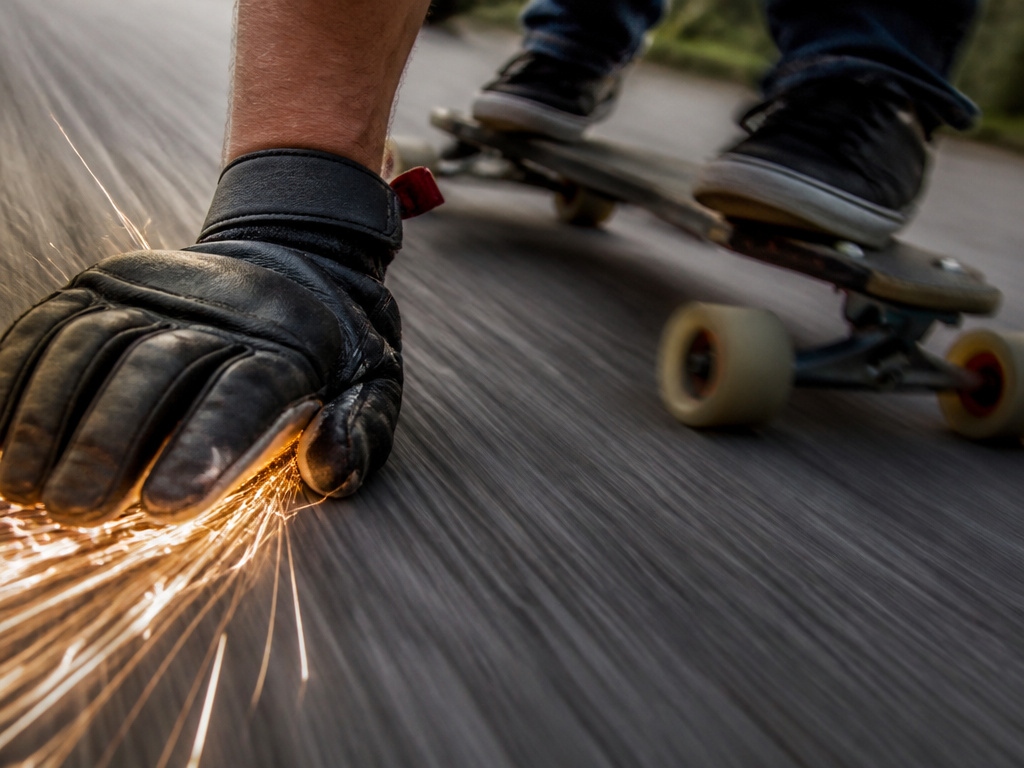
The gear shifts dramatically. Decks are stiff, often with dropped platforms to lower your center of gravity. Trucks are precision-machined for minimal slop, and wheels are hard (around 80a-84a) for predictable sliding. It’s a world of leather suits, full-face helmets, and slide gloves. The sound you’re listening for is the high-pitched scream of urethane wheels sliding across asphalt during a speed-check slide.
3. Carving (Surfing the Pavement)
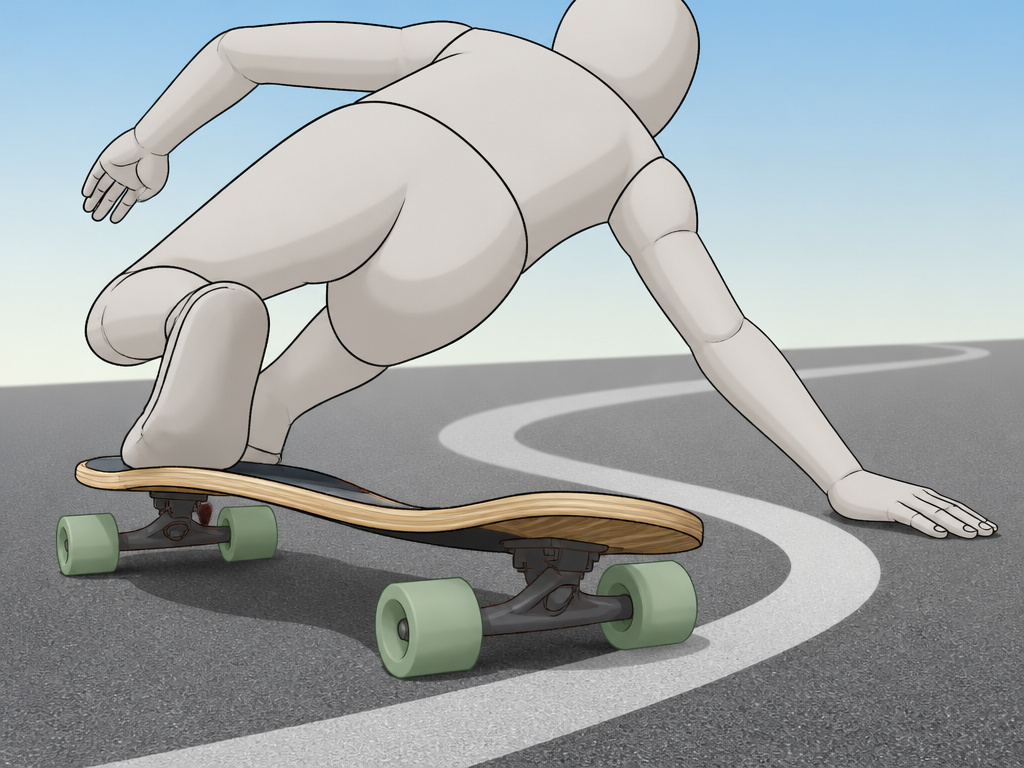
Carving is about rhythm and flow. It mimics the turns of surfing or snowboarding, using the board’s flexibility and truck looseness to generate S-shaped paths down a gentle hill or even on flat ground. It’s less about outright speed and more about the sensation of pumping through turns.
A dedicated carving board often has a pronounced kicktail, a moderate flex, and very responsive trucks. The feel is fluid, you lean, the board arcs, and you use that momentum to initiate the next turn. It’s a full-body workout disguised as play. For a focused look at this technique, explore our guide to the art of longboard carving.
4. Freeriding (The Controlled Slide)
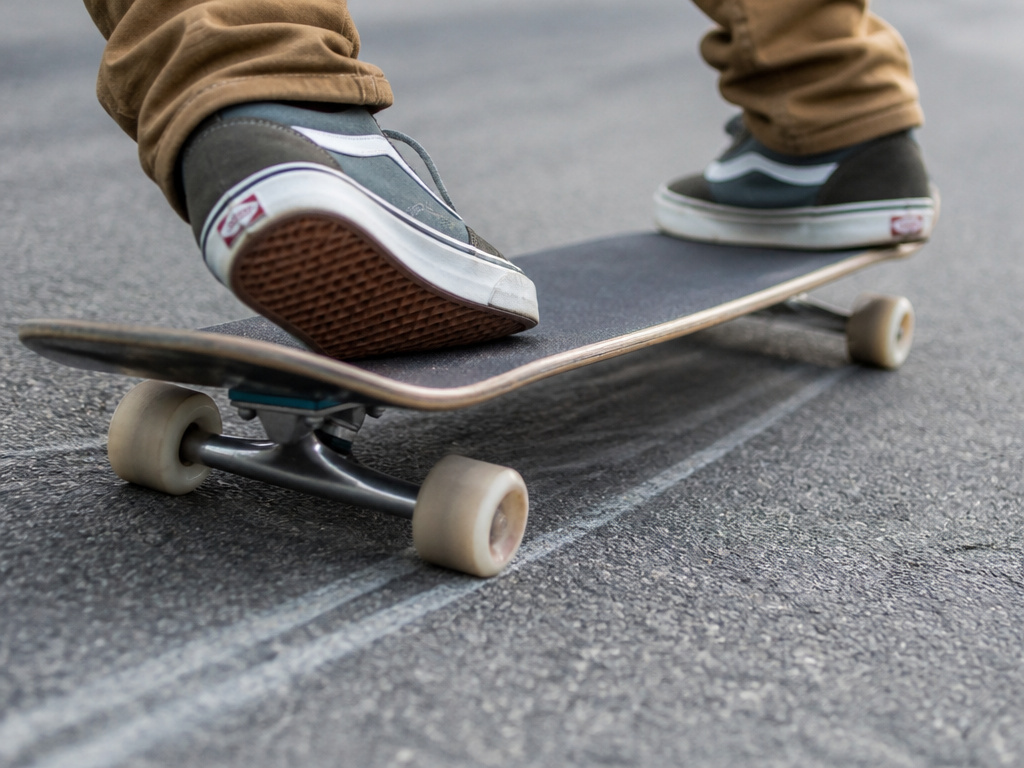
Freeriding sits between downhill and carving. It involves executing controlled slides, spinning the board 180 or 360 degrees, to control speed or just for style. It’s how downhill riders slow down without traditional brakes, and it’s a discipline unto itself.
The setup is a hybrid. You need a deck that’s stiff enough for stability but with a functional kicktail for initiating slides. Wheels are specially formulated with a rounded “lip” (the edge of the wheel) that releases predictably when you break traction. Mastering a heelside 180 slide means learning to trust your edge and commit your weight. The sport of longboard freeriding has its own culture and progression.
5. Freestyle & Dancing (The Deck is Your Stage)
This is where longboarding meets technical footwork. Freestyle involves tricks like shuvits, tiger claws, and boardwalks. Dancing uses the long deck’s length for cross-steps, pirouettes, and fluid sequences that look like a dance routine.
The board is your platform. Decks are typically longer and perfectly flat for predictable foot placement. Grip tape patterns might be artistic, and the trucks are set up to be predictably loose. The feel is creative and expressive, far removed from the high-speed tension of downhill. It answers the question, can you do tricks on a longboard? Absolutely, but they’re a different vocabulary.
6. Long Distance Pumping/Pushing (LDP)
LDP is the endurance sport of longboarding. The goal is to cover 20, 50, or even 100+ miles in a session using a combination of leg pushes and a technique called “pumping”, using your body weight to generate momentum without taking your feet off the board.
Efficiency is everything. Boards designed for long distance pumping are designed with ultra-low platforms and large, fast-rolling wheels to maintain speed with minimal effort. Trucks are specialized for maximum energy transfer. The sensation is like a perpetual motion machine; a well-executed pump feels like the board is helping you forward.
7. Electric Longboarding (Commuting Without the Push)
This is a distinct category. An electric longboard adds a battery pack and motor, turning the board into a personal electric vehicle. A 2020 MDPI study on converting a conventional longboard to electric for urban commuting found a range of “almost 50 km on a flat route” with an energy consumption of “about 10 Wh/km.”
The use case shifts entirely. It’s for commuters who want to cover distance without sweating, or riders who want to tackle hills without effort. The feel is more like riding a silent, agile scooter. Safety considerations expand to include motor failure, battery management, and higher sustained speeds.
8. Beginner Practice & Surf Training
Finally, the classic use: learning. The longer wheelbase and softer wheels make a longboard vastly more stable for a first-time rider. That stability builds confidence in balancing, turning, and stopping before graduating to a twitchier skateboard. It’s also why surfers use them for “sidewalk surfing” to train their balance and carving muscles on land.
| Discipline | Primary Feel | Key Gear Cue | Best For |
|---|---|---|---|
| Cruising/Commuting | Smooth, effortless roll | Large, soft wheels (70mm+, 78a) | Getting around town, relaxed rides |
| Downhill | High-speed, precision control | Stiff deck, precision trucks, slide gloves | Adrenaline, racing, technical speed management |
| Carving | Flowing, rhythmic turns | Flexible deck, loose, responsive trucks | Surf-like feel, playful hill runs |
| Freeriding | Controlled, sliding maneuvers | Harder wheels (80a-84a), functional kicktail | Stylish speed control, technical sliding |
Longboards vs. Skateboards: The Stability Trade-Off

The core difference, when you compare a what are longboards used for analysis, isn’t about quality. It’s about specialization. A traditional skateboard is a tool for tricks, ollies, kickflips, grinds. Its short length (under 84 cm (33 inches) per the FHWA), steep concave, and small, hard wheels make it poppy and responsive for launching off curbs.
A longboard trades that pop for stability and momentum. The FHWA safety study notes that while skateboard wheels are normally 52-60 mm (2.05-2.36 inches), “larger wheels are often used on long boards.” Those bigger wheels (combined with a longer wheelbase) roll over cracks and pebbles that would stop a street skateboard dead. For a full comparison, check out our breakdown of longboards vs skateboards.
Where this goes sideways: Trying to ollie a 40-inch longboard. The physics don’t work. The board is too heavy and the tail isn’t designed for it. You’ll waste energy and likely just stop the board underneath you.
The choice is simple. If your goal is technical street tricks, get a skateboard. If your goal is travel, speed, flow, or just learning to ride, a longboard is the better tool. Many riders end up owning both.
How to Match a Longboard to Your Goal
You don’t pick a longboard. You pick a use case, and the board follows. This decision tree cuts through the noise.
If you want to commute or cruise: Prioritize comfort and ease. Prioritize a drop-through or drop-deck design (lowers the riding platform), wheels at least 70mm in diameter with a soft durometer (78a-80a), and a mild flex in the deck. A board like a Landyachtz Drop Cat is a classic here.
If you want to go downhill or freeride: Prioritize stability and control. You need a stiff deck, precision trucks (like Paris V3 or Bear Gen 6), and harder, slide-friendly wheels. Start with a complete from a brand like Rayne or Madrid.
If you want to dance or do freestyle: Prioritize deck space and predictability. Seek a long, flat deck (often called a “dancer”), symmetrical shape, and standard kingpin trucks set up to be loose but not wobbly.
If you’re a complete beginner: Ignore the exotic stuff. Get a standard pintail or cruiser complete from a brand like Sector 9 or Arbor. The default setup will be forgiving. Your first upgrade should be better bearings, not a new deck.
For a step-by-step walkthrough of this process, our guide on how to choose a longboard goes deeper.
Safety, Law, and the Reality of the Road
This is the essential layer. Longboarding is a blast, but it happens in a world of concrete and cars.
Gear is Non-Optional: The Active & Safe guidelines are blunt: “A properly fitted helmet can decrease the risk of brain injury by 80%.” For cruising, a standard bike helmet with CPSC certification is fine. For downhill, you need a full-face helmet certified for skateboarding (ASTM F1492). Slide gloves are mandatory for freeriding and downhill, they protect your hands and let you touch the pavement to slow down.
The Legal Gray Zone: Sources openly disagree here. A European standard (DIN EN 13613) states the product is “not approved for use on public roads.” Yet the MDPI study frames the electric longboard explicitly as a vehicle for ‘Everyday Urban Commuting’, and Warehouse Skateboards states many people ride them for transportation, implying use in road-adjacent contexts. Legally, you are often considered a pedestrian. This means you follow pedestrian rules, but you move at cyclist speeds. Check your local bylaws.
Before you start: Your helmet must fit snugly without rocking. Your slide gloves must have puck plates that aren’t worn smooth. Test your foot-brake (dragging your sole on the ground) at walking speed before you need it at riding speed.
Your first investment should be a certified helmet. Your second should be practice in an empty parking lot. Knowing how to fall, tucking and rolling, prevents more injuries than any piece of gear.
What longboard shape should I get?
The shape of a longboard deck directly dictates what it’s good for. A classic pintail shape, with its narrow tail and nose, is built for smooth, stable cruising and carving, offering a forgiving ride for getting around. In contrast, a drop-through deck, where the trucks mount through holes in the board, lowers your stance for better stability at higher speeds, making it a common choice for commuting or downhill riding. The wider platform and varied shapes of longboards give riders a more stable stance than traditional skateboards, which is why specific designs excel at specific tasks, from transportation to more technical riding.
Frequently Asked Questions
What is the point of longboards?
The point is efficient, enjoyable movement. They are tools for travel (commuting), sport (downhill), and artistic expression (dancing). Their design prioritizes smooth rolling, stability, and control over distance, which a traditional skateboard cannot match.
Is it easier to skate or longboard?
For a pure beginner, longboarding is easier. The longer wheelbase provides inherent stability, and the larger, softer wheels make balancing and rolling over imperfections simpler. Skateboarding has a steeper initial learning curve focused on managing a twitchier board.
How much do longboards usually cost?
You can find basic completes from reputable brands at various price points. Performance setups for specific disciplines like downhill or LDP can be more expensive, reflecting precision trucks and specialized deck materials. The long-term value is in the components, good trucks and wheels can outlast multiple decks.
Is it difficult to ride a longboard?
The basics, pushing, turning, stopping, are not difficult and can be learned in an afternoon on a stable board. Progressing to specific disciplines like high-speed downhill or technical freestyle is very difficult and requires dedicated practice, coaching, and appropriate safety gear. The learning curve is long but rewarding.
Before You Go
The real answer to “what are longboards used for” isn’t a list. It’s a feeling. It’s the hum of big wheels on fresh pavement, the focus of a downhill tuck, the creativity of a new dance line. They are tools that turn concrete into a playground, a commute, or a race track.
Your first move shouldn’t be to buy the most expensive board. It should be to define what you want out of the experience. Want to get to class? Start with a cruiser. Want to fly down hills? Save for a downhill setup and the full-face helmet that goes with it. The board is just the starting point.
One rule most guides skip: if you only remember one thing, let it be the 80% reduction in brain injury risk from a certified helmet. Everything else, the speed, the tricks, the commute, depends on you staying safe enough to enjoy it tomorrow. Start there, and the rest of the journey unfolds from that foundation. For more on building that foundation, our complete guide to longboarding is the next logical step.
