What Is a Kick Scooter: How to Choose the Right One
This post contains affiliate links. As an Amazon Associate, we earn from qualifying purchases.
A kick scooter is defined by some sources, like Wikipedia, as a human-powered street vehicle with a deck, a handlebar for steering, and two inline wheels, propelled by the rider pushing off the ground with their foot. However, the FHWA user group ‘Kick Scooters’ includes foot-powered kick scooters and similar standup devices with attached motors. Common models use materials like aluminum and steel, with small polyurethane wheels around 100 mm (4 inches) in diameter.
That definition covers the basics, but the real story is in the details that change how you use one. The wheel size, the braking system, and even the legal definition aren’t just specs on a page, they dictate where you can ride, how fast you’ll go, and what happens when you need to stop suddenly. This is why understanding what is a kick scooter matters.
What follows is a breakdown of the kick scooter’s anatomy, the real-world performance you can expect, the critical safety standards and recall history every owner should know, and how to match the right type to your needs, whether you’re commuting a few blocks or teaching a kid to ride.
Key Takeaways
- Kick scooters are human-powered vehicles, distinct from throttle-controlled electric scooters, with common wheels around 100 mm (4 inches) in diameter.
- Three different braking systems exist: an articulated fender you step on, a bicycle-style hand brake, or no brake at all, knowing which you have is critical for safe stopping distances.
- Real-world speeds for a typical adult rider max out around 5–10 mph, influenced by rider strength, terrain, and wheel size.
- Safety standards like ASTM F2641-08 and UL 2272 exist, but a major recall of the Segway Ninebot P100S shows that even high-end models can have structural failures.
- For short trips under a mile on smooth pavement, a basic kick scooter is often more practical than an electric model, offering virtually zero operational cost and a long lifespan with minimal maintenance.
The Core Components of a Kick Scooter
We’ll examine this step by step. The answer to what is a kick scooter isn’t a single object; it’s a system of parts working together. Miss one, and the whole thing falls apart, sometimes literally.
A standard nonmotorized kick scooter consists of a narrow deck approximately 100 mm (4 inches) wide, a steering handlebar, and two inline polyurethane wheels. The deck supports one foot while the other pushes, and the handlebar provides steering control and balance. Braking systems vary: the FHWA identifies articulated fender brakes, bicycle-style hand brakes, and some models with no brakes.
The deck is your platform. The FHWA notes that common nonmotorized kick scooter platform width is about 100 mm (4 inches), just enough for one foot. You stand on it with your dominant foot while you kick with the other. The Federal Highway Administration notes that wider decks, common on motorized versions, allow for both feet side-by-side, but that’s a different beast.
The wheels are where performance lives. The FHWA states the most common nonmotorized scooters have approximately 100-mm (4-inch) diameter polyurethane wheels, while other sources like the iSinwheel blog cite a typical range of 100-200mm. Larger models exist with wheels from 150 mm to 300 mm (6 to 12 inches). Bigger wheels roll over cracks and debris easier, but they add weight and reduce the scooter’s portability. Smaller wheels are lighter and more maneuverable but transmit every pebble directly to your ankles.
The handlebar is your control center. It’s not just for steering; it’s your primary point of balance. Ensure the grip is secure and the connection to the front fork is stable and wobble-free. I’ve seen more than a few beginners fight a wobbly front end because a bolt worked loose after the first week of rides.
Speed, Safety, and Where You Can Ride
How fast can you actually go? And where are you allowed to do it? These aren’t academic questions. They’re the difference between a fun commute and a traffic citation, or worse, a trip to the emergency room.
The iSinwheel blog states kick scooters typically reach 5-10 mph depending on rider strength and terrain. Compare that to the higher speeds of a typical consumer electric scooter, and the difference in commute time and effort is stark.
The terrain matters, too. A smooth bike path lets you coast; a bumpy sidewalk saps your momentum with every crack.
Now, about stopping. The FHWA identifies three distinct braking setups for nonmotorized scooters, and they’re not created equal.
| Brake Type | How It Works | Best For / Risk If Missing |
|---|---|---|
| Articulated Fender | Step down on the rear-wheel cover to create friction. | Kids’ scooters, low speed. Ineffective when wet, can wear out quickly. |
| Bicycle-Style Hand Brake | Lever on the handlebar clamps a brake pad onto the wheel. | Larger scooters, adult commuters. Provides consistent stopping power; requires maintenance. |
| No Brake | Rider must drag a foot or skid a shoe on the ground/wheel. | Very inexpensive toys. Extremely dangerous on any incline or at speed. |
The FHWA notes that a few inexpensive models have no brakes; users step on the rear wheel or skid feet.
Where you can ride is a patchwork of local laws. Many cities treat kick scooters like bicycles, allowing them in bike lanes and on streets, while prohibiting them on sidewalks. Others have no clear rules. Your first stop before commuting should be your local city government’s transportation website. Riding a non-motorized vehicle on a sidewalk is often legal but requires you to yield to pedestrians, a rule many riders forget until there’s a collision.
The injury data is sobering. The U.S. Consumer Product Safety Commission reports that consumer use of self-balancing scooters led to more than 70,000 emergency room visits from 2015 through 2018. About 90% of those injuries were from falls, with 13% being head injuries. The lesson isn’t to avoid scooters; it’s to wear a helmet. This is crucial.
Standards, Recalls, and What “Safe” Actually Means

Safety isn’t just about how you ride. It’s baked into the product before you ever step on it. Voluntary standards and government recalls are the backstop, and they tell a more honest story than any marketing copy.
Several key standards apply. The CPSC staff report cites ASTM F2641-08 (safety specification for recreational powered scooters) and UL 2272 for the electrical systems of personal e-mobility devices. For a basic, nonmotorized kick scooter, the mechanical build quality is what keeps you safe. The CPSC cites voluntary safety standards including ASTM F2641-08.
But standards aren’t foolproof, and high price doesn’t guarantee safety. Look at the November 2024 recall of the Segway Ninebot P100S KickScooter. This was a premium model selling for about $2,000. The CPSC issued the recall because the front fork could break, posing a fall hazard. The firm received 31 reports of broken front forks, including 6 injuries. This is a 72.5-pound scooter; a fork failure at any speed is hazardous.
That recall notice is a masterclass in real-world risk. It specifies the exact model (P100S), manufacture date (2023), and even the serial number format (containing date codes 2308 or greater). Consumers were told to immediately stop using the scooter and contact Segway for a free repair.
Common mistake: Assuming a kick scooter needs no maintenance because it has no motor.
The CPSC has clear jurisdiction here. According to their analysis, if a scooter lacks a seat, is operated standing up, and is incapable of a top speed of 20 mph or greater, the National Highway Traffic Safety Administration does not consider it a “motor vehicle.” That places it squarely under the CPSC’s consumer product safety umbrella. This distinction is why your kick scooter doesn’t need a license plate, but it also means you’re not covered by the same regulatory framework as a motorcycle.
Kick Scooter vs. Electric Scooter: The Practical Choice
This is where most guides get fuzzy. They’ll list abstract pros and cons. Consider the actual trade-offs you’ll feel on your first commute.
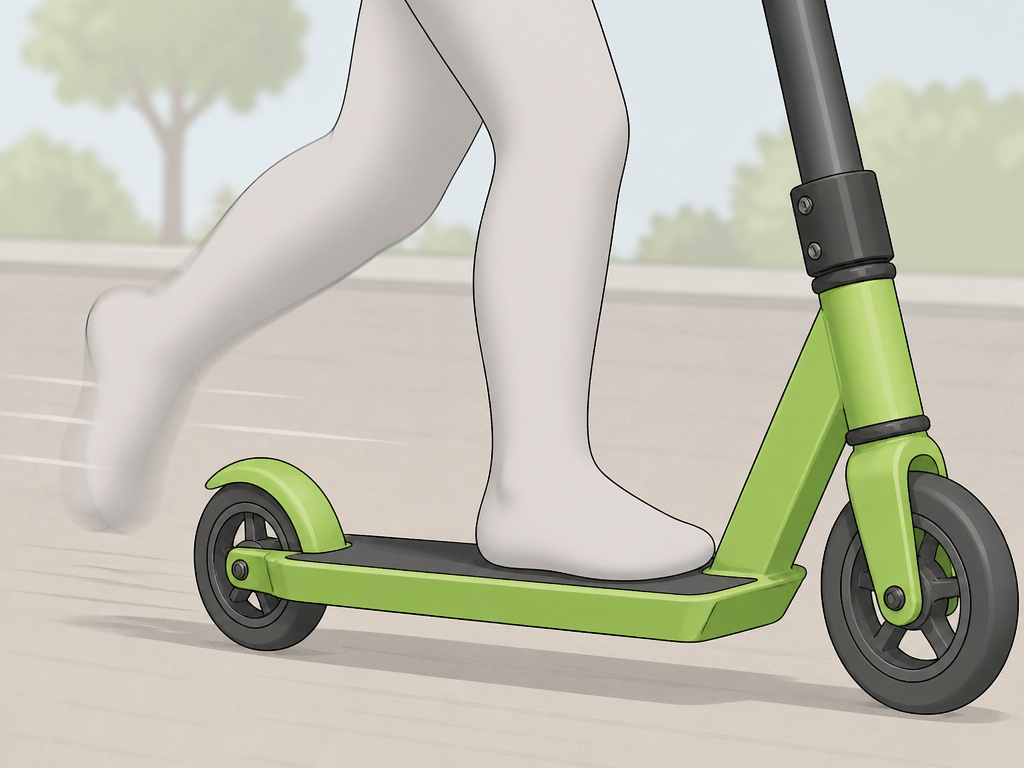
The core difference is power source. The answer to what is a kick scooter is a vehicle that requires your leg muscle. An electric scooter uses a battery and motor. This single difference cascades into everything else: cost, maintenance, legality, and the experience itself.
| Consideration | Kick Scooter | Electric Scooter |
|---|---|---|
| Propulsion | Human-powered kicking. | Electric motor via throttle. |
| Typical Speed | 5–10 mph. | 15–30 mph. |
| Upfront Cost | $30–$200. | $200–$1,500+. |
| Operational Cost | Virtually zero. | Electricity ($0.05/charge) + battery replacement ($150–$300 every 2-3 years). |
| Maintenance | Bolts, wheels, bearings. Simple. | Battery, motor, controller, brakes. Complex. |
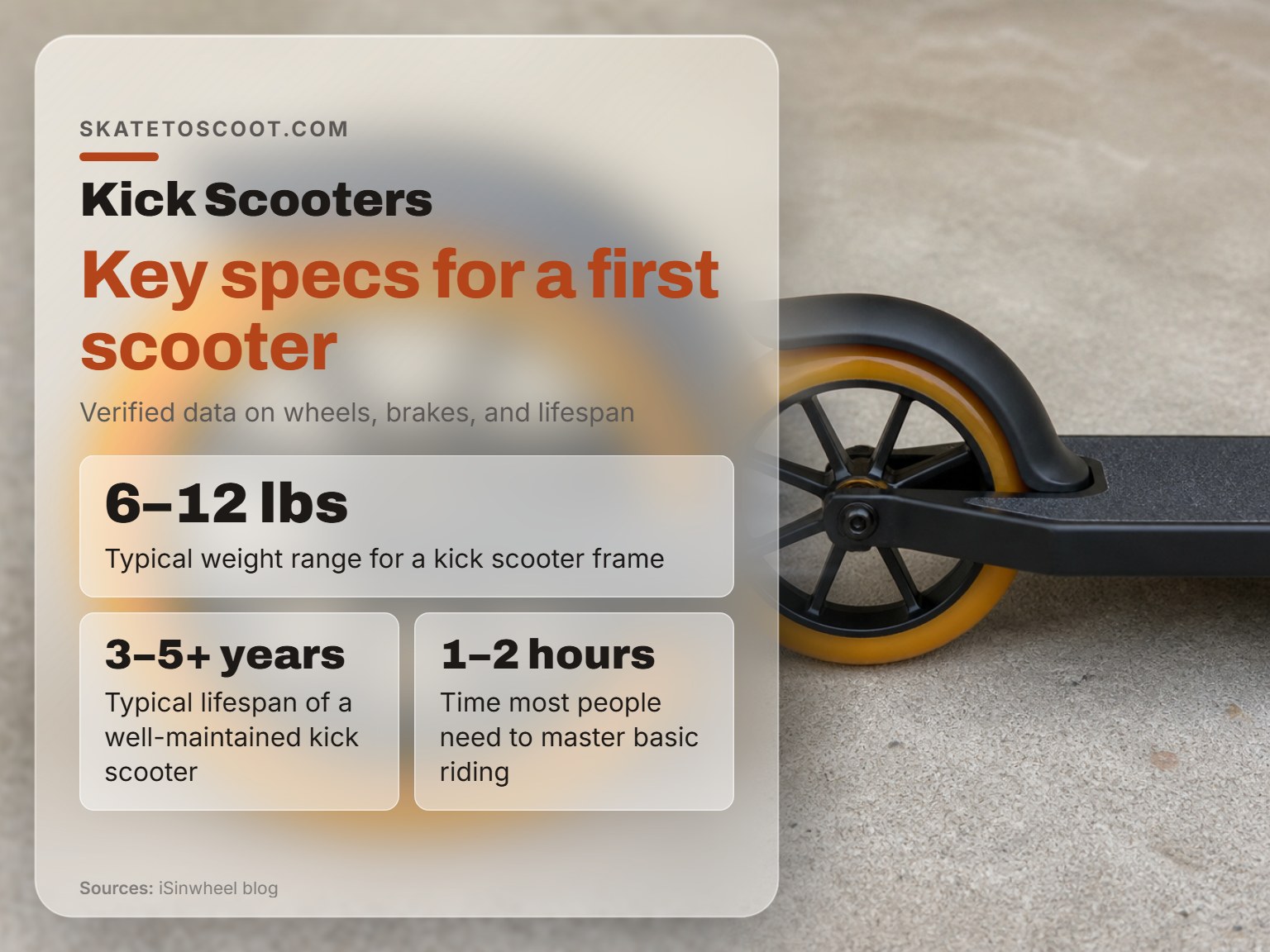
| Learning Curve | 1–2 hours for basics. | Additional time for throttle/brake control at higher speeds. |
| Best Use Case | Short trips (<1 mile), exercise, leisure. | Longer commutes, hillier terrain, no-sweat arrival. |
For a trip under a mile on relatively flat ground, a kick scooter is often the smarter choice. You don’t have to charge it, it’s lighter to carry if you need to, and the upfront cost is minimal. The iSinwheel blog notes that well-maintained kick scooters often last 5–10 years with minimal replacement parts, while electric scooter batteries need replacement every 2–3 years.
However, if your commute is over a mile, involves hills, or you simply don’t want to arrive at work sweaty, the electric scooter becomes compelling. The motor does the work, and speeds of 15–20 mph cut travel time significantly. Just be prepared for the higher upfront investment and the learning curve of managing higher speed and more complex brakes.
How to Choose the Right Kick Scooter for You
Your first scooter shouldn’t be the most expensive one. It should be the one that matches your actual use case. I’ve seen a hundred students buy pro-level gear for a hobby they quit in a month.
Start with the rider. Are you an adult commuting or a parent buying for a child? For adults, look for models with larger wheels (150mm+) and a hand brake. The added stability and reliable stopping are worth the slight extra weight. For younger kids, smaller, lighter scooters with a low deck and a simple fender brake are perfect for building confidence in a driveway or park.
Wheel size is your first performance filter. Need to fold it and stash it under a bus seat? Stick with common 100 mm (4-inch) wheels. Planning to use it for longer rides on paved trails? Jump to the 200 mm to 300 mm (8- to 12-inch) range. The larger wheels roll over obstacles smoothly, turning a jerky ride into a glide.
Material matters for durability. Most frames are aluminum or steel. Aluminum is lighter and rust-resistant but can be more brittle at weld points. Steel is heavier and can rust if scratched, but it’s often more forgiving to abuse. For a first scooter that might take a few knocks, a steel frame isn’t a bad choice.
Don’t forget the brakes. Please. If you’re buying for any use beyond a toddler’s play, insist on a hand brake. The articulated fender brake works, but it becomes slick and ineffective the moment the wheel gets wet from a puddle or morning dew. A hand brake gives you control regardless of conditions.
Finally, consider portability. Does it fold? A folding mechanism is fantastic for multi-modal commutes (scooter to bus, for example), but it’s also another point of potential failure. Check that the latch feels solid and locks with a positive click, not a vague mush. A loose folding joint is a recipe for a sudden, dangerous collapse.
What are the different types of kick scooters?
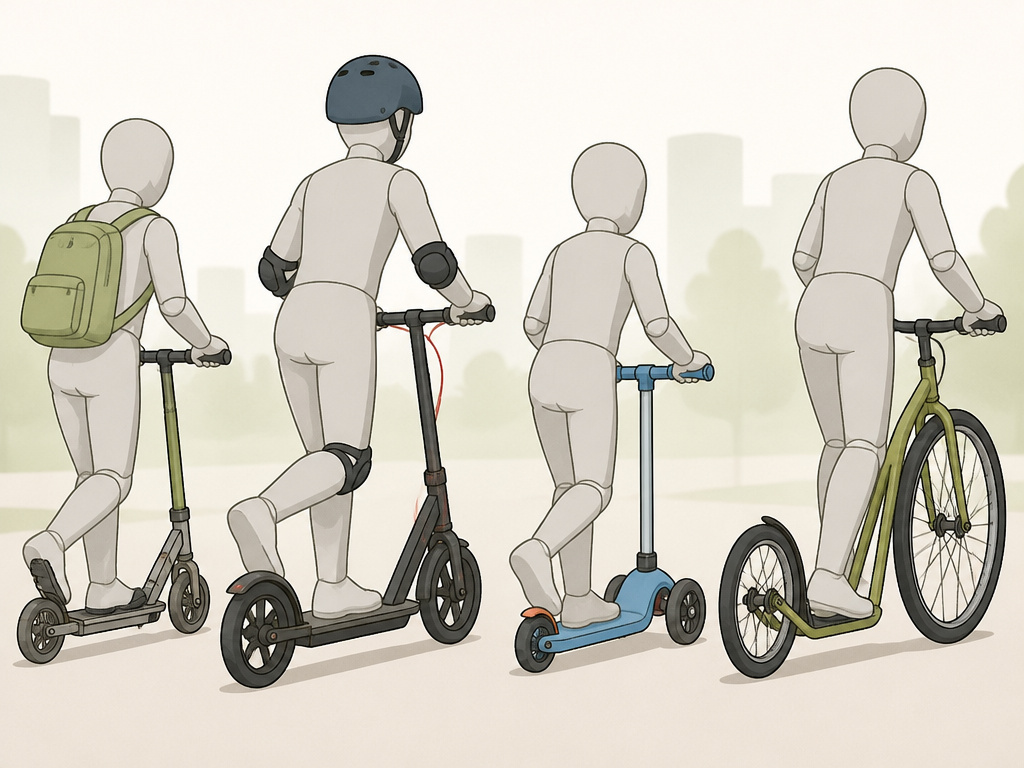
Kick scooters come in several main styles to suit different riders. The most common is the folding scooter, designed for portability and easy storage. Larger, more robust ‘pro’ models are built for performance and durability, often featuring bigger wheels and hand brakes. For younger riders or those seeking extra stability, three-wheeled scooters with two wheels at the front or back are an option. A ‘kickbike’ is a distinct type with a much larger front wheel, resembling a bicycle without pedals, designed for a different riding posture and longer distances. Your choice depends on whether you prioritize convenience, stability, or a more sporty ride.
Frequently Asked Questions
What is the difference between a kick scooter and an electric scooter?
Kick scooter is human-powered, you push off the ground to move. An electric scooter has a battery and motor; you press a throttle to go. This fundamental difference affects speed, cost, maintenance, and where you can legally ride. Many local laws treat slow, human-powered kick scooters more like bicycles, while faster electric models often face stricter rules.
Is a kick scooter easier than walking?
For short distances on flat, smooth surfaces, a kick scooter can be faster and require less effort than walking. You coast between kicks. However, on crowded sidewalks, uphill, or over rough terrain, walking is often easier and safer. The advantage disappears if you have to stop and start frequently or navigate tight spaces.
How much does a kick scooter cost?
Prices vary wildly by quality and features. The iSinwheel blog states kick scooters range from $30-$200, while high-performance or specialty models like the recalled Segway Ninebot P100S sold for about $2,000. The key is to match the price to the use, don’t buy a $200 scooter for occasional park use.
How fast can a kick scooter go?
For a typical adult rider, a realistic sustained speed is 5–10 mph. You can sprint faster, but maintaining high speed requires constant kicking effort. Factors like rider strength, scooter wheel size (larger wheels roll faster), and terrain (hills, smoothness) all influence your top speed. It’s a vehicle for short, quick trips, not for keeping pace with city traffic.
The Bottom Line
A kick scooter is a simple, elegant tool for short-distance mobility. It’s not a substitute for a car or an e-bike, and it won’t turn you into a speed demon. Its value is in its simplicity: no gas, no charging, minimal maintenance, and a bit of built-in exercise.
Before you buy one, answer two questions honestly: How far do I need to go? And what’s the terrain like? If your answer is “under a mile” and “mostly smooth pavement,” a basic kick scooter with a hand brake is probably all you need. You can explore more advanced options once you know you’ll use it, such as by reviewing lists of the best kick scooters for adults.
One rule most guides skip: if you’re using it for commuting, practice your emergency stop in a safe, empty parking lot before hitting the streets. The difference between dragging a foot and smoothly applying a hand brake is the difference between a controlled stop and a fall. Your first ride shouldn’t be the first time you test the brakes.
