What Scooter Does Lime Use: Segway and Okai Models
This post contains affiliate links. As an Amazon Associate, we earn from qualifying purchases.
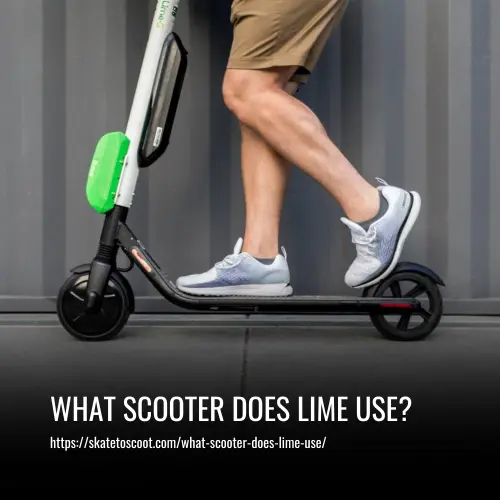
Lime uses custom-designed electric scooters built for its sharing fleet, primarily the Lime Gen 4 E-Scooter and the Lime-S 4.0. These are proprietary models manufactured by partners like Segway and Okai, featuring swappable batteries, drum brakes, and speed caps of 20-25 km/h depending on the region. You cannot buy them new.
The difference between a 20 km/h and a 25 km/h speed cap isn’t academic, it’s the line between a city permit and a parking ticket. That’s the kind of spec that gets buried in municipal paperwork, not marketing brochures.
What follows is a breakdown of every scooter Lime has put on the street: the manufacturers behind them, the safety recalls that shaped the fleet, and how to spot which model you’re about to ride, answering the core question of what scooter does lime use. By the end, you’ll know exactly what scooter you’re renting.
Key Takeaways
- Lime’s current flagship is the Lime Gen 4 E-Scooter, a 500W, 30.5kg model with a top speed of 20 km/h in Australia (or ~24 km/h in the US).
- The fleet is a mix of custom designs and rebadged commercial models from Segway (Ninebot) and Okai, built for durability, not consumer sale.
- Never try to buy or charge the battery. Lime’s battery charging is managed exclusively by trained personnel due to past fire risks with early Segway models.
- The Australian ACCC forced Lime to only use Gen 3 or later models after Gen 2 scooters had a sudden front-wheel braking flaw that caused injuries.
- If you see a scooter with a cable lock integrated into the stem, it’s a Gen 4 or later, a feature rolled out to combat bad parking.
What Scooter Does Lime Use Right Now?
Open the app today and you’ll most likely find two models: the Lime Gen 4 E-Scooter and the Lime-S 4.0. They look similar at a glance, 12-inch tires, a wide deck, a simple display. The real differences are under the hood and in the legal fine print.
The Lime Gen 4 E-Scooter is the workhorse. Its official specs, listed for Australian compliance, are a 500W motor, a weight of 30.5kg, and a top speed of 20 km/h. It carries the safety standard UL2272 and a certificate approval number (SGS/250765). In the US, a Seattle DOT permit application for the same model lists a maximum speed of about 24 km/h (15 MPH). Sources disagree on the maximum speed for this model.
Lime Gen 4 E-Scooter (Australia Spec) Motor: 500W | Top Speed: 20 km/h | Weight: 30.5kg | Brakes: Front & Rear Drum | Certification: UL2272, SGS/250765 (TBC) This is the technical snapshot regulators see. The motor power is a constant; the speed cap is a variable set by the city you’re in.
The Lime-S 4.0 is its sibling, often listed with a similar weight.
These aren’t bikes. The Gen 4 E-Bike is a separate vehicle entirely, 40kg, 250W motor, 25 km/h top speed, conforming to UL2849 and AS 15194 standards. It’s heavier and built for a different job.
Bottom line: Your next Lime ride will be on a Gen 4 or Lime-S scooter. It’s a 500W machine legally restrained to a regulated speed.
The Manufacturers Behind the Logo: Segway and Okai
Lime doesn’t operate a factory. It never has. Its scooters come from a small pool of industrial OEMs, primarily Segway (now part of Ninebot) and Okai. This partnership history explains the fleet’s evolution, and its past safety stumbles.
Segway’s Ninebot ES series provided the early blueprint. The Lime-S 1.0 and the infamous Lime Gen 2 were essentially custom Ninebot ES4 scooters. The DNA is shared.
Okai entered as another fleet specialist. Its ES600/B model forms the basis of many current Lime-S variants.
Where this goes sideways: Assuming all “Lime” scooters are made by the same factory. A Gen 2 from Segway and an Okai baseboard model have completely different failure points, one had firmware that locked the front wheel, the other could crack if jumped off a curb at high speed.
The shift to “Gen 4” represents Lime’s move towards deeper custom design. While Segway or Okai likely still manufacture the physical scooters, the specifications, the frame geometry, battery placement, cable lock integration, are now Lime’s own. This let them address the specific abuse patterns of a sharing fleet. The baseboard is thicker. The battery is swappable by trained personnel.
This move from rebadging to co-design is the single biggest change in the last five years. It turned a scooter from a commodity into a proprietary tool.
Lime Scooter Generations: A Safety Evolution
You can’t talk about Lime’s scooters without talking about what went wrong. The fleet’s design is a direct response to its failures. The timeline is brutal, and it’s all public record.
Generation 2 (The Problem Child): The ACCC’s undertaking is the primary source here. Lime’s Gen 2 e-scooters, used in Australia in 2018-2019, had a critical flaw. Under certain conditions, riding downhill at top speed or hitting a pothole, the firmware would apply excessive brake force to the front wheel, causing a sudden lock. People were injured.
Lime failed to report at least 50 related injuries and didn’t notify the minister about the firmware fix it applied in February 2019. The ACCC forced Lime to undertake that if it ever resumed operations in Australia, it could only supply Gen 3 or later models. The Gen 2 was banned from the fleet.
Generation 3 (The Fix): The Gen 3 had a redesigned brake system: an electronic brake on the rear wheel and a mechanical drum brake on the front. This physically prevented the firmware-induced front-wheel lock. Lime told the ACCC its firmware was never affected by the Gen 2 issue.
Generation 4 (The Modern Standard): Today’s Gen 4 incorporates all those lessons. It has dual drum brakes (front and rear), a sturdier frame, and that critical swappable battery.
| Generation | Key Identifier | Major Issue | Brake System | Status |
|---|---|---|---|---|
| Gen 2 (2018-19) | Looks like a Ninebot ES4 | Sudden front-wheel lock | Faulty firmware-controlled front brake | Recalled, banned in AU |
| Gen 3 | Transitional model | None known | Electronic rear + mechanical front drum | Not in current fleet |
| Gen 4 | Cable lock on stem, “Gen4” on deck | None known | Dual drum brakes (front & rear) | Current model |
The takeaway isn’t that Lime scooters are unsafe today. It’s that the ones you ride now are over-engineered because of the very public disasters of their predecessors.
How to Identify a Lime Scooter Model
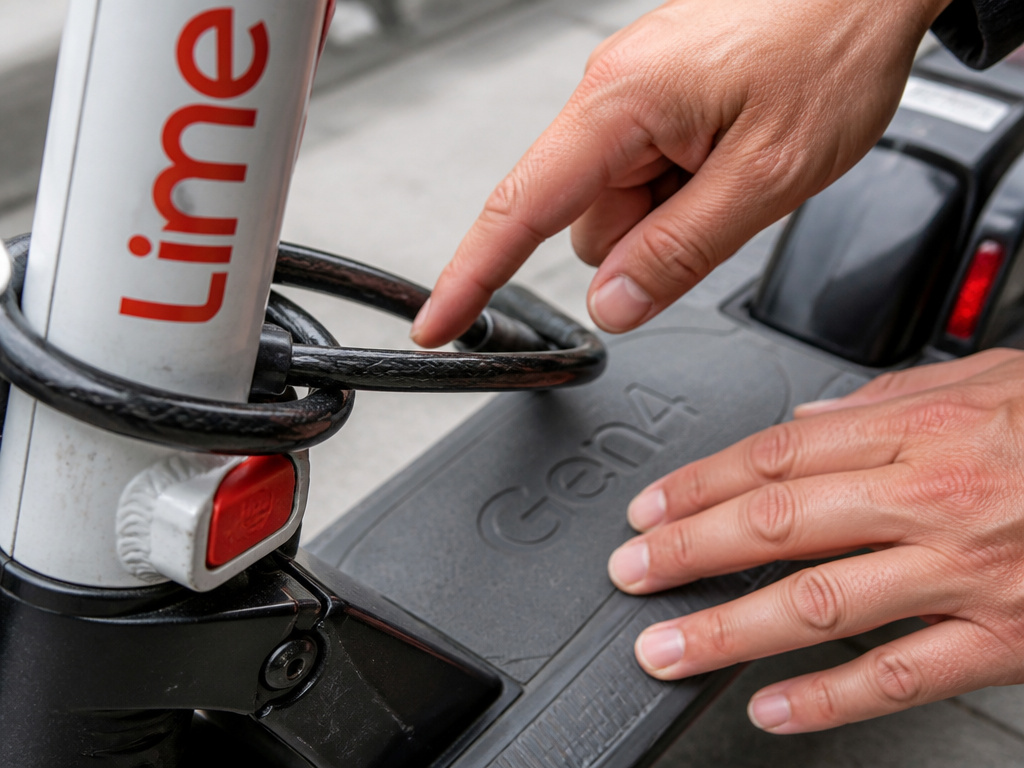
You can tell what you’re riding before you scan the QR code. It takes about five seconds.
- Look at the stem. Is there a thick, black cable loop locked around it? That’s a Gen 4 or later feature.
- Check the deck. Many Gen 4 scooters have “Gen4” molded or printed directly on the plastic deck near the rear wheel.
- Look at the display.
- Examine the rear fender and brake light.
Why does this matter? Knowing how to use a Lime scooter starts with knowing which scooter you’re on.
Lime vs. Bird and Spin: A Rider’s Perspective
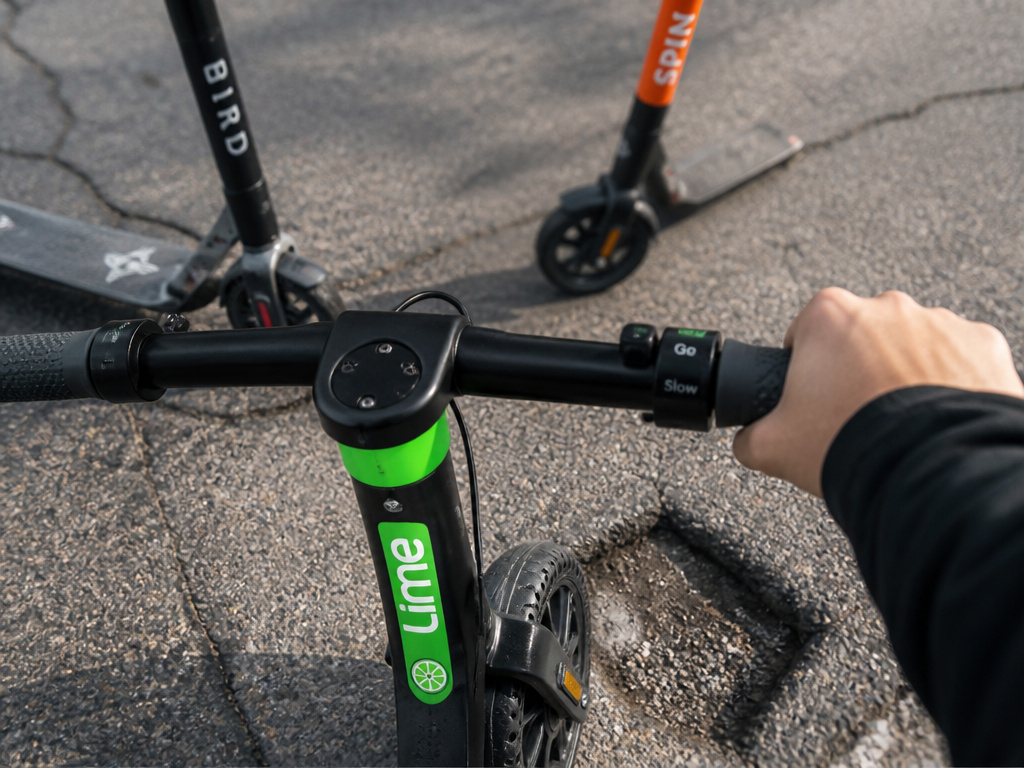
The rental scooter landscape isn’t monolithic. Bird and Spin use different strategies, and it changes the ride.
Spin, in many markets, uses the Segway SNSC 2.x series, which is the commercial version of the Ninebot Max G30. These are famously tank-like. The ride is smoother due to air-filled tires, and the deck is often longer. The trade-off can be a slightly less responsive throttle feel compared to a Lime Gen 4.
I’ve ridden all three brands back-to-back on the same route. The Lime Gen 4 feels like the middle child: more stable and damped than a Bird, but not as plush and planted as a Spin Max. The difference comes down to suspension tuning and tire pressure, things you’d never notice until you hit the same pothole with each.
For the average short trip, the difference is marginal. For a longer commute or a hilly city, it can be the deciding factor between arriving fresh or fatigued. Checking the Lime scooter speed in your app is one thing; feeling how it delivers that power is another.
Can You Buy a Lime Scooter?
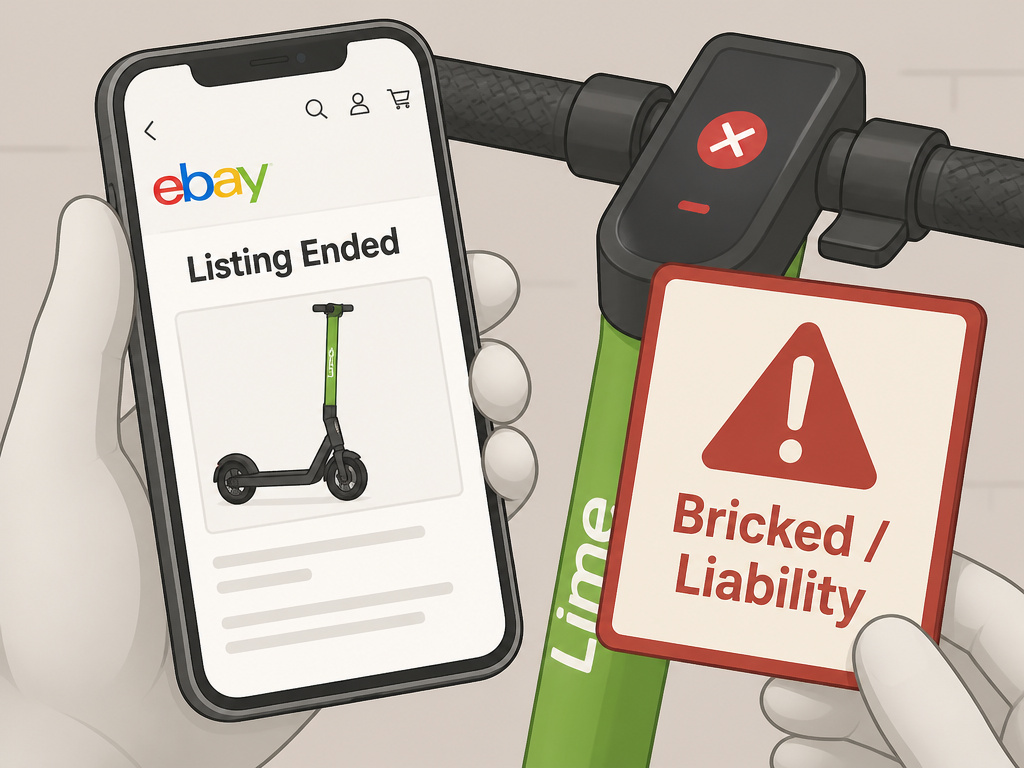
This is the most common question after “what scooter does lime use.” The short answer is no, not legitimately.
Lime does not sell its current or decommissioned scooters to the public. The vehicles are company property, and their proprietary software and locking systems make them useless without Lime’s server authentication. The battery alone is a legal and safety hazard; Lime’s policy states the battery should never be removed from the vehicle and must only be disposed of by trained Lime personnel.
You will see used “Lime” or “Bird” scooters for sale on eBay, Facebook Marketplace, or police auction sites. These are almost always:
- Stolen or illegally salvaged.
- Functionally bricked. The onboard computer is locked the moment Lime marks it as missing/decommissioned. It might power on, but it won’t connect to any app you can download.
- A liability. Modifying them to run requires rewiring the controller, swapping out the display, and often replacing the entire battery management system, a job for an experienced e-vehicle tinkerer, not a casual rider.
The companies that manufacture for Lime, however, sell very similar models. The Segway Ninebot Max G30 (or the newer G2) is the closest consumer analog to the Gen 4’s durability. The Niu KQi3 series mirrors the Lime-S’s form factor and ride quality. This is why forum recommendations always point there.
Safety and Rules: What Makes a Rental Scooter Different
A Lime scooter isn’t just a scooter with a QR code. Its entire existence is governed by a rulebook the rider never sees, written by lawyers and risk managers.
The Battery Protocol: After the 2018 Segway Ninebot battery issue, where a manufacturing defect in less than 0.01% of scooters could cause smoldering or fire. Lime locked down charging. All battery charging is now managed exclusively by trained Lime personnel using certified, compatible equipment. The scooters with swappable batteries are only swapped at staffed facilities. This is a mandatory part of their safety case to cities.
Weight and Load Limits: These aren’t suggestions. Exceed them and you risk mechanical failure. The Lime scooter system is rated for specific loads:
- Scooter/Seated Scooter: 220 lbs (100 kg) max rider/cargo weight.
- Lime Gen 4 E-Bike: 265 lbs (120 kg).
- LimeBike/LimeGlider: 320 lbs (142 kg).
The small front basket on a bike has a 15 lbs (7 kg) limit. Put a heavy backpack in it and you’ll destabilize the steering at the first turn.
The Mandatory Pre-Ride Check: Lime’s rules say to test the brakes by squeezing the levers and rocking the scooter. The wheel shouldn’t move. Most people skip this. That’s how you discover a brake cable is snapped only when you need to stop. The two-second check is the difference between a normal stop and a report to Lime’s Help Center.
Frequently Asked Questions
What is the fastest Lime scooter?
Officially, the Lime Gen 4 E-Bike and the LimeBike have a top speed of 25 km/h. The Lime Gen 4 E-Scooter is capped at 20 km/h in Australia and around 24 km/h (15 MPH) in the US, per its Seattle permit. The motor doesn’t determine top speed; the local law does.
Does Lime use Segway scooters?
Yes, historically and currently. Early generations (Lime-S 1.0, Gen 2) were customized Segway Ninebot ES models. Current Gen 4 and Lime-S models are custom-designed but are widely believed to be manufactured by Segway/Ninebot or Okai under contract.
Can I buy a broken Lime scooter and fix it?
You can find them for sale, but it’s a project, not a purchase. The scooter will be software-locked. You’ll need to replace the controller, display, and often the entire battery pack to make it rideable. It’s rarely cost-effective versus buying a new consumer scooter like a Segway Max G2.
Why do some Lime scooters feel slower than others?
Two reasons: motor power and software geofencing. A 250W Lime-S model will struggle on hills compared to a 500W Gen 4. Lime can and does reduce top speed in certain slow zones (like parks or pedestrian malls) via GPS, which can make an otherwise zippy scooter feel sluggish.
Are Lime scooters safe now?
The current Gen 4 fleet is built to address past safety issues, with dual drum brakes and improved firmware. However, any shared vehicle’s safety depends heavily on rider behavior, helmet use, and regular maintenance, factors outside Lime’s direct control once the ride starts.
The Bottom Line
Lime’s scooter is a moving target. The Gen 4 you ride today is the product of broken bones, regulatory fines, and millions of miles of real-world abuse. It’s not a consumer product you can own; it’s a tool built for a single, brutal job.
If you want the closest thing to that experience, buy a Segway Ninebot Max G2. It has the suspension, the durability, and the aftermarket support. But remember, the rental scooter’s top speed is a legal limit, not an engineering one. The one in your garage won’t have that cap, ride it like it doesn’t.
