Can You Ride an Electric Skateboard in the Rain?
This post contains affiliate links. As an Amazon Associate, we earn from qualifying purchases.
While some riders do, every major manufacturer explicitly warns against riding an electric skateboard in the rain, voids the warranty for water damage, and states that no board is truly waterproof. Riding on wet surfaces drastically increases your risk of crashing and can cause immediate or delayed failure of the battery, motor, and electronic speed controller.
That gap between “you can” and “you should” is where the whole decision lives. A common question is, can you ride an electric skateboard in the rain? Manufacturers like Evolve, ONSRA, Backfire, and E-Glide all print “do not ride in the rain” in their manuals because water ingress is a guaranteed failure mode, not a maybe. The warranty clauses are unambiguous, water damage is excluded.
What follows is a breakdown of the specific risks, what the water-resistance ratings actually mean, the one maintenance step that changes the odds if you get caught out, and the emergency protocol for when a board gets soaked. This isn’t about scaring you off wet pavement. It’s about giving you the manufacturer’s own data so you know exactly what you’re risking.
Key Takeaways
- Manufacturer manuals consistently warn: Brands like Evolve, ONSRA, Backfire, E-Glide, and ACTON explicitly state “do not ride in the rain” in their user manuals and exclude water damage from their warranties.
- IP65 is not waterproof: A common rating like IP65 means “protected against low-pressure water jets,” not “submersion or driving rain.” It’s a test condition, not a riding guarantee.
- Post-ride drying is essential: If you ride in the wet, you must open the enclosure, dry all components with a cloth, and let the board air out thoroughly to prevent delayed corrosion.
- Cold weather compounds the risk: The ACTON BLINK S manual prohibits riding at or below freezing, and ONSRA notes cold temps can cause permanent battery damage. Water and cold is a worst-case combo.
- Your biggest risk is traction loss: Even if your electronics survive, wet pavement, painted lines, and metal surfaces offer drastically reduced grip. A low-speed slide can happen instantly.
What Every Major Manufacturer Actually Says
Open any user manual. The language isn’t vague.
Evolve Skateboards states, “Do not ride the board in wet conditions. The board may slide from under your feet causing injury.” Its warranty specifically excludes damage from “riding in water.” ONSRA’s manual for boards like the VELAR and CHALLENGER 2.0 says, “Do not ride on wet surfaces, do not ride in the rain.” It later clarifies, “IP65 is not waterproof – do not ride in wet conditions.”
Backfire Boards warns, “Do not ride in the rain or any wet grounds with water which will lead high risk of water damage.” E-Glide Powerboards is blunt: “No electric skateboard is waterproof, not even ours.” ACTON is equally direct for its BLINK S: “ACTON BLINK S is not water-proof. Do not ride in the rain, wet or icy weather.”
The pattern is impossible to miss. These aren’t suggestions; they are the conditions under which the product is deemed safe to operate and remains under warranty. Ignoring them means you accept all financial risk for the subsequent repair, a repair that often means replacing the entire battery pack or ESC, not just drying a component.
Common mistake: Assuming “water-resistant” means “rain-proof.” Every manual we cited draws a hard line: resistance is for accidental splashes, not intentional exposure. Riding in the rain is intentional exposure.
What Does an IP Rating Actually Mean for Rain?
You’ll see IP65 or IP55 listed. Here is what those numbers actually mean.
The IP (Ingress Protection) code has two digits. The first refers to solid particle protection (dust), the second to liquid protection. For rain, we care about the second digit. A rating of IP5 means the enclosure was tested with low-pressure water jets. IP6 means it was tested with powerful water jets.
Here’s the critical translation: these are laboratory tests with the board stationary. They do not account for the pressure generated by a wheel spinning at 20 mph, forcing water up into seals. They don’t account for riding through a puddle, which is momentary submersion. They don’t account for temperature changes that cause condensation inside the enclosure after a ride.
| IP Rating (2nd Digit) | Test Condition | What It Means for Riding | Real-World Example |
|---|---|---|---|
| IPX4 | Splashing water from any direction. | Light drizzle might be okay for a very short time. Not suitable for rain riding. | A quick commute where a few drops hit the board. |
| IPX5 | Low-pressure water jets (6.3mm nozzle). | Can handle light rain if you keep speed low and time short. Puddles are a major risk. | Backfire’s IP55 rating. |
| IPX6 | Powerful water jets (12.5mm nozzle). | Offers better protection against direct rain. Still not waterproof; submersion and pressure from wheels will defeat it. | ONSRA’s IP65 rating for its enclosures. |
| IPX7/IPX8 | Temporary immersion (30 mins @ 1m) / continuous immersion. | Rare on e-skates. If present, it indicates a sealed design but motors/bearings are still vulnerable. | Some DIY or niche commercial builds. |
An ONSRA support article adds crucial context, stating, “You can generally ride your ONSRA board in the rain – but no electric skateboard is 100% waterproof. Important: open your board up after every rain ride.” However, ONSRA’s user manual and other manufacturer manuals explicitly state “do not ride in the rain or on wet surfaces.” The warranty still doesn’t cover water damage.
The Physical Risks: More Than Just Electronics
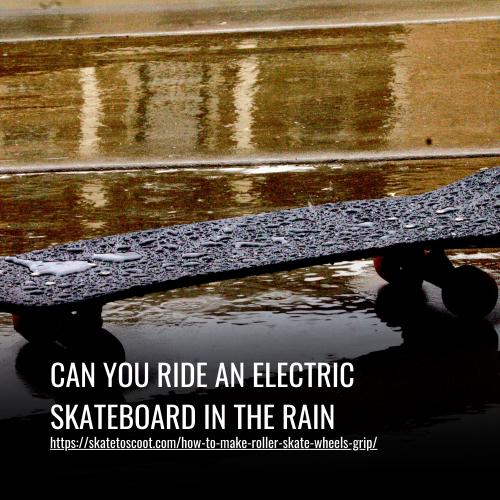
A fried circuit board is an expensive problem. A broken wrist is a personal one. Wet conditions attack your board and your body.
Traction vanishes. Urethane wheels, even all-terrain pneumatics, lose a significant amount of grip on wet pavement. Painted crosswalks, manhole covers, and tar snakes become ice-skating rinks. Your ability to carve, brake, and avoid obstacles plummets. A fall that would be a scrape on dry concrete can become a serious injury.
Mechanical wear accelerates. Water is a solvent. It washes lubricant out of wheel and motor bearings, leading to rust and grinding noise within a few rides. It promotes corrosion on truck axles, kingpins, and every exposed screw. This isn’t a maybe; it’s a guarantee if the water isn’t dried off promptly.
Delayed electrical failure is the silent killer. You might ride in a light shower, dry the exterior, and think you’re fine. Two days later, the board won’t turn on. Microscopic moisture inside a connector or across the circuit board has slowly caused corrosion or a short. This is why the ONSRA article stresses opening the enclosure, to let trapped humidity escape.
Where this goes sideways: Relying on the board’s brakes in an emergency stop on wet ground. The reduced traction means the wheels can lock up and slide, or the motor can over-spin. Your stopping distance can double or triple.
The Step-by-Step Post-Ride Drying Protocol (If You Get Caught)
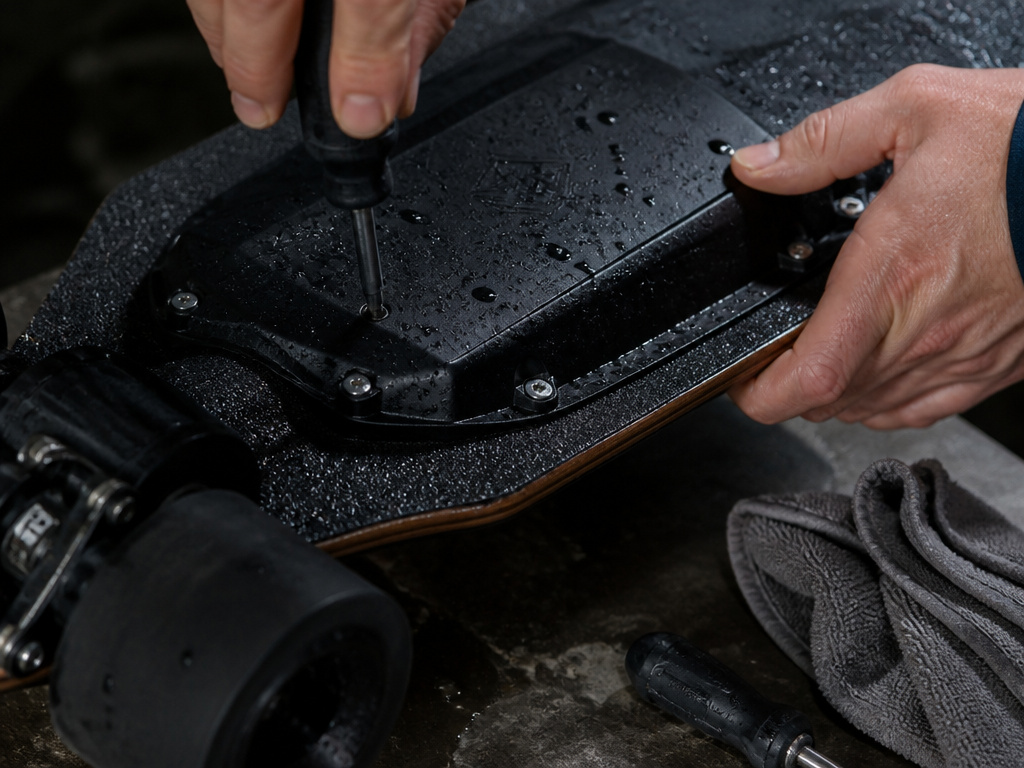
Sometimes, the weather changes. You get caught in a downpour. Here’s what to do, in order, to maximize your board’s survival chances. This protocol is adapted directly from manufacturer advice and community consensus.
- Power down and disconnect immediately. Turn off the board and the remote. If possible, disconnect the battery from the main deck (for models that allow it). Do not plug the charger into a wet board.
- Wipe down the exterior. Use a dry towel to absorb all surface water. Pay special attention to the seam where the battery/ESC enclosure meets the deck, the charging port cover, and around the wheel hubs.
- Open the enclosure. This is the most critical step. Remove the lid/seal to expose the battery, ESC, and wiring. Refer to your board’s manual for proper disassembly to avoid damaging seals.
- Inspect for water ingress. Look for beads of water, dampness, or condensation on the electronics, inside the enclosure lid, and on connectors. Use a dry, lint-free cloth (microfiber is ideal) to gently dab any moisture you see. Do not rub.
- Air dry for 24-48 hours. Place the opened board and its components in a dry, warm, well-ventilated area. A fan on low speed pointed nearby can help. Do not use a hair dryer or heat gun directly on the electronics, as this can melt solder or warp plastic.
- Reassemble and test. Once you are certain everything is bone-dry, reassemble the board, ensuring all seals are properly seated. Consult your manual for charging instructions before attempting to turn it on.
Skipping step 3, opening the enclosure, is how moisture gets trapped. That trapped humidity condenses overnight and drips onto the electronics. By morning, you have a corrosive environment sitting on your $200 circuit board.
Battery and Warranty: The Financial Reality
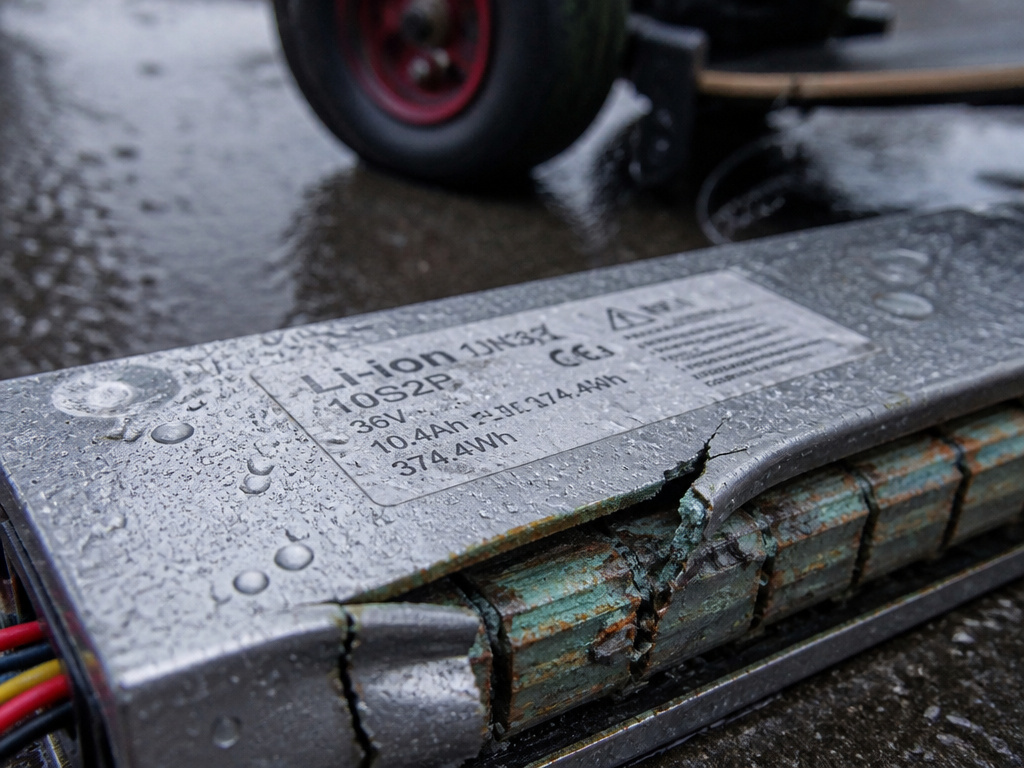
Water damage is an economic event. The numbers from the manuals make the stakes clear.
Lithium-ion batteries and water are enemies. As the Backfire FAQ explains, water can lead to internal shorts, which can cause thermal runaway, a fire. Their advice is clear: “Do not ride in the rain or any wet grounds with water which will lead high risk of water damage.” They also note a battery’s lifespan is 300-500 full cycles before it holds about 70% of its original capacity. Water damage can kill it in one cycle.
The warranty statements are uniform. Evolve’s warranty excludes “riding in water.” E-Glide’s warranty does not apply to any board “subject to immersion in or exposure to water.” ONSRA’s support article confirms: “Water damage from riding through deep water or exposing the electronics to excessive moisture is not covered by the warranty.”
This means the cost of a battery or ESC replacement comes directly from your pocket. No manufacturer whose manual we reviewed provides an exception. Some third-party insurers might offer coverage, but you must read the policy exclusions carefully, most consider riding in conditions contrary to the manufacturer’s instructions as voiding coverage.
Cold, Wet, and Worse: When Conditions Combine
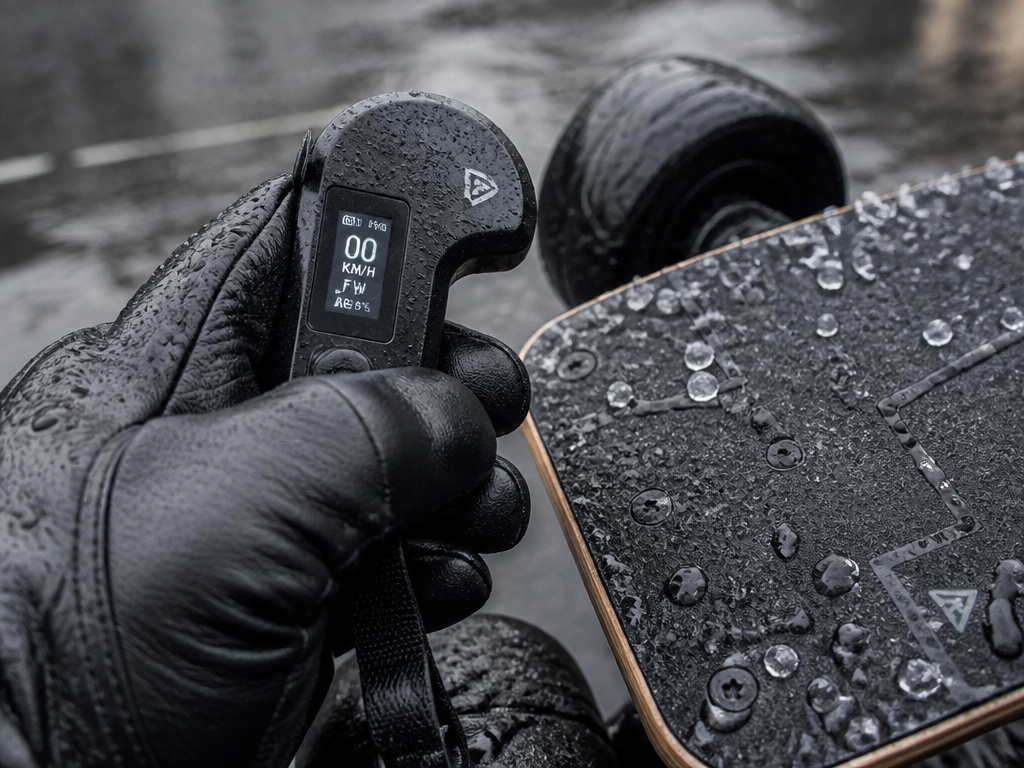
Rain alone is bad. Cold rain is a different level of risk.
The ACTON BLINK S manual has a specific, all-caps warning: “NO RIDING AT/BELOW FREEZING TEMPERATURE.” The ONSRA manual notes that “cold temperatures reduce range and power output, and exposure to very low temps may cause permanent battery damage.” Lithium-ion chemistry slows down in the cold, reducing performance and making the battery more vulnerable to damage from charging while cold.
Combine cold with wet, and you have the perfect storm for failure: contracted seals that might let in more moisture, a sluggish battery trying to deliver power, and a rider with potentially stiff, less-responsive movements. The manual’s optimal battery condition says it all: the ACTON BLINK S performs best between 50-75°F (10-24°C) and 45-85% humidity. Riding in a cold downpour is the opposite of that.
If You Must Ride in Wet Conditions
Realistically. Some people, like the Reddit user from Seattle, live where the ground is often wet. If you accept the risks and have a board rated IP55 or higher, these steps can marginally improve your odds.
- Reduce your speed drastically. This decreases water pressure forced into seals and gives you more time to react to traction loss.
- Avoid all standing water. Puddles are submersion events, not spray. They can force water directly into motor bearings and enclosure seams.
- Use pneumatic (air-filled) tires if possible. They generally offer better wet traction than solid urethane wheels and raise your deck slightly higher off the ground.
- Assume your brakes are half as effective. Start braking twice as early as you normally would. Use a foot-braking drag if you’re skilled.
- Wear full protective gear. A helmet, wrist guards, knee pads, and elbow pads are mandatory. The likelihood of a slip is high.
- Perform the full drying protocol after every ride. No shortcuts. This is the maintenance tax for riding in the wet.
Community members who ride in wet climates often mention using silicone sealant (like “conformal coating”) on circuit boards or adding extra gaskets to enclosure lids. This is a DIY modification that will certainly void your warranty and requires technical skill. It’s a last resort for those who have already accepted the financial risk.
Risk of electric shock
Manufacturer manuals do not explicitly list electric shock as a primary risk of riding in the rain. The stated dangers focus on water damage to the electronics and loss of traction. However, the core warning from all brands is clear: these are not waterproof devices. Introducing water to the battery, motor controllers, and wiring creates a failure point for the electrical system. While the manuals emphasize warranty exclusions and component damage, exposing live electronics to moisture inherently carries a risk of short circuits. The practical guidance is universal: do not ride in the rain or on wet surfaces to prevent any electrical hazard.
Frequently Asked Questions
Is it safe to ride an electric skateboard in rain?
From a safety perspective, no. The drastic loss of traction on wet surfaces significantly increases your risk of falling and getting injured. From an equipment perspective, it is unsafe for the board’s electronics, leading to potential failure and fire risk with the battery.
What happens if you ride your skateboard in the rain?
Immediate risks include slipping and crashing. Short-term risks include rusted bearings and corroded trucks. Long-term risks include failure of the battery, motor, or electronic speed controller (ESC), often days or weeks after the water exposure. This damage is not covered by any manufacturer’s warranty.
Can I ride my electric skateboard on wet pavement?
Manufacturer manuals universally advise against it. Wet pavement carries most of the same risks as rain, reduced traction for you and water spray/mist ingress for your board. It is less hazardous than riding through standing water, but still not recommended.
Which electric skateboard is best for rain?
No electric skateboard is marketed or warranted for rain riding. Models with higher IP ratings (like IP65 on some ONSRA enclosures or IP55 on all Backfire boards) offer better resistance to spray, but their warranties still exclude water damage. The “best” board is the one you are willing to open up and dry meticulously after every wet ride.
How do I dry my electric skateboard after rain?
Follow the protocol outlined above: power down, wipe exterior, open the battery/ESC enclosure, inspect and dab internal components with a dry cloth, and let everything air dry in a warm, ventilated area for 24-48 hours before reassembling and charging.
Before You Go
The data from the manufacturers on the can you ride an electric skateboard in the rain question is too consistent to ignore. Riding an electric skateboard in the rain is a calculated risk, a risk to your safety, your board’s functionality, and your wallet.
If you choose to take that risk, the single most important action you can take is the one ONSRA emphasizes: open your board after every wet ride. That step alone is the difference between a board that fails mysteriously next week and one that might survive a cautious, damp commute. Everything else, the IP ratings, the tire choices, the silicone sealant, is secondary to letting trapped moisture escape.
For daily commuters in rainy climates, this reality might steer you toward a different form of electric personal transport with a higher ingress protection rating. For the occasional rider, the answer is simpler: check the forecast, and if rain is likely, take the bus. Your board, and your bones, will thank you.
