Do Electric Skateboards Have Brakes? How They Stop
This post contains affiliate links. As an Amazon Associate, we earn from qualifying purchases.
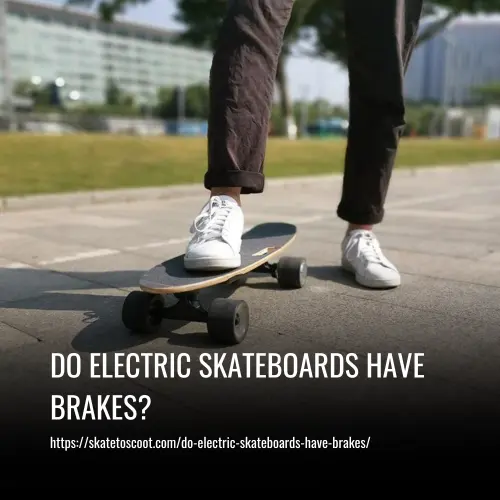
Yes, electric skateboards have brakes, but they are electronic, not physical. They use a system called regenerative braking: pulling back on the remote’s throttle or wheel sends a signal to the motor to spin backward, which slows the board and converts some kinetic energy back into battery charge. This system has critical limitations, including reduced power above certain speeds and the risk of complete shutdown when the battery is full.
That limitation is a physical constraint of the battery and motor. Regenerative braking can only work if the battery has room to accept the charge it generates. A full battery can’t take more, so the system either weakens or shuts off to prevent damage. This turns a steep hill into a runaway hazard if you start at the top with a full charge.
What follows is a breakdown of how this electronic system actually works, where it fails, and the manual skills you must have as a backup when considering the do electric skateboards have brakes question. This section details the specific speed and battery warnings from manufacturers like Inboard, Boosted, and ONSRA, the real-world consequences of the recent Onewheel recall, and the step-by-step techniques to stop your board when the electronics won’t.
Key Takeaways
- Electric skateboards use regenerative braking, an electronic system where the motor spins backward to slow you down and recharge the battery slightly.
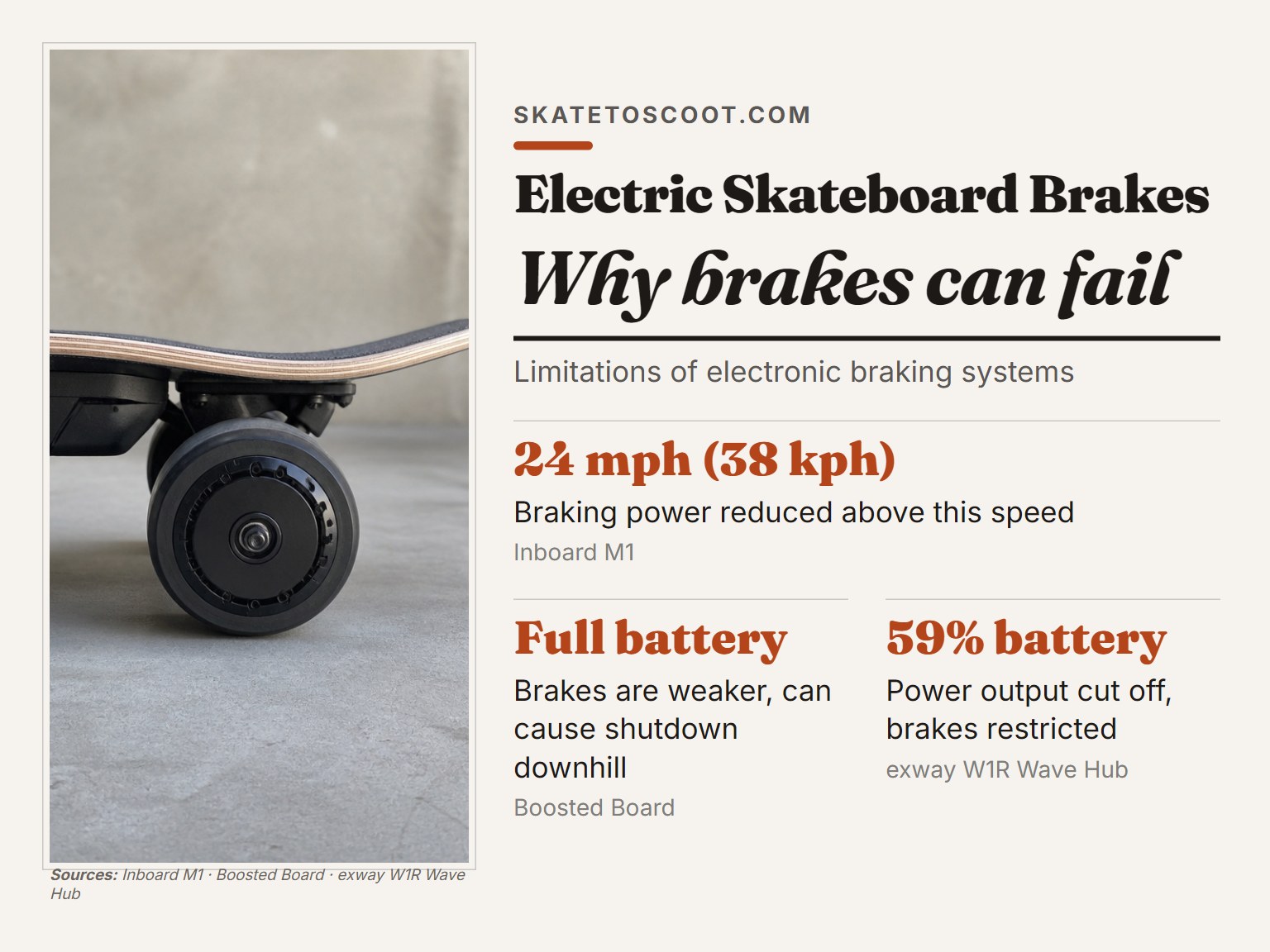
- Braking power weakens or fails entirely on a full battery, riding downhill with a full charge can cause the board to shut down, as warned in the Boosted Board and Inboard M1 manuals.
- Always have a manual backup stop method. Foot braking, carving, or sliding are essential skills because your board can lose power and brakes at any moment due to interference or battery faults.
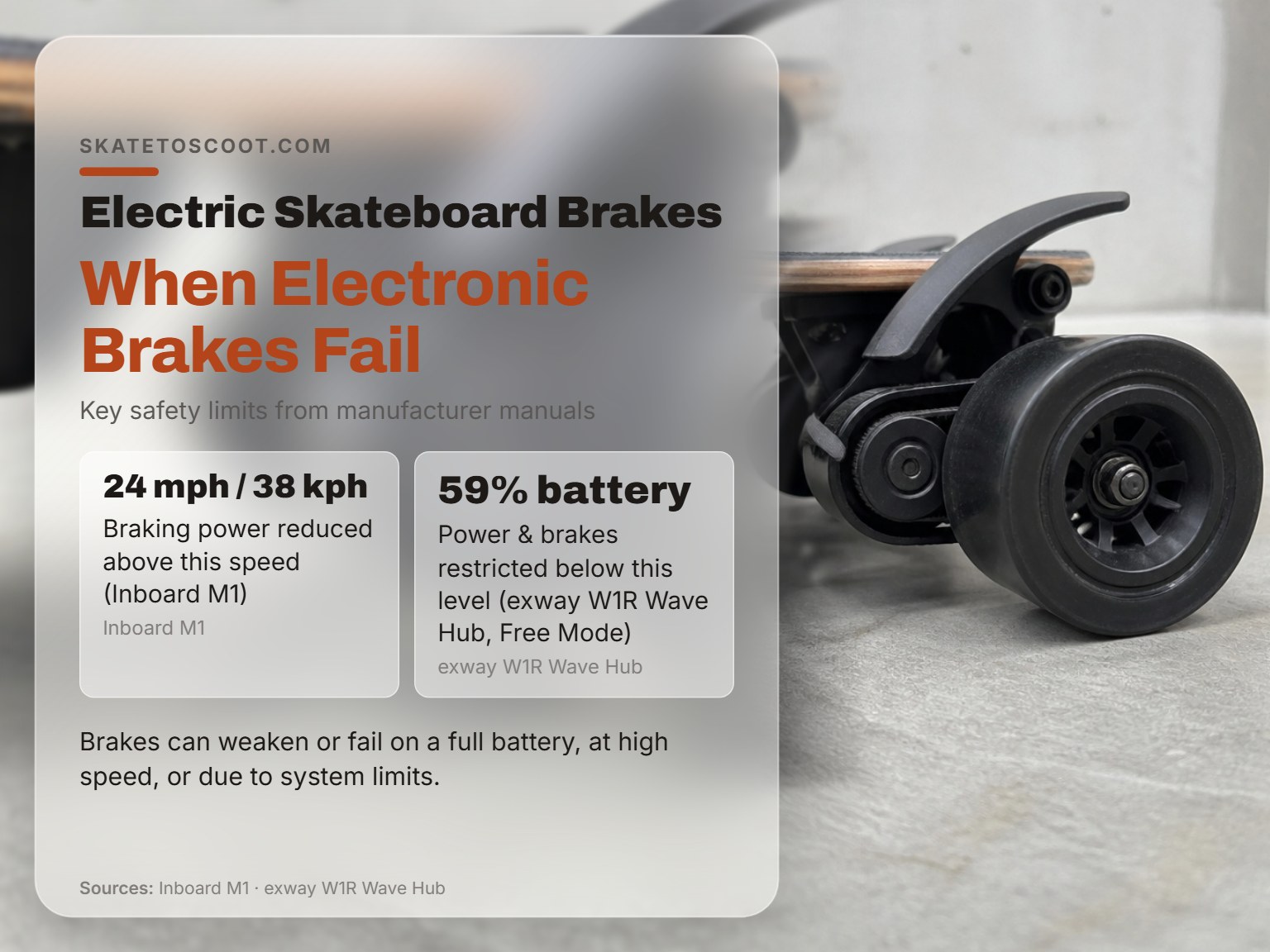
- Model-specific limits are critical. The Inboard M1’s braking power reduces above 24 mph (38 kph); the exway W1R restricts power and brakes when the battery has 59% left.
- The 2023 Onewheel recall mandates a firmware update for certain models to add a “Haptic Buzz” safety alert. This highlights that electronic braking systems are software-dependent and can be subject to government safety interventions.
The 5-Step Regenerative Braking System
Here is a step-by-step explanation. The brake on your electric skateboard is your motor running in reverse, managed by a tiny computer.
You pull the throttle wheel on the remote backward. This action sends a wireless signal to the skateboard’s Electronic Speed Controller (ESC). Think of the ESC as the board’s brain, it takes your input and decides what to tell the motor. Upon receiving the brake command, the ESC reverses the electrical current flowing to the motor. This forces the motor to spin opposite the direction of travel. That resistance is what slows the wheels.
The Inboard M1 user guide specifies its “Braking System: Electronic Regenerative Braking.” This is a third-party, technical confirmation of the mechanism used by most mainstream boards.
As the motor resists, it acts as a generator. The spinning wheels turn the motor, which generates electricity. This electricity is fed back into the battery, providing a small recharge. It’s not enough to extend your range dramatically, but it’s the core of the “regenerative” function. Finally, the ESC constantly monitors factors like battery charge level, motor temperature, and speed. If any parameter goes out of a safe range, say, the battery becomes overcharged from braking, the ESC will reduce braking power or cut it entirely to protect the hardware. This last point is where riders get into trouble.
What “Braking Power Reduced” Really Means
You’ll see this phrase in manuals. It’s not a gentle suggestion. It’s a system operating at its mechanical limit.
The Inboard M1 manual states braking power is reduced above 24 mph (38 kph). The ESC will dial back the braking force to prevent burning out the motor’s windings. The result is a longer, less confident stopping distance. The ONSRA manual adds another layer: braking strength is adjustable from 10-100% per speed mode. A beginner mode might cap braking at 50% to prevent a sudden stop that throws the rider, while a pro mode gives full, immediate power. Not understanding which mode you’re in, and its corresponding brake sensitivity, is a common setup mistake.
| Brand / Model | Braking Limitation | Direct Consequence |
|---|---|---|
| Inboard M1 | Power reduces above 24 mph (38 kph) | Stopping distance increases dramatically at high speed. |
| ONSRA Boards | Adjustable strength per mode (10-100%) | Beginner mode may not stop you quickly enough on a hill. |
| exway W1R Wave Hub | Power & brakes restricted at 59% battery in free mode | You lose the ability to brake for safety to protect the battery. |
| Boosted Board | Shutdown on a full battery downhill | Complete loss of all power and brakes mid-descent. |
Cold weather is another silent brake killer. The ONSRA manual warns that cold temperatures reduce range, top speed, acceleration, and can cause permanent battery damage. Your brakes feel mushy and unresponsive on the first cold ride of the season.
The Critical Failure: Braking on a Full Battery
This is the single most important safety warning. Most major manufacturers warn about it, though some, like Mellowboards, claim their dual braking system still works when fully charged.
Regenerative braking generates electricity. That electricity must go somewhere. On a full battery, there’s no room left to store it. The system faces a dilemma: overcharge and damage the battery, or shut down. It chooses shutdown. The Boosted Board quick start guide is brutally clear: “BRAKING DOWNHILL ON A FULL BATTERY WILL CAUSE BOARD SHUTDOWN since regenerative braking will overcharge the battery. The remote will warn you by beeping, and you’ll lose your braking power.”
Where this goes sideways: Starting a long downhill run with a 100% battery. The board beeps for a few seconds as the battery overcharges, then cuts all power and brakes. You are now on a runaway, motorless skateboard.
Following this procedure is essential. If your battery is full and you need to go downhill, ride on flat or slightly uphill terrain first. Drain the battery to create a buffer for the regenerative energy. The ONSRA manual advises exactly this: “With a full battery (High Voltage alert) the brakes are weaker – ride on flat ground first, then go downhill.” This is the difference between a controlled ride and an emergency.
What Happens When Regenerative Brakes Fail?
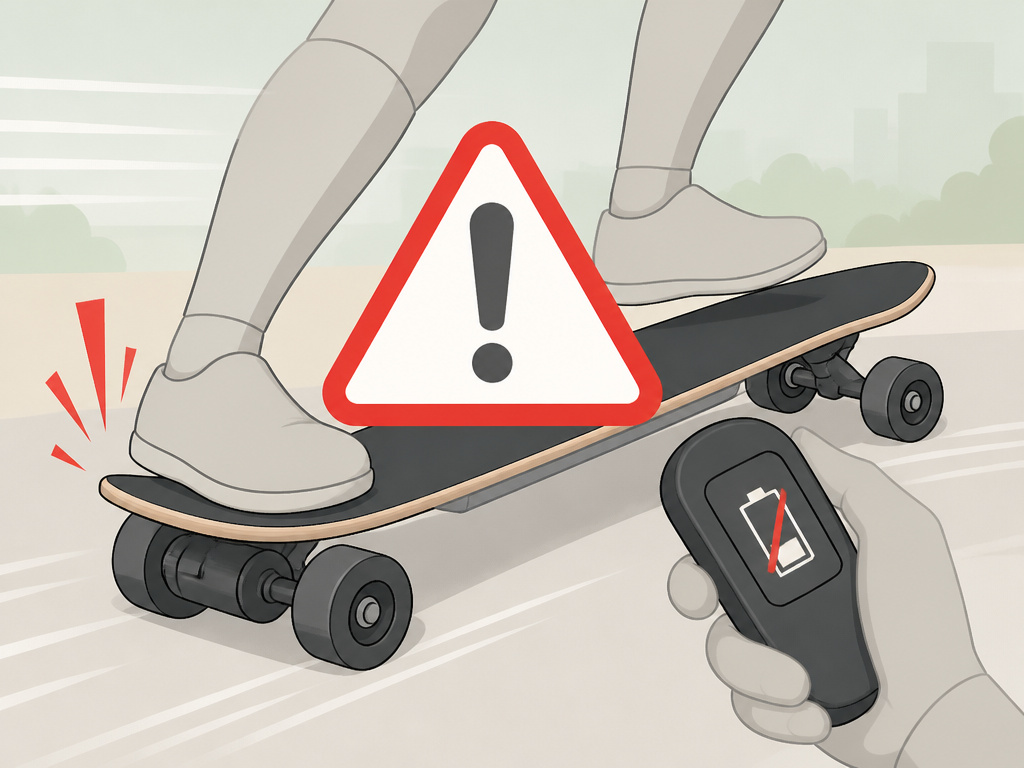
Your board can lose power and brakes at any moment. The Boosted guide lists the reasons: radio interference, a dead remote battery, unintentional release of the remote button, or the overcharge scenario. When it happens, you have about two seconds to react before momentum takes over.
The recent Onewheel recall underscores the stakes. The U.S. Consumer Product Safety Commission (CPSC) announced the recall of 300,000 Onewheel self-balancing skateboards in September 2023 after four reported deaths between 2019 and 2021. The official CPSC Onewheel recall notice states the hazard: “The skateboards can stop balancing the rider if the boards’ limits are exceeded.” For Onewheel GT, Pint X, Pint, and XR models, a mandatory firmware update adds a “Haptic Buzz” alert, a buzzing sensation and sound, to warn riders before the board shuts off. This is a direct, government-mandated admission that electronic braking and balance systems can fail catastrophically without adequate warning.
Your first line of defense is your stance when you compare a do electric skateboards have brakes scenario. At the first sign of failure, a beep, a sudden loss of resistance in the remote, or silence from the motors, shift your weight to your back foot and prepare to step off. Do not panic and jump. You need to scrub speed immediately.
Your Manual Backup: Foot Braking and Carving
Trust the process, not just the trick. If you rely solely on the electronic brake, you’ve built your safety on a single point of failure. Learning to foot brake is not optional; it’s your emergency parachute.
Here’s the progression, from least to most aggressive:
- Foot Drag (Beginner): Shift your weight to your front foot. Extend your back foot and gently let your shoe sole drag on the ground. Increase pressure gradually to slow down. Practice at walking speed first.
- Carving (Intermediate): Use wide, S-shaped turns across the pavement. Each turn converts forward momentum into lateral movement, slowing you down. It’s less abrasive on your shoes and effective for moderate slopes.
- Coleman Slide (Advanced): Crouch down, place a gloved hand on the ground, and kick the board out sideways into a controlled slide. This is for emergency stops at higher speeds and requires practice on a smooth, safe surface.
Electronic vs. Physical Brakes: Why Pads Are Rare
You might wonder why nobody just puts a disc brake on an electric skateboard. It’s a question of complexity, weight, and a fundamental mismatch with the skateboard’s design.
A traditional brake requires a mounting point, a hydraulic or mechanical cable system, and a way to control it from the remote. This adds weight, cost, and failure points like leaking fluid or snapped cables. More critically, a skateboard deck flexes. A rigid brake caliper mounted to a flexing deck would either break or constantly lose alignment. There are patents, like US11224794B2 for an in-line skate braking system using an electric motor to press a brake segment against the wheels, but these are complex add-ons, not integrated solutions. For now, the industry standard is regenerative braking because it uses the existing motor and ESC, it’s elegant, if fragile.
So, where does that leave you? With a system that works well within strict parameters but demands respect and a backup plan. Your braking power is a negotiation between battery charge, speed, temperature, and software.
Brake Maintenance and Pre-Ride Checks
You can’t service the regenerative brake itself, but you can maintain the system it depends on. A five-minute pre-ride check catches most failure modes.
Start with the remote. Is the battery charged? Are the throttle wheel and its return spring working smoothly? A faulty remote can fail to engage the brake. Check the board’s battery level. Is it fully charged? Remember the hill rule. Inspect the wheels and motors for debris. Debris on the motors can cause issues. Listen for unusual sounds. Unusual sounds from the motor may indicate a problem.
Finally, know your board’s specific quirks by reading the manual. Does it have a low-battery brake restriction like the exway? Does it have adjustable brake strength like ONSRA? This is the operational manual for your vehicle.
How should I stand when using electric skateboard brakes?
Your body position is critical for maintaining control during braking. Always wear a helmet and protective gear as specified by your board’s manufacturer. Adopt a stable, low stance with your knees bent and your weight centered over the board. Lean back slightly as you apply the brakes to counteract the forward momentum, but keep your body aligned to avoid being thrown off. Practice in a safe, open area to get a feel for how your specific board decelerates. As stated in manuals like those for the Inboard M1 and exway W1R, you should not ride in environments, on inclines, or at speeds where you would not be safely in control of an unpowered skateboard.
What do I do if my electric skateboard brakes fail?
You must be prepared for the possibility of a complete loss of braking power. Some manufacturers, like Boosted, warn that your board can lose power and brakes at any moment due to factors like radio interference, a dead remote battery, or downhill overcharging of a full battery. If the brakes fail, your primary goal is to slow down and bail safely. Step off the board with a running motion if possible, aiming to roll on your protective gear to dissipate energy. As warned in manuals like the Boosted Board’s, never ride in hazardous environments where a loss of control could be catastrophic. Manual foot-braking is an essential backup skill every rider must practice.
Can I adjust how strong my electric skateboard brakes are?
Some electric skateboards allow you to customize the strength of the regenerative braking system. For example, ONSRA boards let you adjust braking strength from 10% to 100% within each speed mode. However, be aware that external conditions can override your settings. Braking power can be reduced at high speeds, and it will be weaker with a fully charged battery, as regenerative braking cannot safely function without risking overcharge. Always test your adjustments in a controlled environment.
Frequently Asked Questions
Do all electric skateboards have brakes?
Yes, all modern electric skateboards intended for street use have a braking system, and it is almost exclusively electronic regenerative braking. Most production models use electronic regenerative braking.
How do you stop an electric skateboard if the remote disconnects?
You stop using manual methods: foot braking, carving, or sliding. Learning to ride a traditional skateboard or longboard first builds essential bail-out skills.
Can you get stronger brakes on an electric skateboard?
Braking strength is usually a function of your board’s motor power and ESC programming. Some boards, like ONSRA models, allow you to adjust brake strength within the settings. Aftermarket modifications are risky and will void your warranty, as tampering with electronics is explicitly warned against in manuals.
Are electric skateboard brakes safe?
They are safe when used within their designed limits. The primary danger comes from operating outside those limits, braking downhill on a full battery, riding in wet conditions that can cause electronics to fail, or exceeding the board’s speed capacity.
What was the Onewheel recall about?
In September 2023, Future Motion recalled 300,000 Onewheel self-balancing electric skateboards in cooperation with the CPSC after four reported deaths. The boards could stop balancing the rider if their limits were exceeded. The fix for GT, Pint X, Pint, and XR models is a mandatory firmware update to include Haptic Buzz alert functionality.
Before You Go
The answer to “do electric skateboards have brakes” is a qualified yes. They have a clever, energy-recycling system that works until it doesn’t. Your takeaway shouldn’t be fear, but preparedness.
Treat a full battery at the top of a hill with the same respect you would a sharp blade. Drain it first. Practice foot braking in an empty parking lot until it’s muscle memory, not a panic move. And read your board’s manual, the specific warnings for an Inboard M1, a Boosted Board, or an ONSRA are the documented edge cases where the physics of your board break down.
The electronic brake is a tool, not a guardian. Your skills are the backup system. Build them, and you can trust the ride.
