How to Loosen Longboard Trucks: Step-by-Step
This post contains affiliate links. As an Amazon Associate, we earn from qualifying purchases.
To loosen your longboard trucks, turn the kingpin nut counter-clockwise. Use a skate tool, a 9/16-inch socket, or a 3/8-inch wrench. Make small, quarter-turn adjustments, then test ride. The goal is easier turning without causing wheel bite, where the wheel touches the deck.
That single action changes everything. It shifts the board from a stable, straight-line cruiser to a carvy, responsive surfboard on wheels. But the space between “just right” and “wheel bite” is where most new riders get stuck. You can feel the board fighting you on every turn, so you give the nut another half-turn left. Suddenly, you’re leaning into a carve and hear the dreaded scrape-thunk of a locked wheel. The board stops, you don’t. This is why learning how to loosen longboard trucks properly is crucial.
This guide walks you through the mechanical why behind each step of how to loosen longboard trucks. This guide lists the required tools, explains how one truck design alters the method, and describes solutions for when loosening the nut doesn’t work.
Key Takeaways
- Use a 9/16-inch socket or skate tool to turn the kingpin nut counter-clockwise, making small quarter-turn adjustments between test rides.
- Tighten your trucks if you experience wheel bite, when the wheel touches the deck mid-turn, to prevent a sudden stop.
- For drop-through trucks, you must disassemble the truck to adjust it; the kingpin faces outward through the deck.
- If loosening the nut doesn’t create a smoother turn, check your bushings for damage or excessive hardness, they may need replacing.
- Sources disagree on judging tightness by thread visibility; prioritize ride feel and the absence of play in the hanger.
The 5-Step Adjustment Process
This isn’t about guesswork. It’s a repeatable, mechanical procedure. Grab your board and follow these steps.
First, identify the kingpin nut. It’s the large nut on the baseplate, oriented toward the nose or tail of your board, with a bolt (the kingpin) running vertically through the truck’s hanger. If you’re looking at the bottom of your board, it’s the nut you can’t miss.
To adjust truck tightness, locate the kingpin nut on the baseplate. Using a skate tool, a 9/16-inch socket (per Yocaher), or a 3/8-inch wrench (per Deviate Board Co.), turn the nut counter-clockwise to loosen. Tighten the nut clockwise to increase stability and reduce turn radius. Make incremental adjustments of a quarter-turn, then test ride to assess feel.
Step 1: Secure Your Board. Turn it upside down so it rests on the grip tape, or hold it firmly between your knees. You need the truck stable.
Step 2: Fit Your Tool. Place your skate tool’s socket, your 9/16-inch socket, or your wrench onto the kingpin nut. Use a 9/16-inch socket to prevent rounding the nut. Yocaher recommends a 9/16-inch socket for this job, while Deviate Board Co. Lists a 3/8” wrench as a valid option.
Step 3: Make the Initial Turn. Rotate the tool counter-clockwise (lefty-loosey) to loosen it. You’ll feel the resistance change.
Step 4: The Quarter-Turn Rule. From there, never adjust more than a quarter-turn at a time before testing. The Deviate Board Co. Guide emphasizes that small adjustments make a noticeable difference. This patience prevents you from going straight to wheel-bite territory.
Step 5: Test and Repeat. Stand on the board and rock side-to-side. Then, take a slow, cautious ride in a safe area. Does it turn more easily? Does it feel unstable? Return to the nut for further micro-adjustments until the board responds to your lean without feeling sloppy.
Where this goes sideways: Loosening the nut without checking if it’s fully seated after each adjustment. If you loosen it too much, the nut can disengage from the kingpin threads. The Deviate Board Co. Warning is clear: check that the kingpin nut is fully seated on the kingpin if you loosen it, or it can come off while skating.
If turning the nut feels impossible when learning how to loosen longboard trucks, or if the truck still feels rigid after several turns, you’ve hit a different problem, likely a bushing issue. We’ll get to that.
What “Looser” Actually Feels Like (And When to Stop)
A loose truck isn’t a wobbly truck. It’s a responsive one. The difference is in the feedback.
When you lean, the board should lean with you immediately, without a dead zone. You’ll feel the truck respond to your lean. On a ride, you’ll find carving requires less effort. This is the “surfy” feel riders chase.
But there’s a limit. Sources like Decathlon UK Support and SkatePro.com warn that loosening the kingpin too much can lead to wheel bite. Wheel bite happens when your turn is so deep that the wheel physically contacts the bottom of your deck. The result is a sudden stop. You’ll hear a sharp plastic scrape followed by a thunk. At low speed, you run off. At high speed, you pitch forward.
How do you find the edge without going over? After each quarter-turn loosening, perform a lean test. With the board stationary, press down on the edge with your hand until the wheel lifts off the ground. Look at the gap between the wheel and the deck. Is there still clearance? Now do it while leaning your weight onto the board as if in a sharp turn. If the gap closes, tighten the nut a quarter-turn. Your final setting should have a safe margin.
The Critical Difference: Drop-Through Trucks
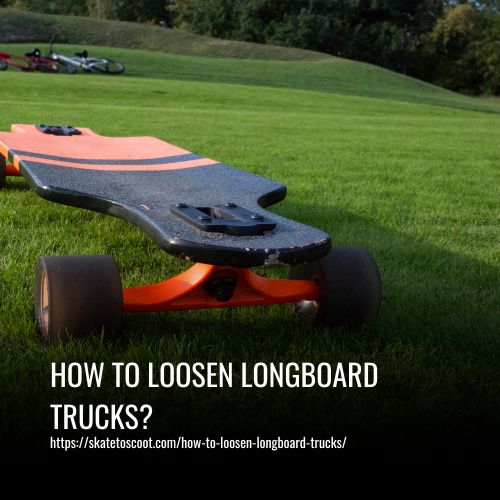
Most guides assume top-mount trucks. If your longboard has a drop-through deck, where the trucks mount through a hole in the deck, the rules change completely.
The Decathlon support article is definitive: “You cannot mount your trucks without disassembling them.” You can’t just reach under the board with a wrench. To adjust a drop-through truck, you must take it apart.
Here’s the specific, non-negotiable sequence from the manufacturer:
- Loosen and remove the kingpin nut.
- Remove the top washer, the roadside bushing, the hanger, the boardside bushing, and its washer. Don’t lose the pivot cup.
- Now you can access the baseplate. The Decathlon guide stresses a key point: “Keep in mind: the kingpin goes outwards!” When you place the baseplate on the deck, the kingpin must face downward through the mounting hole.
- Reassemble in this order from the kingpin base upward: pivot cup, boardside bushing, hanger, roadside bushing, washer, kingpin nut.
- The Decathlon guide advises: Screw the baseplate onto the deck first. The guide notes this makes everything else easier.
- Finally, adjust the kingpin nut. The guide advises: “Only tighten the lower bushing nut until there is no play in the hanger. You can gauge by leaving one or two screw threads visible.”
| Truck Type | Adjustment Access | Key Disassembly Step | Risk of Skipping |
|---|---|---|---|
| Top-Mount | Direct, under board | Not required | Overtightening kingpin |
| Drop-Through | Must disassemble | Kingpin must face outward through deck | Incorrect assembly, damaged pivot cup |
It’s a more involved process, but understanding it prevents you from forcing a standard adjustment on a truck that doesn’t work that way.
Why Loosening the Nut Might Not Work: The Bushing Factor
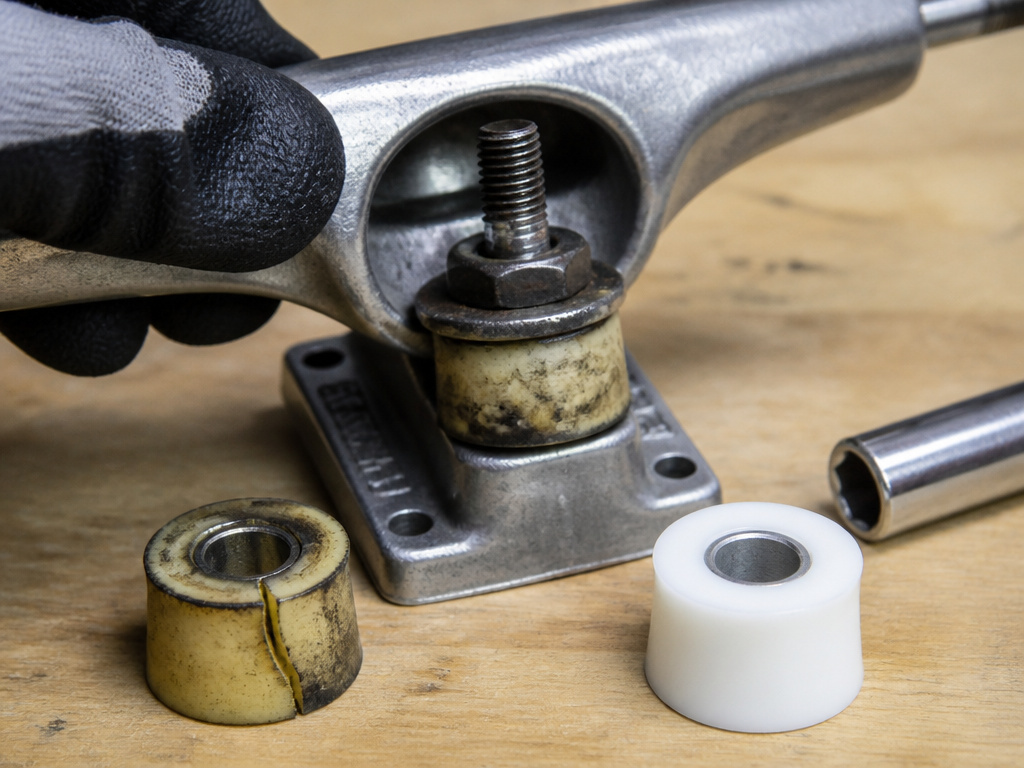
You’ve turned the kingpin nut counter-clockwise a full two turns. The nut is loose, but the truck still feels stiff and unresponsive. What gives?
The nut compresses the bushings, the urethane cylinders on the kingpin. If those bushings are too hard for your weight, or if they’re old and cracked, no amount of nut-turning will create a loose feel. The S+S Sportartikel GmbH manual for FunTomia longboards is clear: “Damaged or cracked bushings should be replaced.”
This is where you graduate from simple adjustment to basic tuning. To inspect the bushings, you will need to disassemble the truck. Look for:
- Cracks or splits, especially around the edges.
- Deformation, a barrel bushing that’s bulged out like a squashed can.
- Hardness mismatch, they might simply be too firm (a higher durometer number).
If your bushings are shot, you’ll need a guide to changing longboard bushings. If they’re intact but too hard, the SkatePro.com advice applies: “If you’re looking for a softer, smoother feel and have already loosened the kingpin nut as much as possible, try using softer bushings.” Choosing the right ones is its own science, covered in our article on how to choose longboard bushings.
Tools You Can Actually Use (Not Just the Skate Tool)
The perfect tool is a skate tool. It has the right-sized socket, often a wheel axle wrench, and it’s portable. But you don’t need one to get started.
The sources list several effective alternatives:
- 9/16-inch Socket & Ratchet: Yocaher calls this the easiest method.
- 3/8-inch Wrench: Deviate Board Co. Lists this as a valid option.
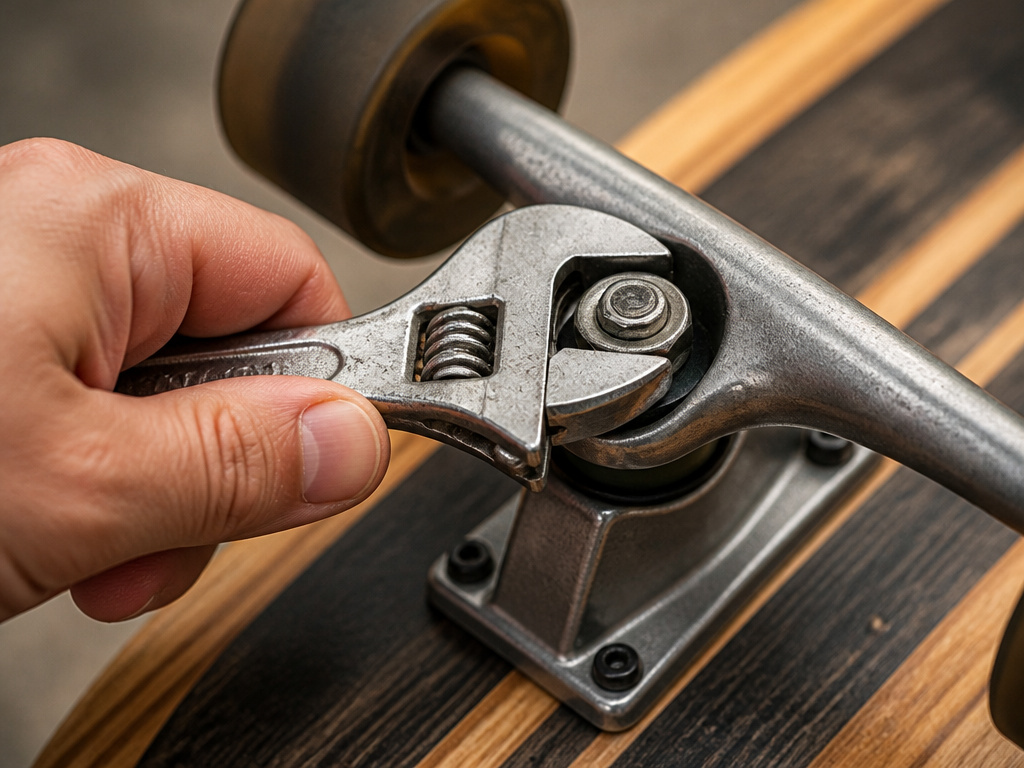
- Adjustable Wrench: The SkatePro.com guide states you can tighten trucks with an adjustable wrench.
An adjustable wrench is the most common household tool that will work. Open it to fit snugly on the kingpin nut. The downside is it can slip and round the nut’s corners if not perfectly fitted. Use a 9/16-inch socket if you have one, but the wrench will do the job for occasional adjustments.
The Manufacturer Debate: How Loose is “Loose”?
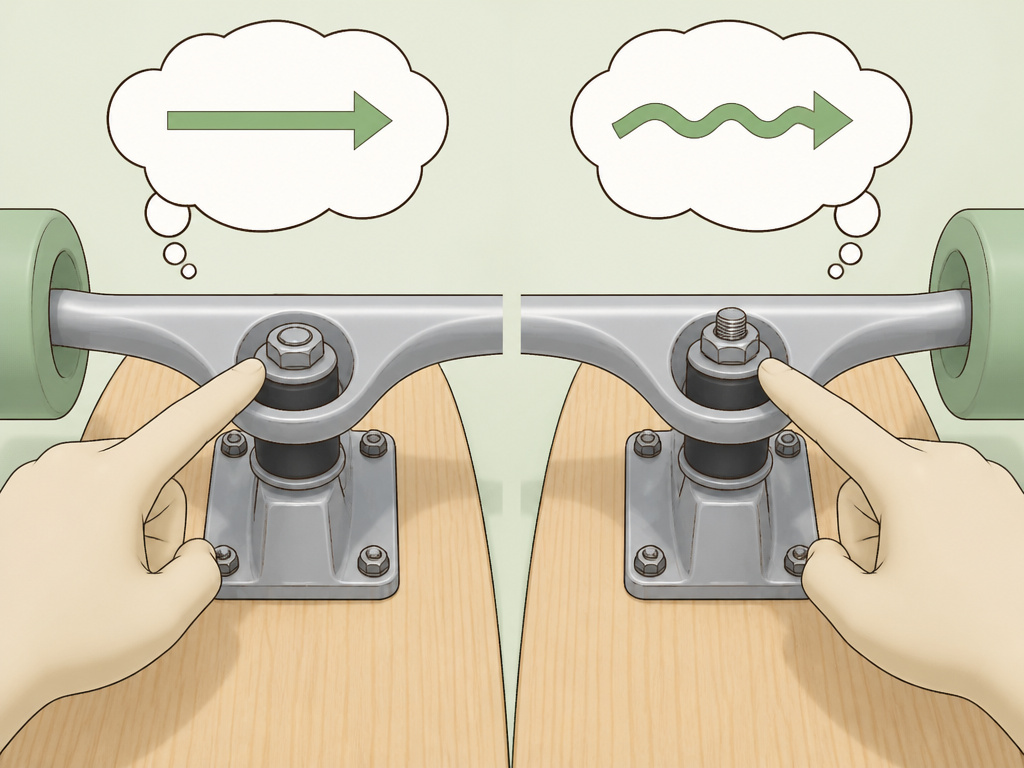
Here’s where the sources don’t agree. There are two schools of thought on judging your final adjustment, and both have merit.
The Visual Thread-Count Method (Decathlon, S+S Sportartikel GmbH):
The Decathlon guide says to leave “one or two screw threads visible.” The S+S Sportartikel GmbH (FunTomia) manual states: “Check that the locknut’s threads must always fully sit on the threads of the King Pin.” They warn that if threads protrude too far, the kingpin may need professional shortening. This method is precise and repeatable for reassembly.
The Ride-Feel Method (Yocaher):
Yocaher directly contradicts the visual approach: “Pay little mind to the amount of threads that stick out past the nylon on the nut. Instead, adjust the tightness until the board feels comfortable regardless of which way either of you face.”
Which is right? For reassembly, the visual method from Decathlon or S+S provides a specific starting point. For an experienced rider tuning for a specific style, the feel method is the ultimate truth. Your comfort and control are the final metrics. Start with the visual check, then fine-tune by feel during your test rides.
Frequently Asked Questions
How loose should longboard trucks be?
There is no universal setting. They should be loose enough to turn and carve comfortably with a gentle lean, but tight enough to avoid wheel bite and maintain control at your cruising speed. It’s a personal preference best found through incremental adjustment.
Can you loosen trucks without any tools?
Technically, no. You need a tool to grip and turn the hardened steel kingpin nut. However, you can use common household tools like an adjustable wrench or a correctly sized socket instead of a dedicated skate tool.
Why are my trucks still tight after loosening them?
If the kingpin nut is loose but the truck remains stiff, the bushings are the culprit. They may be too hard for your weight (high durometer), or they may be old, cracked, and seized up. Inspect them and consider replacing them with softer or new ones.
Should the front and rear trucks be equally loose?
Not necessarily. Some riding styles, like sliding, benefit from a differential setup. The Freebord tuning guide for its FB5 trucks recommends setting the front truck looser than the rear to help initiate slides. For general cruising and carving, keeping them similar is fine.
How do you avoid speed wobbles with loose trucks?
Loose trucks can increase the potential for speed wobbles by making the board more responsive. To counteract this, focus on maintaining a low, stable stance with your weight over the front truck. Strengthening your legs and ankles also helps. If wobbles persist, tighten the trucks incrementally until stability returns, and consult our guide on how to avoid longboard speed wobbles.
Before You Go
One rule cuts through all the debate: if you experience wheel bite, tighten your trucks. That immediate physical feedback, the wheel grabbing the deck, is a clear signal that you’ve gone too far. Everything else is a gradient of personal taste.
Start with the mechanical basics: the right tool, a quarter-turn patience, and a test ride after each tweak. Understand that drop-through trucks demand disassembly, and that stubborn stiffness points to your bushings. The rest is about logging miles and learning what your board tells you. Now get out there and carve.
