How to Make a Lime Scooter Your Own: The Full Process
This post contains affiliate links. As an Amazon Associate, we earn from qualifying purchases.
To make a Lime scooter your own, you must legally acquire a decommissioned unit, then bypass its proprietary software lock, either through community firmware hacks for specific models or by physically replacing the controller, and finally perform necessary hardware repairs.
This process hinges on a clear distinction: you are converting a decommissioned rental scooter into a personal vehicle, not hacking an active rental. The official Lime manual explicitly states that modifications void warranties, a stance directly contested by the DIY repair and hacking community documented on sites like ScooterHacking.org. A key part of the community’s ethos is figuring out how to make a Lime scooter your own. Your path forks immediately based on the scooter’s generation and your technical comfort.
What follows is a walkthrough of the three-phase process: legal acquisition, software liberation, and hardware restoration. By the end, you’ll know which models are viable targets, the tools required, and the ongoing commitment of owning what was built as fleet hardware.
Key Takeaways
- The only legal starting point is a decommissioned scooter purchased from an impound, auction, or secondhand market; taking an active rental is theft.
- Conversion feasibility depends entirely on the Lime scooter model; Gen 2.5 and some Gen 3 units have known community hacks, while newer models may require a full controller swap.
- Budget $150–$300 for replacement parts like batteries, chargers, and tires, on top of the scooter’s purchase price, according to repair guides.
- A full hardware rewire, while more work, provides complete independence from Lime’s software.
- Post-conversion, treat it as a DIY vehicle; expect to handle all maintenance, as official Lime support and parts are unavailable.
The Legal First Step: Acquiring a Lime Scooter

You cannot ethically or legally “make” an active Lime scooter your own. The vehicles in the fleet are Lime’s property, protected by GPS and network locks. The legitimate entry point for how to make a lime scooter your own is a decommissioned unit. Cities and rental companies regularly auction off scooters that are damaged, out-of-service, or from a discontinued fleet.
These auctions or impound sales are where the community sources its projects. A Reddit user in California reported getting a Lime Gen 2.5 from an impound after the company pulled out of their area. That’s the model scenario: a scooter that is legally separated from the rental network and sold as surplus hardware. The first question to ask any seller is for proof that Lime has relinquished ownership, a critical step in how to make a lime scooter your own. No proof, no sale.
Common mistake: Assuming a scooter found abandoned or “junked” is free for the taking. If it’s still reporting to Lime’s servers, it’s still their property. Taking it is theft, and attempting to hack it could violate computer fraud laws.
Once you have a legitimate scooter, identify it. The model dictates everything that comes next. Earlier models like the Lime-S 1.0 are identified as a Ninebot SN1.0BLK. Knowing this is critical, as hacking procedures are model-specific.
Software Liberation: Bypassing the Lime Lock
With a legally-owned scooter in hand, the next barrier is its brain. The scooter expects to communicate with the Lime app to activate. Your goal is to either trick it into thinking it’s always active or replace the brain entirely.
The community at ScooterHacking.org has documented methods for several generations. For example, unpatched Sx2.5 scooters can be hacked using an Arduino and specific serial commands. The Lime-S 1.0 (Ninebot SN1.0BLK) can be activated using standard SNSC procedures. These are software-level interventions that require connecting to the scooter’s controller board, often via the charging port or a diagnostic header.
This is where your comfort with coding and basic electronics is tested. The process isn’t point-and-click; it involves following precise command sequences that, if done wrong, can brick the controller. The ScooterHacking.org Lime firmware guide is the primary repository for these techniques. It’s a living document, so the instructions for your specific model might be a forum post or a Discord chat log, not a polished tutorial.
| Lime Model | Community Hack Method | Technical Skill Required |
|---|---|---|
| Lime-S 1.0 (SN1.0BLK) | SNSC standard procedures | Moderate |
| Unpatched Sx2.5 | Arduino + serial commands | High |
| Lime-S 3.0, M1.1, X1.3 | Specific firmware dump | High |
| Gen 4+ | Limited public info; may require hardware swap | Very High |
For later models like the Gen 4, public hacking details are scarce. The company’s security has evolved. When the software route hits a wall, the only path forward is hardware.
Hardware Conversion: The Full Rewire
When software hacking is impractical or impossible, you go under the hood. This means physically replacing the scooter’s proprietary controller, display, and sometimes the throttle with generic, user-controlled components. It’s more invasive but offers total freedom.
You start by stripping out the Lime-specific electronics. The Gen 2.5 uses H6 screws for stem assembly, so you’ll need that Allen key. Inside, you’ll find a central controller wired to the motor, battery, throttle, and display. Your mission is to disconnect all of it and install a new, universal scooter controller. This is essentially rebuilding the scooter’s electrical nervous system.
The tools you’ll need:

- A multimeter (for verifying battery voltage and continuity).
- Hex keys and Torx drivers (T10, T20, and a 6mm hex are common).
- Wire cutters, strippers, and soldering iron or crimp connectors.
- A new controller matched to your motor’s voltage (42V for Gen 2.5).
- A generic throttle and display, or re-use the old throttle if it’s a simple analog type.
The physical process is straightforward but meticulous. Label every wire you disconnect. Match motor phase wires from the old controller to the new one. Connect the battery, throttle, and brake signals. The messy part is the Lime-specific wiring for GPS and cellular modems, you can simply cut and insulate these, as they’re useless for a personal scooter.
Where this goes sideways: Connecting the battery backwards to the new controller. The magic smoke that escapes is permanent. Always double-check polarity with your multimeter before applying power.
Once rewired, you’re no longer dealing with a Lime product. You have a generic electric scooter built on a sturdy Lime frame. This is a great platform for adding your own scooter accessories like better lights or a phone mount.
The Real Cost: Parts, Labor, and Time
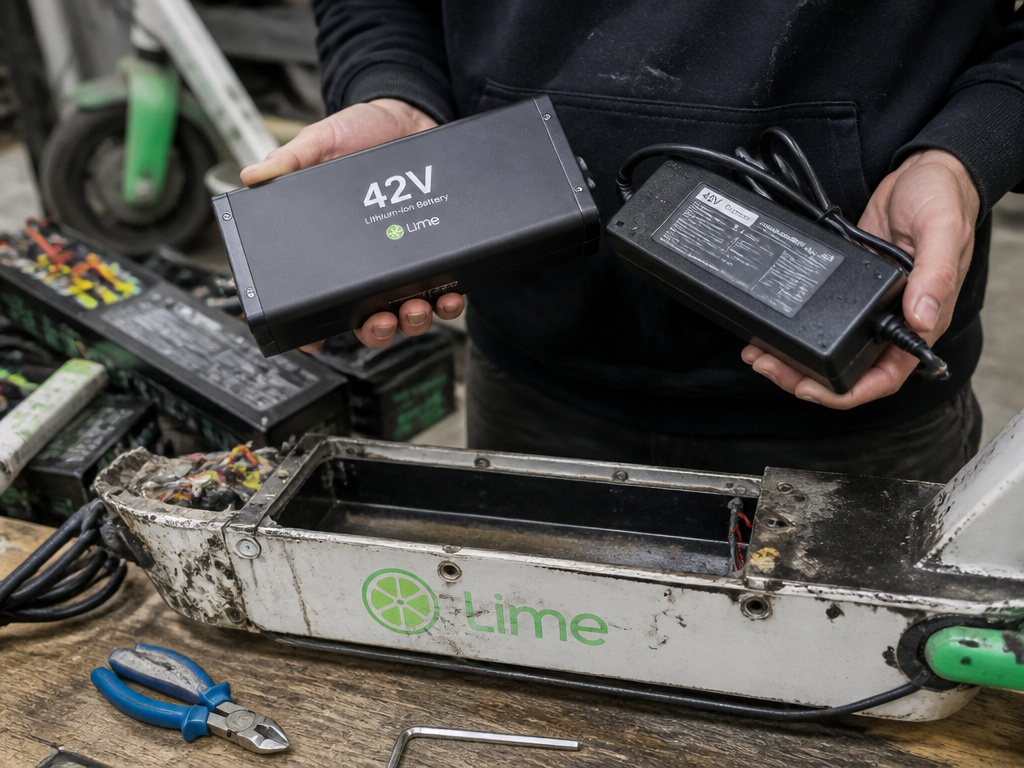
Converting a Lime scooter isn’t about saving money compared to buying a new, retail scooter. It’s a project with its own economics. The scooter itself might cost a variable amount at auction. The parts to revitalize it are another story.
According to a repair guide from Levyelectric, a total refurbishment runs $150-$300 in parts, plus your labor. That guide breaks it down:
- Battery: An aftermarket 42V replacement costs $80-$150.
- Charger: A generic 42V 2A charger is $25-$40.
- Tires: Replacement costs $15-$40 per tire.
- Brakes: Pad replacement and cable adjustment is $10-$25 for pads, $5-$15 for cables.
These are estimates for making a decommissioned scooter fully functional. If your unit needs a motor, the cost climbs sharply. This is why inspecting the scooter before purchase is essential. Spin the wheels by hand, they should move freely without grinding. Check the brake levers for firmness. Look for obvious frame cracks.
The labor time is the hidden cost. A simple battery swap might take an hour. A full controller rewire and system rebuild can easily consume a weekend, especially on your first attempt. Compare that to the instant gratification of unboxing a new retail scooter. The value is in the learning, the customization, and the satisfaction of reviving discarded hardware.
Owning and Maintaining Your Converted Scooter
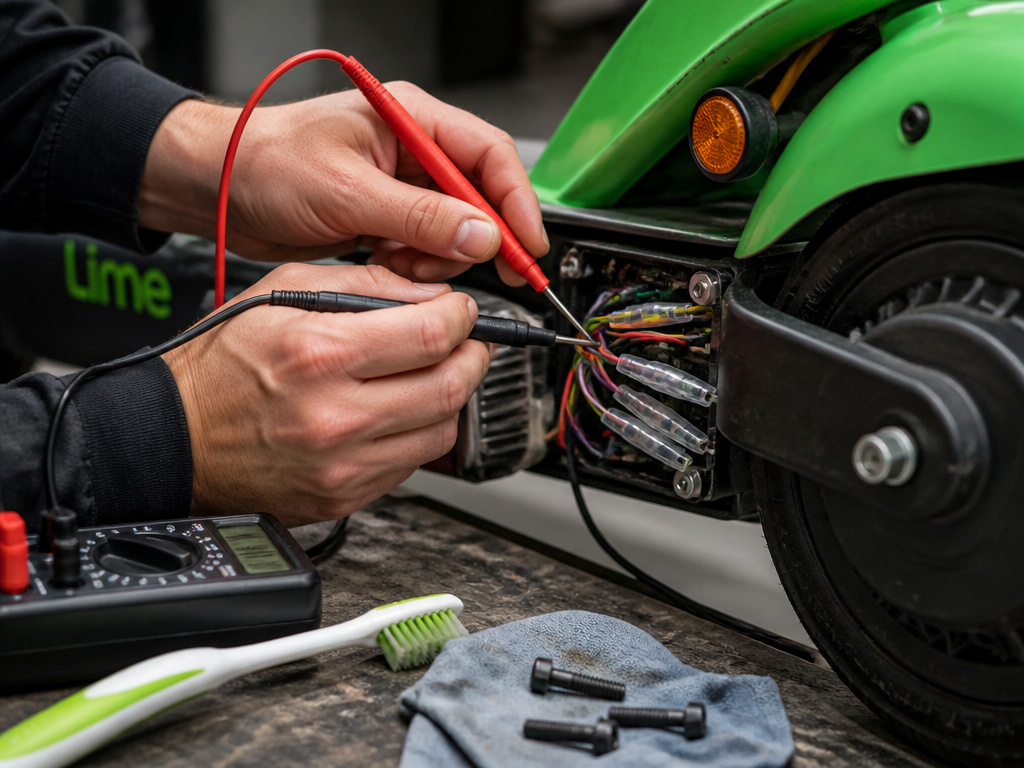
After the conversion, you’re the manufacturer, warranty department, and repair shop. Your maintenance routine becomes your safety net.
Start with the basics from the Lime manual, even if you’ve replaced the guts. The kickstand must be fully retracted to ride. Check the brakes by holding the levers and pushing the scooter; it shouldn’t roll. Visually inspect tires before every ride. These rental scooters are built for durability, but they’re also ridden hard. A Gen 2.5 has a non-folding design, which simplifies the frame but also means it’s a single, rigid unit; it uses H6 screws for stem assembly.
Cleaning is simple: a soft damp cloth and a soft-bristled toothbrush. The manual explicitly warns against corrosive substances like gasoline, acetone, or bleach. This advice holds true for any scooter, converted or not.
For performance upgrades, the world of electric scooter accessories opens up. You can add a more powerful motor controller for higher speed (though the stock 300W front-wheel motor has limits), or upgrade to air-filled tires for a smoother ride. Since you’ve already mastered the rewire, installing these add-ons is just another Saturday project.
Finding parts or conversion kits
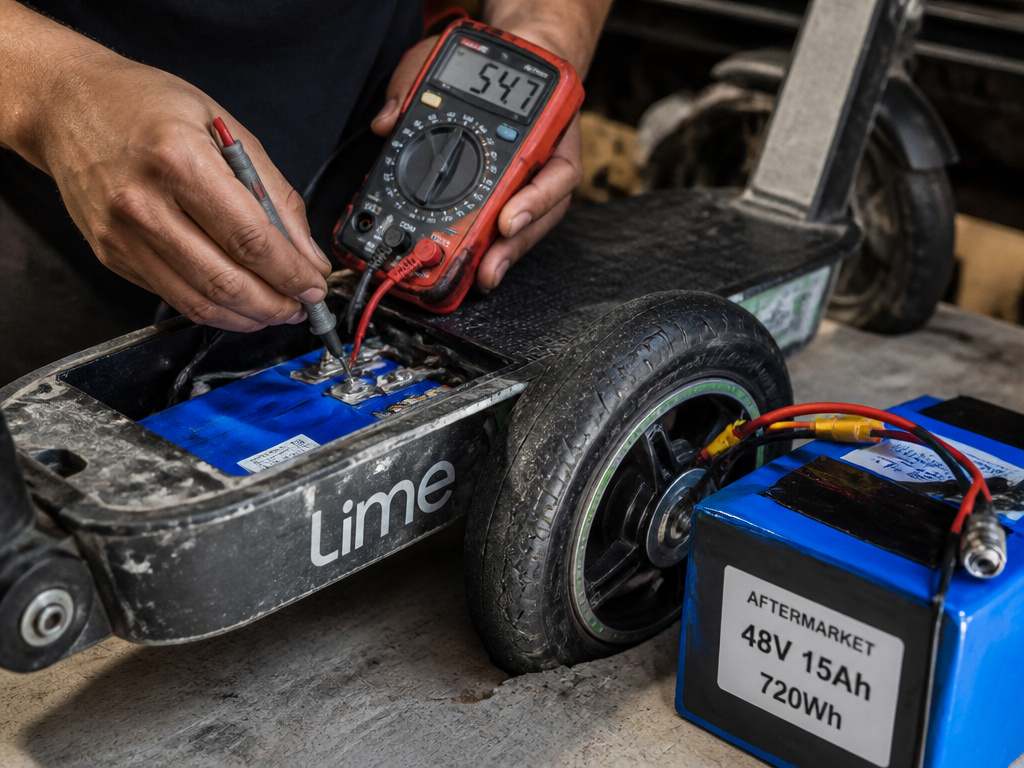
For a decommissioned Lime scooter, sourcing parts is a scavenger hunt. The most common needs are batteries, chargers, tires, and brake components. Aftermarket replacements exist, but you must match the specifications of your specific model. For example, a Gen 2.5 uses a different battery than a Gen 3.0. Online marketplaces and scooter repair forums are the primary sources for these components. There are no official ‘conversion kits’ from Lime, as the company explicitly states that modifications void warranties. Instead, the community shares information on compatible parts and hacking procedures for different scooter generations, which you can find on dedicated technical wikis.
Frequently Asked Questions
Is it illegal to hack a Lime scooter?
It is illegal to modify a Lime scooter that is still part of the active rental fleet, as it constitutes unauthorized access to computer systems and theft of property. The process described here is only legal when applied to a decommissioned scooter you have legally purchased at auction or from a liquidator.
What’s the easiest Lime scooter model to convert?
The Lime Gen 2.5 and the Lime-S 1.0 (Ninebot SN1.0BLK) have the most documented community procedures for software activation. The Gen 2.5 also has a relatively simple wiring harness, making it a candidate for a full hardware rewire if the software method fails.
Can I just hotwire it instead of all this software hacking?
The term “hotwire” is misleading. These are digital vehicles, not cars with ignition wires. Simply crossing two wires won’t start it. The closest analog is a full hardware rewire, where you replace the locked controller with an open one. There are guides that explore how to hotwire a Lime scooter in this sense, by bypassing the entire proprietary system.
How fast will my converted Lime scooter go?
It depends on the model and your modifications. According to its manual, the stock Lime Gen 2.5 has a maximum speed of 15 mph (24 km/h), though some aggregator sites claim higher speeds for unspecified Lime models. If you perform a full controller swap, you may be able to increase this, but you are limited by the motor’s power (300W for the Gen 2.5) and local e-scooter laws.
Where can I find parts for my Lime scooter?
Official Lime parts are not sold to consumers. Aftermarket batteries, chargers, tires, and universal controllers are available on online marketplaces like eBay, Amazon, and specialty electronics sites. Knowing your Lime scooter model and its specs (like 42V battery) is crucial for buying compatible parts.
The Bottom Line
Converting a Lime scooter is a project for tinkerers, not commuters looking for a cheap ride. The real cost isn’t just the parts list, it’s the hours of research, the risk of bricking a controller, and the ongoing responsibility of maintaining a one-of-a-kind vehicle. If that sounds appealing, start by identifying a legally-obtained Gen 2.5 or earlier model and consult the ScooterHacking.org wiki.
For everyone else, the economics are clear. The $300 you might spend on conversion parts, plus the auction cost and your weekend, gets you close to the price of a new, warrantied, mid-range personal scooter. The Lime conversion path is about the journey, the learning, and the satisfaction of revival. It’s the difference between buying a skateboard and learning to customize a hoverboard from the frame up. One is a tool, the other is a testament to your skill. Choose the path that matches your patience and purpose.
