How Much Is a Hoverboard: The 5 Main Price Drivers
This post contains affiliate links. As an Amazon Associate, we earn from qualifying purchases.
Hoverboard prices vary widely, but the real price is determined by five things: safety certification, motor power, battery capacity, wheel construction, and extra features like Bluetooth. A common question is how much is a hoverboard? A certified, durable board for an adult typically costs more than a cheap, uncertified model, which can be a fire risk.
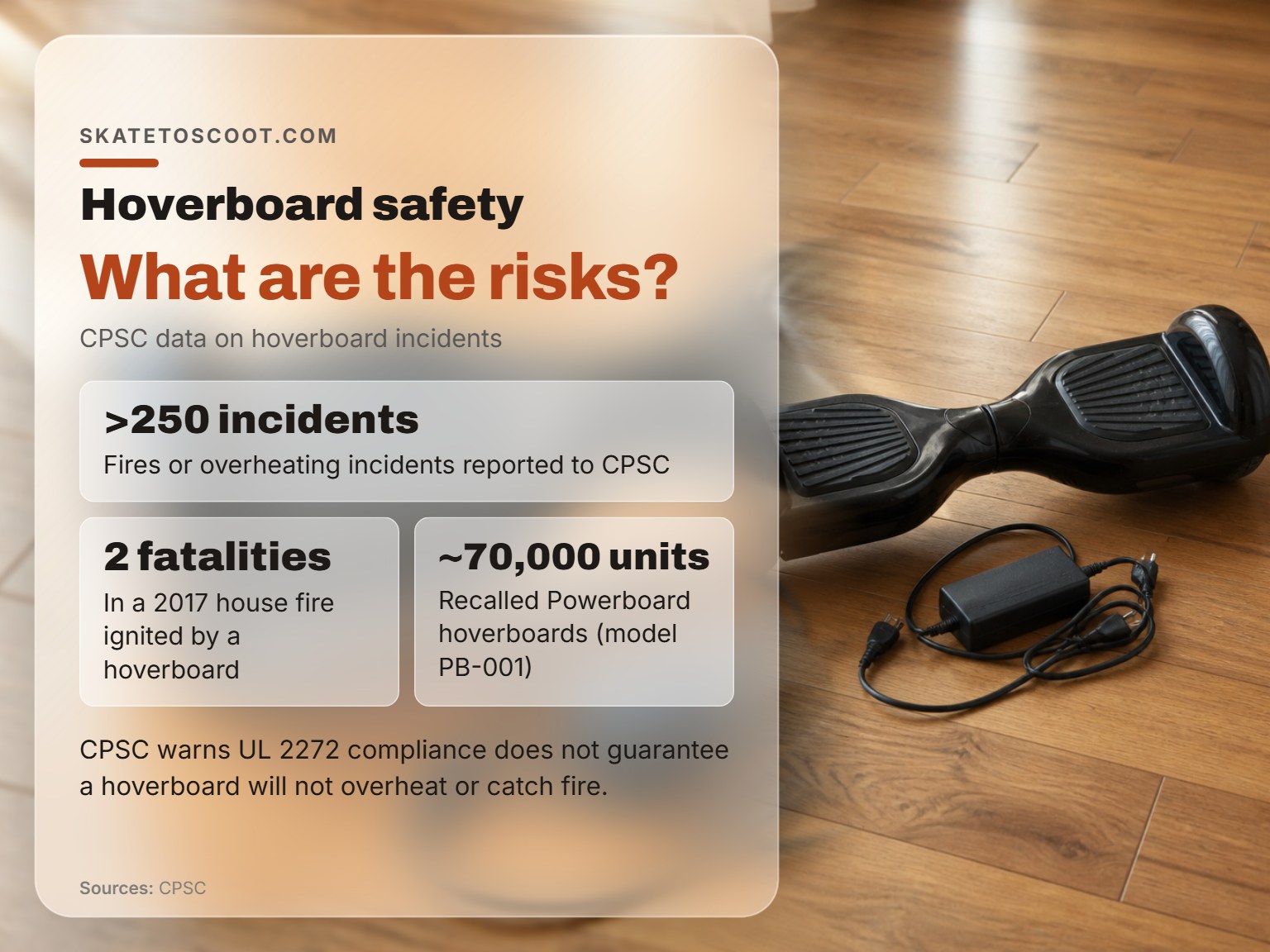
That price spread isn’t random. It’s the direct cost of materials that either pass or fail a safety test. The CPSC is aware of more than 250 hoverboard incidents related to fires or overheating, including a March 2017 house fire in Harrisburg, Pennsylvania, that killed two children. The cheapest boards on the market skip the expensive testing and components that prevent those failures.
What follows is a breakdown of where your money actually goes, from the essential safety stamp to the nice-to-have lights. You’ll also find a real comparison of what different retailers offer and the one feature most buyers regret skimping on.
Key Takeaways
- The UL 2272 safety certification is essential and adds cost; boards purchased before January 29, 2016, are definitively non-compliant.
- Motor power and battery capacity directly affect price; higher wattage motors and larger capacity batteries generally cost more.
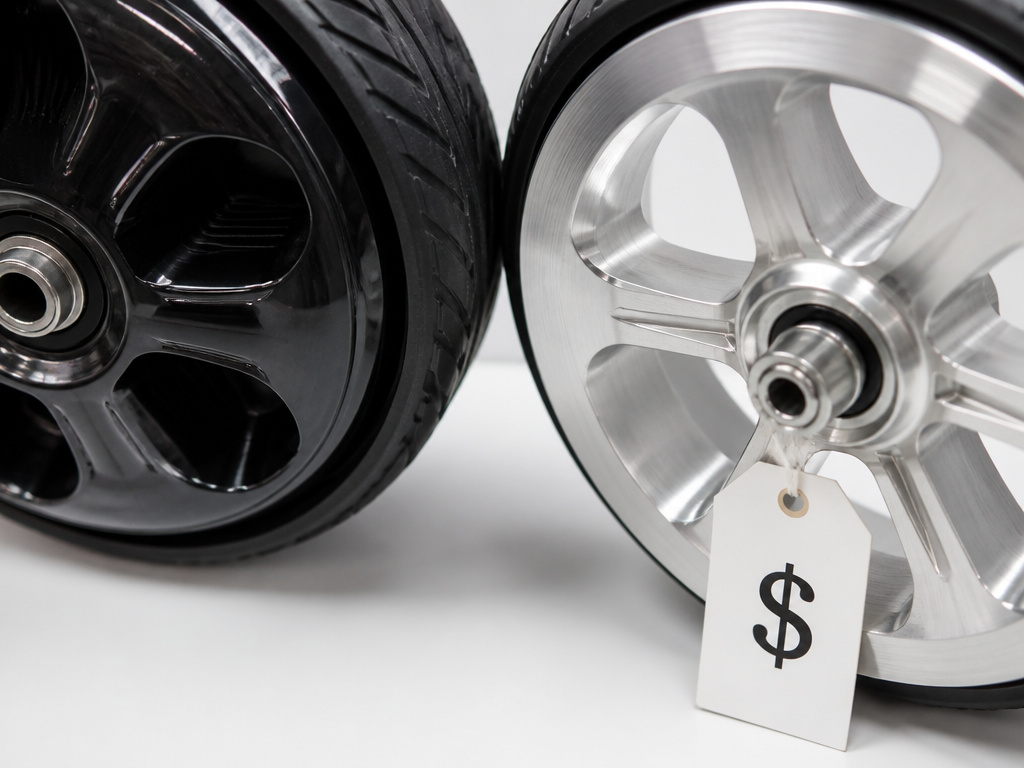
- Aluminum wheels cost more than plastic and are marketed as more durable.
- The cheapest hoverboards often lack full UL 2272 certification and can represent a documented fire hazard.
What Determines a Hoverboard’s Price? (The 5 Main Drivers)
We can break this down step by step. When you see a $130 board next to a $400 one, the how much is a hoverboard question isn’t just about a brand name. You’re paying for specific, measurable components that affect safety, performance, and how long the thing lasts. I’ve seen this common mistake a hundred times: a buyer picks the cheaper option, then wonders why it struggles on a gentle hill or needs a new battery in six months.
The price is built on five pillars. Miss one, and you’re trading dollars for risk or disappointment.
Safety Certifications and Standards The UL 2272 standard is a consensus-based American National Standard (ANSI) and National Standard of Canada (NSC). It takes a system-wide approach to electrical safety, testing the entire hoverboard unit, not just individual components like the battery or charger, for fire and overheating risks. Compliance adds manufacturing cost, which is why uncertified boards are cheaper.
First and most critical is safety certification. This is where the most severe cost-cutting happens, and the consequences are in the government reports. The Consumer Product Safety Commission (CPSC) states that hoverboards should be compliant with the UL 2272 safety standard. However, they explicitly warn that even UL 2272 compliance cannot guarantee a hoverboard will not overheat or catch fire.
That warning matters. It means that even a certified board has a baseline risk, so starting with an uncertified one is playing with fire, literally. The CPSC is aware of more than 250 hoverboard incidents related to fires or overheating, including a March 2017 house fire that killed two children. On July 18, 2016, CPSC recalled hoverboards from 10 different companies, affecting over 500,000 scooters.
How do you spot a certified board? Check for a holographic UL certification label on the bottom of the product itself, not just a claim on the box. The CPSC also warns that many sellers claim to have UL-compliant components, but UL 2272 covers the entire hoverboard unit. A certified battery pack in an uncertified chassis doesn’t count.
| Price Tier | Likely Certification Status | Risk Level | Best For |
|---|---|---|---|
| Budget (< $150) | Often missing or fraudulent UL 2272 mark | High. Correlates with CPSC incident data. | Avoid. |
| Mid-Range ($200 – $300) | Should have verifiable UL 2272 label | Managed. Follows CPSC guidelines. | Most riders, daily use. |
| Premium ($350+) | UL 2272 certified, sometimes with additional testing | Lower. Uses higher-grade components. | Heavy use, rough terrain, adult riders. |
The cutoff is clear: if you bought your hoverboard before January 29, 2016, it is not UL 2272 compliant. That date is in the CPSC safety alert for a reason.
Motor Power and Battery: The Performance Duo
After safety, power dictates price. A hoverboard’s motor determines its torque, its ability to climb hills and accelerate smoothly. Its battery determines range, how far you can go on a charge.
Take the Jetson Stereofly. Its manual lists a 360W (peak) motor and a 25.2V 4.0AH Lithium-ion battery. That battery provides a real-world range and supports that motor’s peak output. A cheaper board might pair a motor with a lower-quality battery, which can lead to poor performance and potential overheating.
Hoverboards.com advertises its X6 model with a 4,400 mAh battery output and an 8-12 mile range. That capacity directly supports a dual-motor system for a smoother ride. A larger capacity battery, such as the 4,400 mAh battery in the Hoverboards.com X6, provides a longer range per charge.
Where this goes sideways: Pairing a powerful motor with a weak battery. The motors demand more current than the battery can safely deliver, leading to overheating.
Wheel Size and Construction: Plastic vs. Aluminum
Wheels are a visual and functional differentiator. Size affects stability and terrain handling; construction affects longevity.
Smaller wheels (6.5″) are used on models like the Hoverboards.com X6.
The material is a bigger deal. Plastic wheels cost pennies to produce. Aluminum wheels, like those on the X6, cost more but are marketed as never cracking. For heavier riders or rougher terrain, aluminum wheels may offer greater durability.
Extra Features: Bluetooth, Lights, and App Control
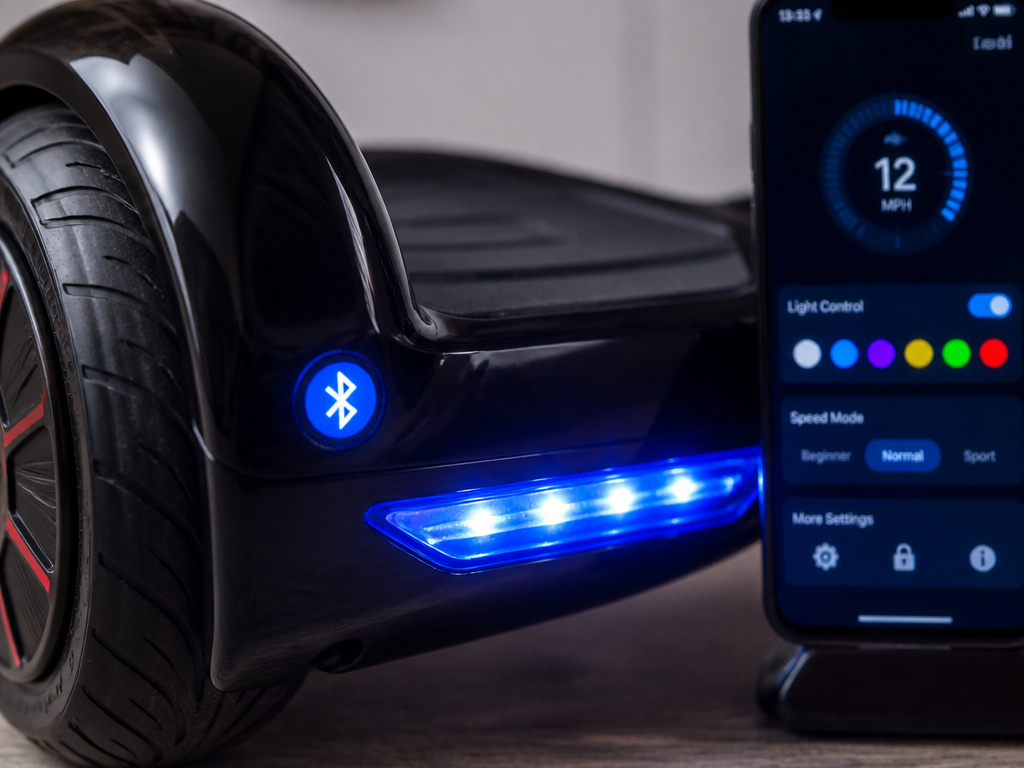
This is where the “fun” budget goes. Built-in Bluetooth speakers, LED light arrays, and companion smartphone apps for speed mode control are pure add-ons. They don’t make the board safer or more powerful, but they do increase the manufacturing cost and, therefore, the retail price.
The Jetson Stereofly manual notes you can connect a device to its Bluetooth speaker to stream music, and the lights will sync to the beat. Neat? Sure. Essential? No. These features are why two boards with identical motors and batteries can have a $50-$100 price difference.
How Much Are Hoverboards at Major Retailers?
Prices float. A model might be $249 on Amazon, $269 at Target, and on sale for $229 at Walmart the week before Christmas. This volatility is why a static price list is useless, but understanding the retail landscape isn’t.
Amazon is the wild west. You’ll find the widest range, from suspiciously cheap no-name brands to well-reviewed models like the Jetson. The critical task here is verification, scrolling through Q&A to confirm the UL 2272 label is real, not just mentioned in the title.
Big-box retailers like Walmart, Target, and Best Buy tend to carry a curated, safer selection, often from known brands like Razor or Jetson. The trade-off is less variety and sometimes a slightly higher price for that curation and easy returns.
Specialty online retailers like Hoverboards.com stake their reputation on safety and quality, hence their 90-day warranty and claim of over 100,000 satisfied customers. You often pay a premium for this direct-to-consumer assurance.
| Retailer Type | Price Range Typical | Pros | Cons | Best For |
|---|---|---|---|---|
| Amazon | $130 – $400+ | Vast selection, competitive pricing, reviews. | Risk of counterfeit/non-compliant boards, must verify. | Savvy shoppers who do their own verification. |
| Walmart / Target | $180 – $350 | Curated, safer picks, easy in-store returns. | Less selection, can be pricier than online. | Buyers who want convenience and trust the store’s filter. |
| Specialty Online (e.g., Hoverboards.com) | $250 – $400+ | Focus on safety/quality, better warranties, direct support. | Higher prices, shipping wait. | Buyers prioritizing verified safety and customer service. |
The best times to buy are during standard retail holidays: Black Friday, Cyber Monday, Prime Day, and post-Christmas sales. Inventory clears and last-year’s models get discounted.
The Real Cost: Price vs. Value and Hidden Expenses
The sticker price is the first cost in the how much is a hoverboard calculation. The total cost of ownership is what sneaks up on you. I’ve seen this happen many times. I’ve watched too many skaters buy the “complete” only to spend more on upgrades in a year.
Safety Gear is Non-Optional. A helmet, wrist guards, and knee pads are not included and add to the upfront cost.
Replacement Parts Wear Out. Tires (or wheel covers), batteries, and chargers are consumables. A replacement lithium-ion battery pack is an additional cost. Using a non-supplied charger voids warranties and, per the CPSC, increases fire risk. The Jetson manual explicitly says to use only their charger and to never leave it charging overnight.
Extended Warranties and Repairs. The standard warranty is often 90 days, like Hoverboards.com’s. An extended warranty adds to the purchase price. Repair costs are high; these are not user-serviceable devices. A burnt-out motor or control board often means replacing the entire unit.
Common mistake: Storing a hoverboard long-term without proper battery care. The Jetson Stereofly manual says to fully charge the battery before storing and recharge it once a month during storage. This differs from general lithium-ion best practice from other industries, which often recommends storage at ~40-60% charge for longevity.
Many people don’t realize this: a $200 hoverboard with a $50 helmet and a $90 replacement battery after 18 months costs $340. A $300 hoverboard that includes a better battery and a 1-year warranty might cost $340 upfront but saves you the mid-life crisis and the risk.
Safety Certifications and Standards: The Non-Negotiable Cost
We touched on this as a price driver, but it deserves its own deep dive because it’s the most common area of buyer deception. The gap between a certified and uncertified board isn’t just a label; it’s an entire engineering and testing process.
The UL 2272 standard is a system-level approach. It doesn’t just test a battery cell in isolation; it tests how that cell behaves in the hoverboard’s chassis under vibration, temperature swings, and electrical fault conditions. This is why the CPSC emphasizes that a UL-compliant battery pack in an uncertified hoverboard is not safe.
The consequences of missing this are documented, not theoretical. The Hoverboard LLC Powerboard (model PB-001) recall involved ~70,000 units. There were 27 reports of these boards overheating, sparking, and smoking, with one property damage report. They were sold for between $350 and $1,000, proof that a high price alone doesn’t guarantee safety.
How to Verify, Not Just Trust:
- Check for the holographic UL mark on the device itself, not just the box.
- Check the CPSC recall database using the model number.
- Be wary of sellers on generic online marketplaces with prices significantly below known brands.
- Ask the seller for the UL certification file number. A legitimate manufacturer can provide it.
This verification step adds no monetary cost, only a few minutes of your time. It’s the most valuable investment you can make in a hoverboard purchase.
Hoverboard Pricing: Kids vs. Adults
The needs, and therefore the costs, differ. A board for a 60-pound child doesn’t need the same motor torque or weight capacity as one for a 200-pound adult.
Kids’ Hoverboards are often smaller, with lower top speeds and softer acceleration curves. The Jetson Stereofly has a default “Beginner” speed mode for this reason. These boards can be less expensive because they may use smaller motors and batteries. Durability still matters, a plastic wheel will crack just as easily under a child’s weight.
Adult Hoverboards require more robust components. The Hoverboards.com X6 is marketed for both kids and adults, which means its 6.5″ aluminum wheels and dual 350W motors are built to handle a wider weight range. This versatility comes at a higher price. An adult-specific or all-terrain model with larger tires and more power will typically cost more.
The line between a “kids” and “adults” board is often blurry in marketing. Focus on the hard specs: weight capacity, motor wattage, and wheel diameter. Don’t buy an underpowered “kids” board for a teenager or adult; it will struggle, overheat, and die prematurely.
Where to Buy a Hoverboard and What to Look For
You know the factors that drive price. Now, where do you actually make the purchase, and what’s the final checklist before you click “buy”?
- Choose Your Retailer Type. Decide if you want the variety (and verification duty) of Amazon, the curated safety of a big-box store, or the specialized focus of a site like Hoverboards.com. Your comfort level with risk should guide this.
- Filter for UL 2272. Use this as an essential search filter. If a listing doesn’t mention it, move on.
- Match Specs to the Rider. An adult typically needs a board with a more powerful motor and larger battery.
- Read the Return Policy and Warranty. A 90-day warranty is standard. A 30-day return policy is essential in case the board has a defect out of the box. The Jetson manual advises recalibrating straight out of the box, if that doesn’t fix issues, you need an easy return path.
- Factor in the Extras. Add the cost of safety gear to your budget. Decide if an extended warranty is worth it for you (often it is for complex electronics).
Following a detailed hoverboard review from a trusted source can shortcut this process, as they’ve done the verification and performance testing for you.
How fast can a hoverboard go?
Hoverboard speeds vary by model. One specific model has a maximum speed of 12 miles per hour. When traveling near or at its top speed, it will emit a continuous beeping sound as a warning to slow down. Another model lists its top speed in a range of 6 to 8 miles per hour. It’s crucial to remember that higher speeds require greater skill from the rider to maintain balance and control, especially when navigating turns or uneven surfaces. Always start in a beginner mode to get accustomed to the board’s acceleration and responsiveness.
What is the maximum weight for a hoverboard?
The fact sheet does not provide specific numbers for maximum weight capacity. In general, every hoverboard model is engineered to support a certain rider weight, and exceeding this limit can lead to problems. Overloading the board can cause the motor to overheat, which may trigger warning beeps and require you to let the motor cool for a significant period before riding again. It can also strain the frame, wheels, and battery, potentially leading to premature wear or even a safety hazard. Always check the manufacturer’s specifications for your specific model before riding.
Frequently Asked Questions
How much do real hoverboards cost?
Real, UL 2272-certified hoverboards from reputable brands typically cost between $200 and $400. Prices below $150 often indicate missing or fraudulent safety certifications, correlating with the fire hazards documented by the CPSC. The final price depends on motor power, battery capacity, wheel material, and extra features.
What is the most expensive part of a hoverboard?
The lithium-ion battery pack and the certification process are the most expensive parts. A quality, high-capacity battery is a significant cost driver. The rigorous testing required for UL 2272 compliance adds substantial manufacturing expense, which is why uncertified boards can be sold so cheaply.
Can you find a safe hoverboard under $200?
It is difficult but possible, especially during sales on last-year’s models from major brands like Jetson. The key is verification, you must confirm the presence of a legitimate UL 2272 label on the device itself, not just in the product description. Extreme caution is advised for any board under $150.
Are more expensive hoverboards safer?
Not automatically, but they are more likely to be safer. A higher price should reflect the cost of certified components, robust construction (like aluminum wheels), and a larger battery that isn’t stressed to its limits. However, safety is determined by compliance with UL 2272, not price alone. Always verify the certification.
How much are hoverboards at Walmart under $100?
Extremely rare and highly suspect. As of the latest CPSC guidance and market data, a price this low almost certainly means the hoverboard lacks proper UL 2272 certification and uses substandard, potentially hazardous components. The CPSC warns that a price significantly lower than competitors is a red flag for non-compliance.
Is a hoverboard or electric scooter better for the price?
This depends entirely on use case. For pure utility and commuting, an electric scooter generally offers more stability, range, and speed for a similar price. For fun, maneuverability, and a smaller storage footprint, a hoverboard can be a better value. Our hoverboard vs electric scooter guide breaks down the trade-offs in detail.
The Bottom Line
Your budget should start at $250 for a legitimate, durable hoverboard for an adult rider. Going under $200 means you are likely compromising on the battery, the motor, or the safety certification, and the CPSC reports show which of those compromises leads to fires.
Spend your first 10 minutes of research verifying the UL 2272 mark, not comparing Bluetooth speaker quality. The certification is the foundation; everything else is a feature. Once that’s locked in, match the motor and battery to the rider’s weight and your terrain. Aluminum wheels are worth the upgrade.
Finally, remember the total cost. A helmet is not optional. Batteries degrade. That $200 board isn’t a $200 purchase; it’s the first installment. Paying $300 upfront for a better-built board with a longer hoverboard lifespan often costs less in the long run. Your goal isn’t the cheapest price today; it’s the most rides without incident tomorrow.
