How Much Is a Knee Scooter: Rent vs. Buy Math
This post contains affiliate links. As an Amazon Associate, we earn from qualifying purchases.
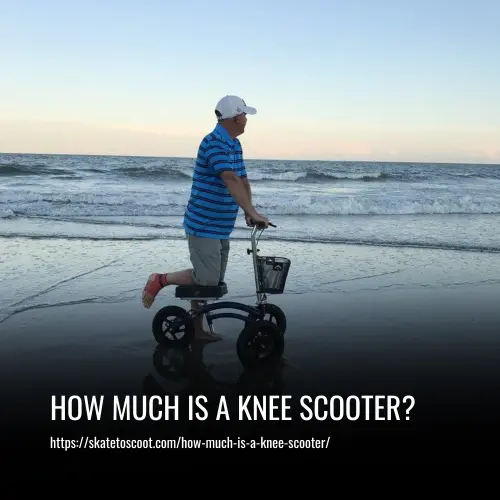
A knee scooter typically costs between $100 and $400 to buy, or $30 to $60 per week to rent. The final price depends on weight capacity, wheel type, and features like foldability. Basic models start around $100, while heavy-duty or all-terrain versions with larger air tires can reach $400.
That price spread isn’t random. It maps directly to what the scooter can actually handle, your weight, your home’s flooring, and whether you need to navigate a cracked sidewalk. A common question is how much is a knee scooter. A $100 scooter gets you a basic frame with solid plastic wheels; a $350 model buys you a 300+ lb capacity and tires that won’t send you flying over a pebble.
What follows: a breakdown of where those numbers come from across five major brands, the real math on renting versus buying, and the features that genuinely justify a higher price tag. By the end, you’ll know exactly which price bracket matches your recovery.
Key Takeaways
- Basic economy scooters start around $100, but Reddit users report these can have safety issues like wheels breaking on uneven surfaces.
- Renting costs roughly $30–$60 per week, making a purchase more economical if your non-weight-bearing period exceeds 3–4 weeks.
- Weight capacity varies by $100+. The Roscoe ROS-KS2 holds 250 lbs, while the Karman KW-200 and Drive Medical models hold 350 lbs, a critical spec to check.
- Open-box or refurbished models from brands like KneeRover offer significant savings and are often unused returns, a smart way to get a higher-end model for less.
- All-terrain air tires cost more but are essential for outdoor use; solid wheels are a “death trap” on anything but perfectly smooth indoor floors.
Price Ranges for Buying a Knee Scooter
You can group purchase prices into three tiers: budget, mid-range, and premium. The tier dictates not just comfort, but safety and where you can safely use the device.
Budget models sit in the $100 to $150 range. These are the scooters you’ll find with generic brand names on Amazon. They typically have solid plastic wheels, a basic padded knee rest, and a weight capacity around 250 lbs. Mechanically speaking, they work. The issue is where they work. As one Reddit user in r/brokenankles put it, solid wheels are for indoor use only; outside they are a “death trap” on pebbles or cracks. The frame and welds on these models are also lighter, which correlates with the online reviews warning about wheels breaking off.
Mid-range scooters from established brands like Drive Medical or Zipr cost between $150 and $250. This is where you get verified specs. These models often include better padding, more adjustment range (the Drive Medical’s knee pad adjusts from 16″ to 23″), and a more robust folding mechanism. You’re paying for predictable engineering.
The premium tier, from $250 to $400, includes brands like KneeRover and specialized models from Karman or NOVA. Here you’re buying capability for specific situations. This tier also includes “all-terrain” models with large, air-filled tires that users on Reddit call “bulletproof” for outdoor use. The higher price pays for engineering that allows safe use in everyday settings, not just smooth indoor floors.
| Price Tier | Typical Price | Key Features | Best For |
|---|---|---|---|
| Budget | $100 – $150 | Solid wheels, basic frame, ~250 lb capacity | Short-term, indoor-only use on smooth surfaces |
| Mid-Range | $150 – $250 | Name-brand specs, better adjustment, foldable | Most home recoveries, some outdoor use on pavement |
| Premium / All-Terrain | $250 – $400 | Large air tires, high weight capacity, enhanced stability | Outdoor navigation, uneven surfaces, longer recovery periods |
Common mistake: Choosing a scooter based on price alone without checking the wheel type. Solid wheels bind on carpet transitions and catch on sidewalk cracks, creating a tip-over risk within the first week of outdoor use.
The Rent vs. Buy Math (and Hidden Costs)
Renting seems like the flexible choice, but the numbers turn quickly when you compare a how much is a knee scooter purchase price. In the UK, Mobility Hire lists a budget knee walker for £33 per week (about $42). In the U.S., local medical supply stores often charge $40 to $60 weekly. At that rate, a four-week rental costs between $160 and $240, more than the purchase price of a basic or even mid-range scooter.
The break-even point usually falls between three and four weeks of rental. If your doctor says you’ll be non-weight-bearing for a month or more, buying is almost always cheaper. Renting makes sense for very short-term recoveries (under two weeks) or if you’re unsure about your need and want to try one first.
The hidden costs change the equation on both sides.
- Rental Hidden Costs: Delivery fees (often $25-$50), late return penalties, and damage waivers. Some contracts require a multi-month commitment.
- Purchase Hidden Costs: Shipping (can be $20-$50 for a bulky item), essential accessories like a storage basket ($15-$30), and a knee pad upgrade if the stock one is thin. If you buy online, you might also face a restocking fee for returns.
Advertised weekly rental rates seldom reflect the full expense. The purchase price online is rarely the final charge. Always factor in shipping and the first accessory you’ll need to buy.
Key Features That Actually Affect the Price
Not all specs are marketing. A few directly impact cost and your daily safety.
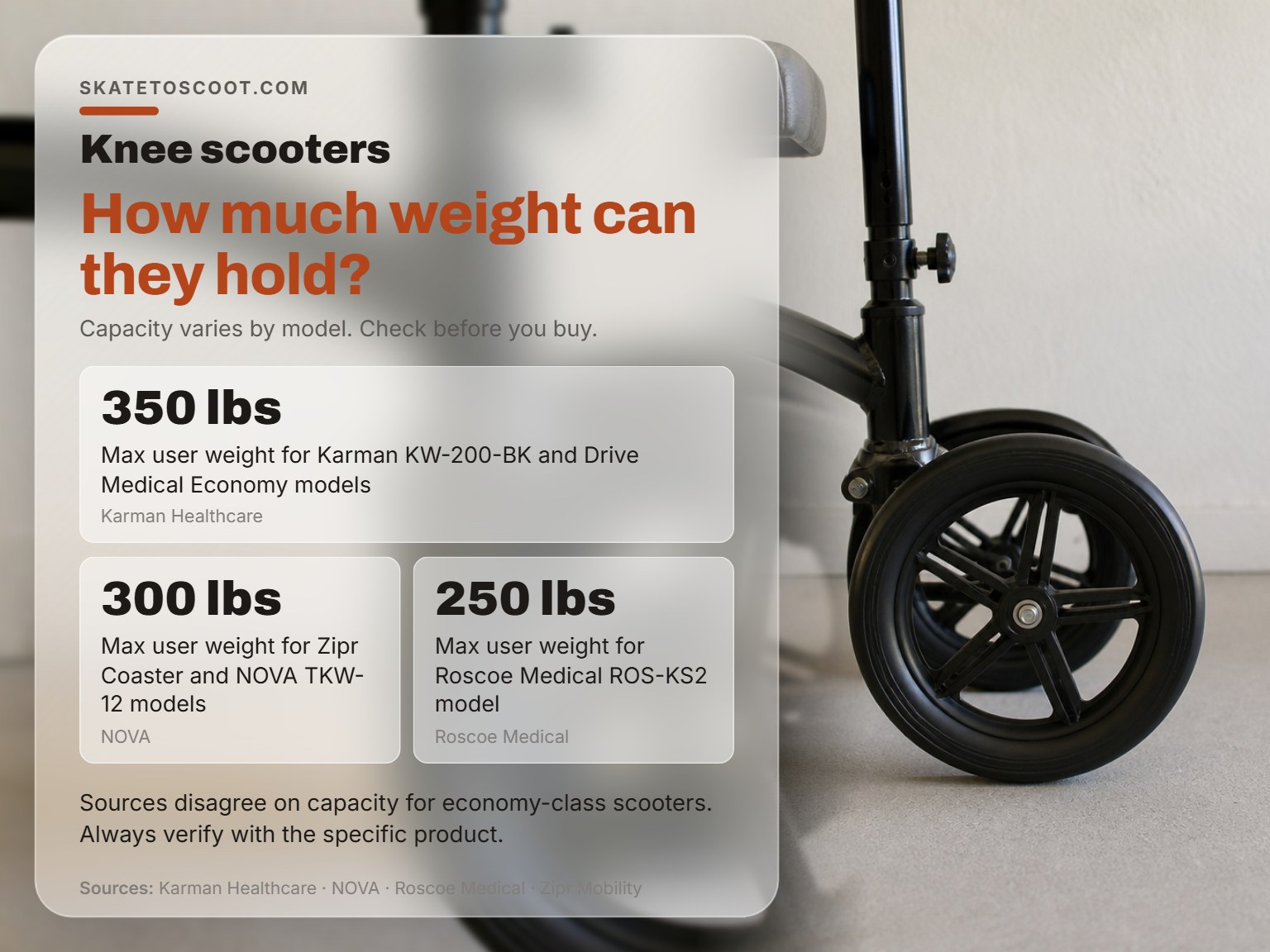
Weight Capacity: This is a structural spec. The difference is in the tube thickness, weld points, and axle design. Models have different maximum weight capacities (e.g., Roscoe Medical lists 250 lbs, Zipr and NOVA list 300 lbs, while Karman and Drive Medical list 350 lbs), which can affect their construction and price. Don’t buy right at your weight, give yourself a 20-30 lb margin.
Wheel Type and Size: This is the biggest differentiator. Small, solid plastic wheels are cheap. Larger, air-filled tires with tread are not. The Roscoe ROS-KS2 has 7.25″ wheels. An all-terrain model might have 8″ or 10″ pneumatic (air) tires. The air tires absorb bumps and roll over cracks; the solid wheels transmit every shock to your knee and can stop dead on a threshold. The upgrade to air tires can add $75 to $150 to the price, but for any outdoor use, it’s not an upgrade, it’s a necessity.
Adjustability Range: A wider adjustment range requires more complex hardware. Compare the knee pad height: the Drive Medical adjusts from 16″ to 23″, a 7-inch range. The Roscoe ROS-KS2, per one source, adjusts from 13.75″ to 19.25″, while another source lists a range of 13″ to 19″. If you’re very tall or very short, that extra range is what makes the scooter usable without constant discomfort. You pay for that engineering.
Foldability and Portability: A simple fold mechanism is standard. A quick-release, tool-free fold that makes the scooter truly compact for car trunks adds cost. Lighter materials (aluminum vs. Steel) also increase price but reduce the scooter’s weight, which matters if you must lift it in and out of a car daily.
Where to Buy (And How to Save)
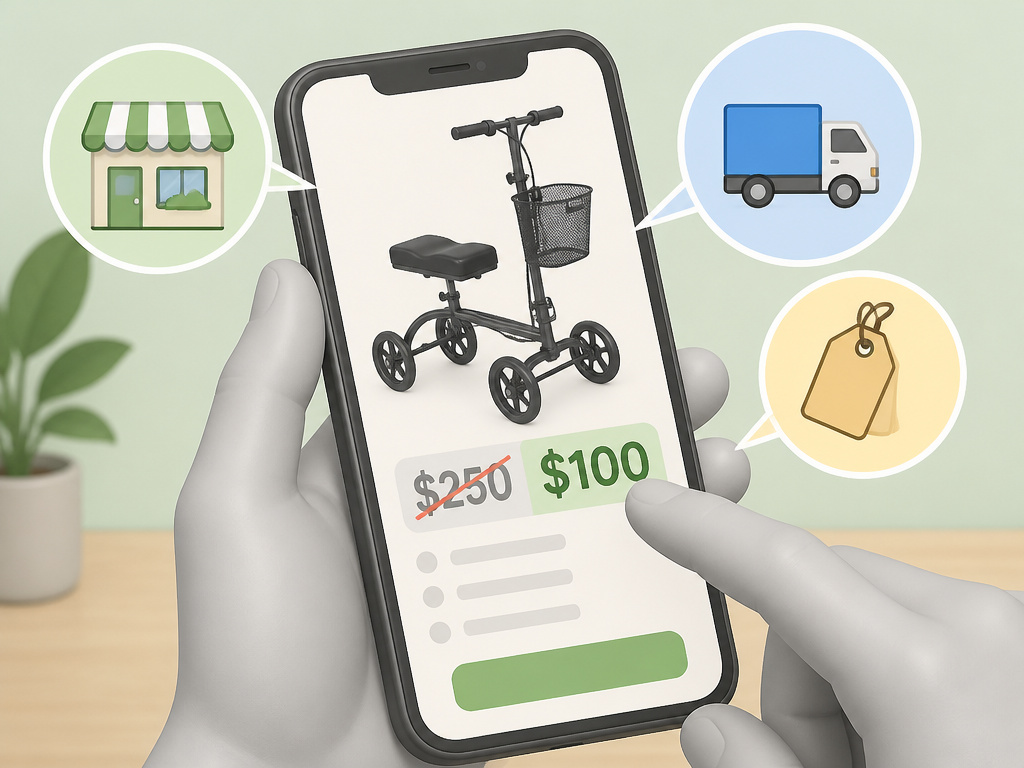
Your purchase location changes the price, the return policy, and how fast you get it.
Online Retailers (Amazon, Brand Websites): This is where you’ll find the widest selection and competitive prices. Amazon offers fast shipping (sometimes same-day) and a straightforward return window. Buying directly from a brand site like Zipr or KneeRover often gets you a manufacturer warranty. Zipr offers a 3-year limited warranty on its Coaster model. The downside is you can’t try before you buy, and shipping costs can be high.
Local Medical Supply Stores: You pay a premium here for immediate availability and the chance to test a model. It’s the solution if you need a scooter today. Call ahead; not all stores stock them, and inventory varies. Some also offer rental-to-own programs.
Secondhand Markets (Facebook Marketplace, Craigslist): This can be the most cost-effective route. Since knee scooters are used for a limited time, many are sold nearly new. Look for name brands like Drive Medical or KneeRover. Inspect the wheels for cracks, test the brakes, and ensure all adjustment knobs work. You can often find a $250 scooter for $100.
The Smart Save: Open Box & Refurbished. Brands like KneeRover sell “open box” models directly. These are typically returns that have been inspected. As noted in a Reddit thread from r/brokenbones, these are often unused and come with the full warranty at a 20-30% discount. It’s the most reliable way to get a higher-tier model on a budget.
Where this goes sideways: Buying a used scooter without checking the weight capacity label. A faded label or a “good deal” can lead to using a 250 lb capacity scooter when you need 300 lbs, risking a frame failure.
Knee Scooter vs. IWalk: A Cost and Capability Comparison
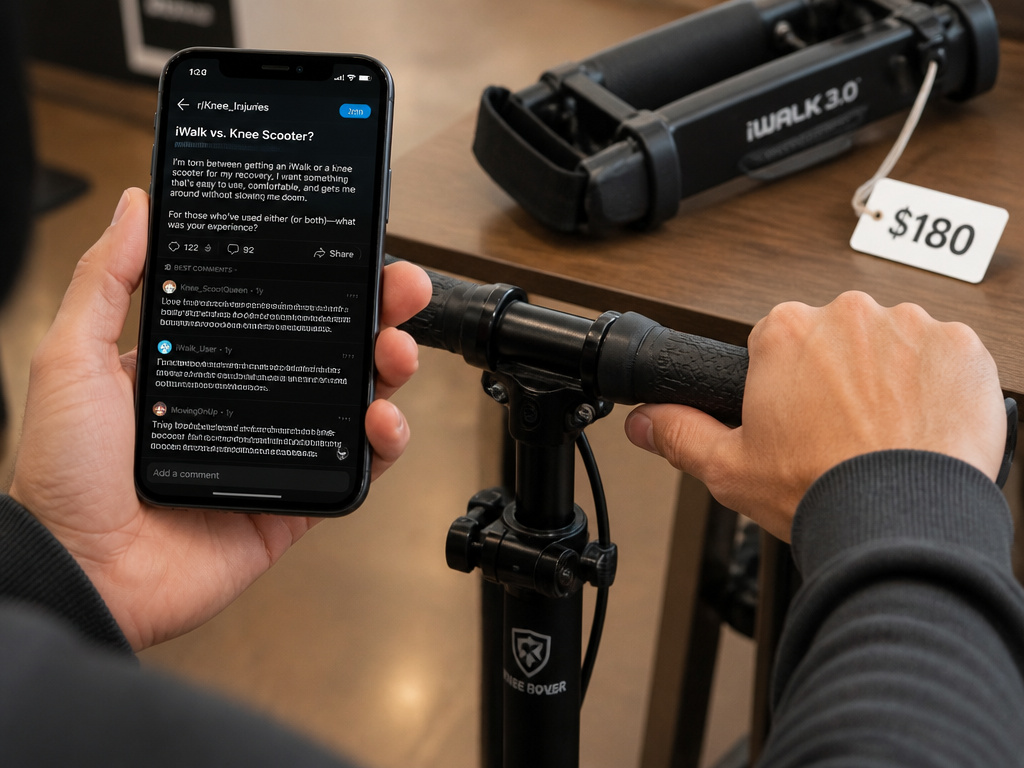
Some Reddit communities, like r/AchillesRupture, fiercely debate knee scooters versus the hands-free iWalk crutch. The choice significantly impacts your budget and mobility.
The iWalk is a peg-leg style device that straps your injured leg to a bent-knee platform, freeing both hands. New, they cost around $180; refurbished or used, you might find one for $65. Its primary advantage is hands-free operation for tasks like cooking or carrying items. Its major limitation is endurance: it requires your leg to be bent for long periods, which one Reddit user noted can contribute to blood clot risk if not frequently straightened.
A knee scooter provides a stable, upright platform. Your hands are on the handles, but your weight is off your foot. The cost is comparable to a new iWalk, but the scooter is generally safer for longer-distance mobility. As the debate on Reddit shows, iWalk advocates love it for indoor chores, while scooter users trust it for stability outdoors.
The financial takeaway: if your recovery involves mostly indoor, stationary tasks, an iWalk could suffice. If you need to move any distance or navigate outdoors, a scooter’s stability is worth the investment. For the price of a new iWalk, you can often find a capable mid-range scooter.
Insurance, Warranties, and Protecting Your Purchase
Insurance coverage for a knee scooter is not guaranteed. It often depends on your plan’s “durable medical equipment” (DME) clause and a written prescription from your doctor. Even with a prescription, you may face a deductible or be required to rent first. Always call your insurer with the specific product name and code (like the Karman KW-200-BK‘s UPC 661094548818) before purchasing.
Warranties vary dramatically. A longer warranty often signals better build quality but read the details, what exactly is “limited” coverage?
To protect your purchase:
- Register the product immediately with the manufacturer.
- Keep the original box and packaging for at least the return window, in case of defects.
- Use a credit card that extends the manufacturer’s warranty.
These steps cost nothing but can save you the full cost if a weld fails or a wheel bearing seizes in the first few months.
Knee Scooter Brand and Model Comparison
Key specifications differ between brands, affecting fit and usability. For example, weight capacity varies significantly, with some economy models supporting up to 350 lbs, while others have a 250 lb or 300 lb limit. The range for adjusting the knee pad height also differs; some scooters adjust from 16 to 23 inches, while others have a lower starting point around 13 inches. These numbers are crucial for matching a scooter to your body and for answering how much is a knee scooter for your needs. User experiences highlight that paying more often buys better outdoor capability and durability, with some noting that cheaper models can have safety issues. Refurbished models from known brands can offer a cost-effective middle ground.
Frequently Asked Questions
Will insurance pay for a knee scooter?
Sometimes, but it’s not automatic. You typically need a formal prescription from your doctor stating it’s medically necessary durable medical equipment (DME). Even then, many plans will only cover a rental, not a purchase. Contact your insurance provider with the specific model information before you buy.
Is a knee scooter worth it?
For a non-weight-bearing period longer than a few days, yes. Crutches are exhausting and strain your hands, shoulders, and good leg. A scooter provides stability and saves energy. The consensus from Reddit users in recovery forums is that the mobility and independence are worth the cost, with many describing it as transformative.
How expensive are knee scooters?
New knee scooters range from about $100 for a basic model to $400 for a heavy-duty, all-terrain version. The average user spends between $150 and $250 for a reliable mid-range model from a known brand like Drive Medical or Zipr.
Does Walmart sell knee scooters in store?
Some Walmart locations carry knee scooters in their pharmacy or medical section, but inventory is spotty. You’ll have a much wider selection and better price shopping online at Walmart.com or on Amazon, where delivery can be just as fast.
The Bottom Line
Your knee scooter budget should start with two numbers: your weight and your recovery timeline. If you’re over 250 lbs, skip the budget tier, the $50 you save isn’t worth the risk. If you’ll be off your foot for more than three weeks, buy instead of rent; the math works in your favor.
For most people recovering from a foot or ankle injury, a mid-range scooter from Drive Medical or Zipr, costing $150 to $250, is the practical choice. It has the verified weight capacity, decent adjustment, and a foldable design that works for the majority of home and light outdoor use.
If your world includes sidewalks, ramps, or any uneven ground, the single best investment you can make is in air-filled tires. That feature alone dictates whether the scooter is a mobility aid or a hazard. Mechanically speaking, that’s the line. Spend enough to cross it.
