How to Dispose of Hoverboard: A Step-by-Step Safety Guide
This post contains affiliate links. As an Amazon Associate, we earn from qualifying purchases.
To dispose of a hoverboard safely, you must treat its lithium-ion battery as hazardous waste. Never put it in the trash. The process involves checking for recalls, safely preparing the battery, and delivering the entire unit or just the battery pack to a designated e-waste recycler, battery drop-off, or household hazardous waste facility.
That lithium-ion battery is the whole problem. It’s not like tossing an old toy. When damaged, shorted, or improperly disposed of, the cells can overheat, vent toxic gases, and ignite, sometimes weeks after you think they’re dead. This is why you must know how to dispose of hoverboard batteries safely. The Consumer Product Safety Commission (CPSC) links them to more than 250 fire incidents.
What follows is the drill. This guide explains how to check if your board is part of an active recall like the EVERCROSS EV5, the right way to tape those terminals, where to take it, and what to do if your local recycler turns you away. By the end, you’ll know exactly where that hoverboard needs to go when you compare a how to dispose of hoverboard guide to your local options.
Key Takeaways
- Never throw a hoverboard in the trash. Its lithium-ion battery can cause fires in garbage trucks and landfills, as documented by the CPSC.
- Check for an active recall first at CPSC.gov. Recalled models like the EVERCROSS EV5 require immediate battery removal and specific hazardous waste disposal.
- Tape the battery terminals with non-conductive electrical tape before transport or storage to prevent short-circuiting, which is a primary ignition source.
- Use a designated drop-off point. Look for battery recyclers (Call2Recycle), e-waste facilities, or household hazardous waste collection events, not general recycling bins.
- Store a broken hoverboard safely away from heat and flammable materials on a non-flammable surface like concrete until you can dispose of it.
Why You Can’t Just Throw It Away
Be honest about the battery. It’s not an accessory; it’s the hazard. A hoverboard’s power comes from a dense lithium-ion battery pack. When that pack is crushed, punctured, or short-circuited, exactly what happens in a garbage compactor, the chemical reaction inside can turn into a thermal runaway.
You’ll smell the smoke first. It’s a sharp, chemical scent, then you’ll see it. That’s what recycling facility workers report right before a battery fire ignites other materials.
The numbers from safety agencies aren’t theoretical. The CPSC is aware of more than 250 hoverboard incidents related to fires or overheating. One in March 2017 ignited a house fire in Harrisburg, Pennsylvania, resulting in two fatalities. Municipalities have seen the damage firsthand, and many now explicitly ban hoverboards from curbside garbage and recycling streams for this exact reason.
Common mistake: Assuming a “dead” battery is safe. A lithium-ion cell can hold a residual charge sufficient to cause a short circuit long after the device stops working. That’s why taping the terminals is non-negotiable.
This is a documented fire hazard with a body count, not a minor environmental footnote. Treating it like regular trash isn’t just wrong; it’s how people get hurt.
Is Your Hoverboard Under Recall?
This changes everything. If your board is part of an active safety warning, the disposal process is an urgent directive. One prominent example is the EVERCROSS EV5.
In March 2024, the CPSC issued a warning to immediately stop using these boards. They received a report of a fire in May 2023 that caused substantial property damage to a New York City residence. The agency urges owners to immediately remove the battery packs and dispose of them via local hazardous waste procedures.
| Recalled Model | Color Options | Sold From/To | Key Disposal Directive |
|---|---|---|---|
| EVERCROSS EV5 | Black, Blue, Pink | July 2021 – Present (March 2024) | Remove battery pack immediately. Dispose of battery as hazardous waste. |
| Pre-2016/Pre-UL 2272 Models | Various | Before January 29, 2016 | Assume non-compliant. Check CPSC.gov for specific recalls. Contact manufacturer if recalled. |
How do you check? Go straight to the source: CPSC.gov. Use the search function. If your board is listed, follow the instructions in the official notice, like the CPSC hoverboard fire hazard warning. For older boards, the rule is simple: if you bought it before 2016, it is not UL 2272 compliant and has a higher inherent fire risk.
The distinction matters. A recalled board’s battery is considered defective and poses a heightened, immediate risk. The urgency is about removing an identified ignition source from your home.
The Step-by-Step Disposal Process
Okay, you’ve checked for recalls. Your board needs to go. Here’s the sequence that actually works, built from regulator guidelines and recycler advice.
Before you start: You’ll need appropriate tools to potentially remove the battery, a roll of non-conductive electrical tape, and a sturdy container. Work in a dry, well-ventilated area away from anything flammable.
- Power down and cool off. Ensure the hoverboard is completely turned off. If it’s been used or charged recently, let it sit for an hour. A warm battery is more volatile.
- Remove the battery pack (if possible). Most hoverboards have a plastic cover on the underside secured by screws. Removing the battery isolates the hazard and makes transport easier. If the housing is sealed or you’re uncomfortable, skip to step 4, many facilities accept the whole unit.
-
Tape the battery terminals. This is the most critical safety step everyone glosses over. Locate the positive (+) and negative (-) metal connectors on the battery pack. Cover each terminal completely with a generous wrap of electrical tape. Do not let the tape bridges touch. You’re creating a physical barrier to prevent a short circuit.
-
Place the secured battery or entire unit in a container. Use a non-flammable container like a metal toolbox or a sturdy cardboard box. This prevents movement and contains any potential leakage.
- Transport directly to a disposal site. Do not let it sit in your hot car. Go straight to your chosen drop-off location. This isn’t a multi-stop errand.
Where this goes sideways: Storing a taped battery in a junk drawer or hot garage after removal. The tape is a temporary safety measure, not a permanent fix. Get it to a facility within 24 hours.
What about just swapping in a new battery installation and keeping the board? Don’t. If you’re disposing of the hoverboard, it’s because the whole product is at the end of its lifespan or unsafe. Putting a new battery into a damaged or recalled frame is asking for trouble.
Where to Take It: Finding Local Options
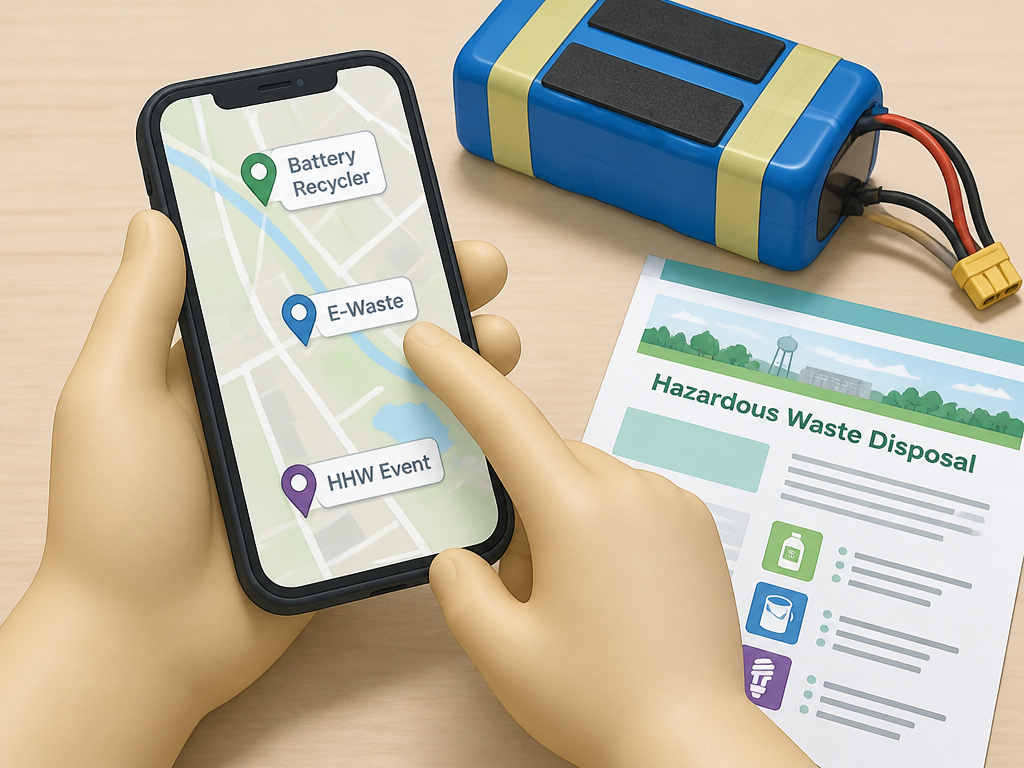
You have the taped battery in a box. Now where? “A recycling place” is too vague. You need the right type of facility.
First, understand the categories:
- Battery Recyclers: Programs like Call2Recycle often accept loose battery packs at retail drop-boxes (Home Depot, Lowe’s). They specialize in the battery chemistry.
- E-Waste (Electronic Waste) Facilities: These handle whole electronics. Call ahead to confirm they accept hoverboards with batteries. Some require an extra fee.
- Household Hazardous Waste (HHW) Collection: Your city or county runs these, often on specific weekends. They take batteries, chemicals, and items too hazardous for trash. This is usually free for residents.
| Disposal Option | Best For | What to Expect | How to Find |
|---|---|---|---|
| Battery Recycler (e.g., Call2Recycle) | Isolated battery packs only. | Free drop-off at partner retailers. Quick and specific. | Use the “Find a Drop-Off” tool on their website. |
| Dedicated E-Waste Facility | The entire hoverboard unit. | May charge a small fee ($5-$20). They handle disassembly. | Search “[Your City] e-waste recycling”. |
| Municipal HHW Collection Event | Multiple hazardous items, including whole hoverboards. | Free for residents, but often limited dates/locations. | Check your city/county government website. |
| Retail Store Drop-Off (Best Buy, Staples) | Varies widely. Many now refuse hoverboards due to fire risk. | Call first. Policies have tightened significantly. | Store websites usually list accepted items. |
Your best first move is to visit your city or county’s “Waste Management” or “Public Works” website. Look for “hazardous waste” or “e-waste” instructions. The published hoverboard safety guidelines from the CPSC explicitly direct you to a “local battery recycler or hazardous waste collection center.”
If the first place you call refuses it, don’t give up. Ask them, “Do you know who does accept them?” Often, the municipal HHW program is the final answer.
Navigating Conflicting Advice and Special Cases
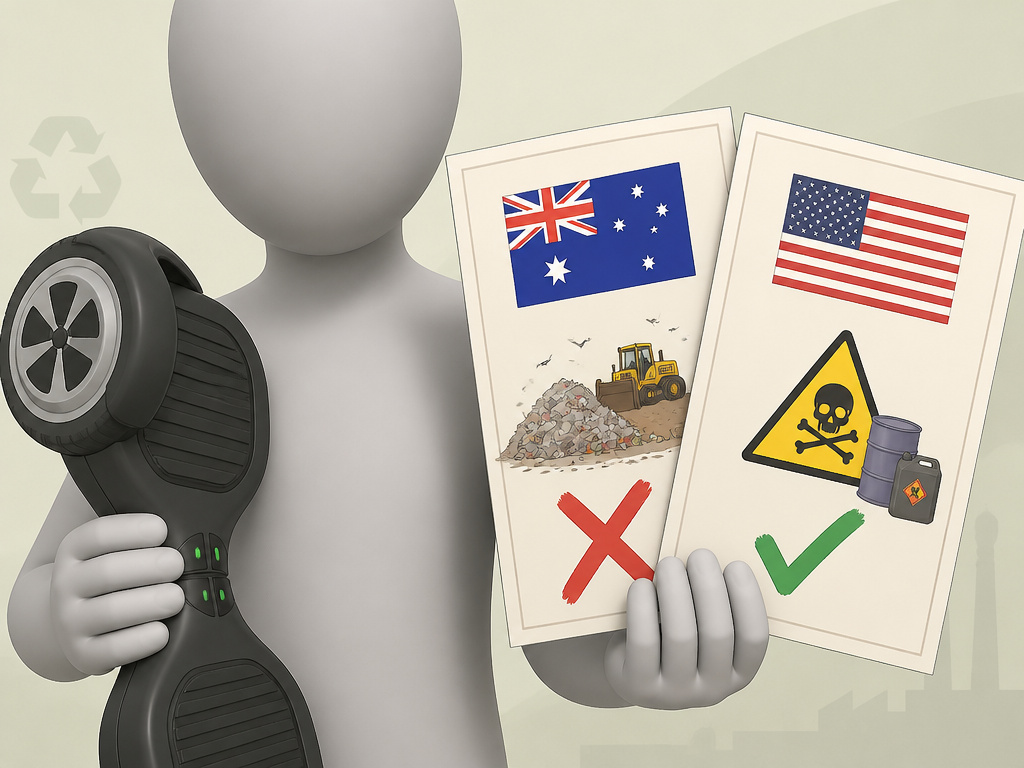
One unspoken problem is that even official sources disagree. The Australian Competition and Consumer Commission (ACCC) states lithium batteries and battery powered devices should be disposed of in ordinary waste or taken to local landfills. Many U.S. Municipal guides now say the exact opposite.
Why the conflict? Regulation and experience. The official ACCC product safety announcement from 2016 reflected a different waste infrastructure. Today, after documented fires in recycling streams, the consensus in the U.S. Has shifted decisively toward hazardous waste handling.
Special Case 1: The Recycler Says No.
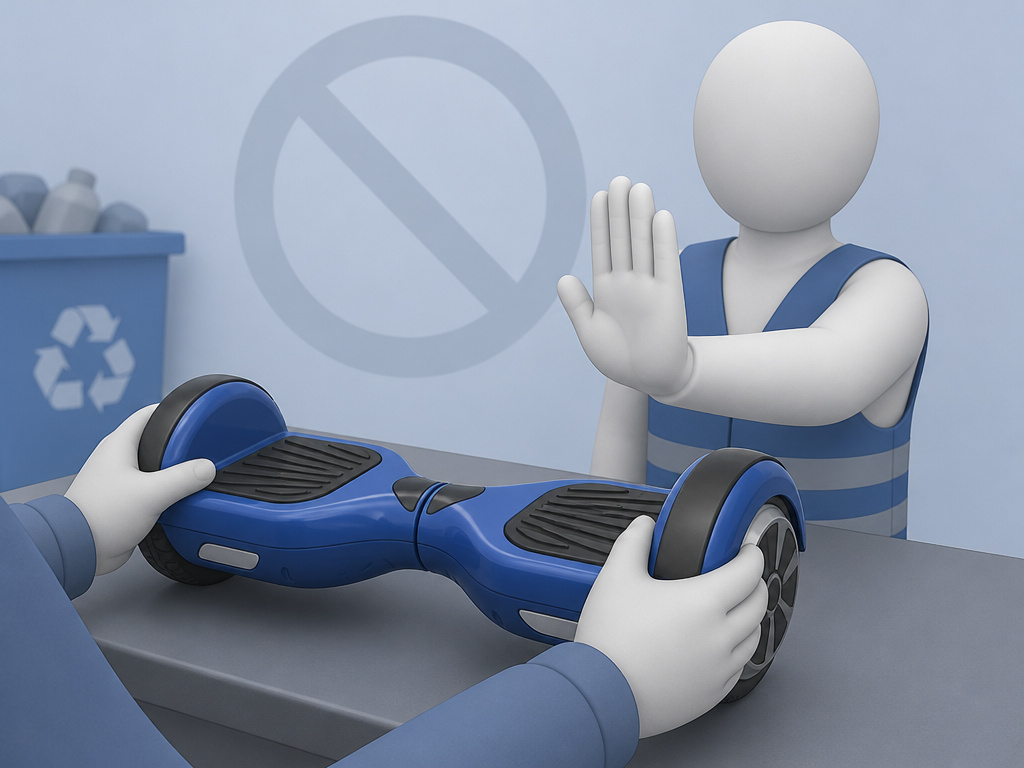
You followed the steps, brought it in, and they refuse it. It happens. Your next steps are:
- Politely ask if they can recommend another facility.
- Contact your city’s waste management department directly. They have a legal obligation to provide disposal information for hazardous household waste.
- Search for “household hazardous waste event [Your County]”. Many areas hold periodic collection events that accept items permanent facilities do not.
Special Case 2: Safe Storage Before Disposal.
You can’t get to a facility for a week. Store the taped battery or entire board in a cool, dry place. Store it in a cool, dry place away from heat sources and flammable materials. Do not store it in a living space or near anything flammable.
Special Case 3: What About Donation or Resale?
If the hoverboard is functional, safe (UL 2272 compliant), and not recalled, donating it is a great option. But you must be certain. Giving away a recalled or fire-prone model passes the hazard to someone else, which is irresponsible. When in doubt, recycle.
The Dangers of DIY Disassembly
You might be tempted to take it apart for scrap metal or to “properly” recycle the components. My strong advice is: don’t.
Lithium-ion battery packs are not user-serviceable, as they are often glued and spot-welded shut. Prying them open can puncture a cell, causing immediate chemical release and potential ignition. You are not equipped to handle that reaction. Also, an overcharged battery or one damaged from a crash can be in an unstable state, waiting for a trigger.
The professionals at certified e-waste facilities have the training, tools, and containment booths to handle this. Your kitchen table does not. The minor value in scrap copper or aluminum isn’t worth the risk of a chemical fire you cannot extinguish with water.
Your role ends at safe preparation and transport, which is the core of the how to dispose of hoverboard process. Let the certified recyclers do the actual dismantling. This is the core of fire prevention, recognizing the limit of your own skill and tools.
Where to take your hoverboard for recycling
Guidance differs by region: the U.S. CPSC directs consumers to a local battery recycler or hazardous waste collection center, while the Australian ACCC states lithium batteries and devices should be disposed of in ordinary waste or taken to local landfills. Never place the device or its lithium battery in your household recycling bin, as this can lead to dangerous incidents at recycling facilities. While national programs exist, availability varies by city and county. Start by checking your municipal website for household hazardous waste collection events or permanent drop-off locations. Many electronics retailers also offer take-back programs for batteries and devices. If your first call gets a ‘no,’ ask for a referral; they often know which neighboring facility handles these items. The goal is to ensure the battery pack is processed separately from general waste and recycling streams.
Frequently Asked Questions
Can I throw a hoverboard in the dumpster?
No. Throwing a hoverboard in a dumpster or regular trash is illegal in many municipalities and dangerous everywhere. The lithium-ion battery can be crushed, leading to fires in garbage trucks, transfer stations, and landfills. Always use a designated hazardous waste or e-waste pathway.
What if my hoverboard is still working?
If it’s a modern, UL 2272 compliant board and not under recall, consider donating it to a local charity, thrift store, or selling it online with full disclosure of its condition. Ensure the recipient understands the necessary battery fire safety practices, like using the correct charger.
Are there fees for hoverboard recycling?
Sometimes. Dedicated e-waste facilities often charge a fee to cover the cost of safe battery handling. Municipal household hazardous waste collection events are typically free for residents. Battery-only recyclers like Call2Recycle are usually free.
How do I know if my board is UL 2272 compliant?
Check the bottom of the hoverboard for a holographic UL certification label. The original packaging should also have a certification mark. If you bought it before January 29, 2016, it is not compliant. If you’re unsure, the CPSC recommends asking the seller for documentation.
What’s the best way to transport it to a facility?
Place the taped battery or whole unit in a sturdy box or non-flammable container. Transport it in the trunk or bed of your vehicle, away from passengers. Do not leave it in a hot car unattended. Go directly to the disposal site.
The Bottom Line
Disposing of a hoverboard is a deliberate act of safety, not just cleaning. That lithium-ion battery demands respect. The process is straightforward: check for recalls, tape the terminals, and deliver it to a facility equipped for the hazard.
If you take away one action, let it be this: find your local household hazardous waste program’s website right now. Bookmark it. That’s your definitive answer, not a generic web search. Their rules are the ones that matter for your trash pickup, your local landfill, and your liability.
Everything else is background noise. The agencies have published the warnings, the federal safety agency’s product warning, the regulator’s hoverboard safety notice, and the fires have provided the tragic proof. Your job is just to connect those two points with a single trip to the right drop-off location. Then it’s handled.
