How to Do a Cross Step on a Longboard: Mechanics Explained
This post contains affiliate links. As an Amazon Associate, we earn from qualifying purchases.
To do a cross step on a longboard, you walk from the tail toward the nose by crossing your back foot in front of your front foot, planting it securely on the board’s centerline, then bringing the other foot forward. The core mechanics are shoulder-width steps, centered weight, and a speed just above walking pace for stability. Avoid shuffling or skipping.
Think of it like walking on a narrow beam that’s also moving. The board’s length, your speed, and where you place your foot decide whether you walk or wobble. Most guides talk about keeping your weight centered, but they miss the part about feeding pressure forward, it’s not just balance, it’s propulsion. A key technique for this is learning how to do a cross step on a longboard.
What follows: the exact six-step sequence, the two speed traps that catch everyone, a head-to-head on foot placement philosophy, and the gear tweaks that make this move possible instead of painful.
Key Takeaways
- Speed is a stabilizer. Lush Longboards states cross-stepping is harder at very low speeds, while SurferToday notes it becomes harder at high speeds; aim for a pace a little more than walking for consistent balance.
- Centered foot placement is essential. Plant each step on the board’s center stringer; stepping off-center introduces wobble that compounds with each step.
- Shuffling is a dead end. It might feel safer, but it kills your ability to generate speed and ruins your trim on the wave.
- Practice the “half-step” first. Master shifting your back foot in front of your front foot and back before attempting a full walk; this builds the muscle memory for weight transfer.
- Your board length dictates difficulty. According to Degree 33 Surfboards, a board at least 3 feet longer than your height makes cross-stepping significantly easier, though other sources focus on technique without prescribing a specific length.
What a Cross Step Actually Is (And Why It’s Not Shuffling)
First, a clarification. A cross step is a deliberate, crossed-leg walk. Shuffling is a hesitant, parallel-foot slide. The difference isn’t just style, it’s physics.
Shuffling keeps your feet wide and your weight low, which feels stable but anchors you to one spot on the board. It’s like riding the brakes. A cross step, however, allows you to shift your weight forward and back to manage the board’s trim and speed. It’s the difference between standing on a moving sidewalk and walking on it. One is passive; the other gives you agency.
I’ve seen this common mistake a hundred times. A skater gets comfortable with a wide, stable stance and starts sliding their feet up the board. It works for a session or two, until they need to generate speed in a fading section and can’t. The shuffle fails because it doesn’t transfer weight efficiently. Your fundamentals are your foundation, and this is a fundamental worth drilling.
Where this goes sideways: Practicing only on flat land. Without the wave’s momentum and angle, you develop a stiff, vertical posture that collapses the second you hit moving water. Dry-land practice is for foot-placement memory, not for building wave-appropriate balance.
The 6-Step Cross Step Sequence
Don’t think of this as a dance. Think of it as a controlled fall from one foot to the other, with the board catching you each time. Here is the sequence, drawn from the consensus across SurferToday, Degree 33, and Lush Longboards.
Step 1: Find Your Baseline Stance. Get the board trimming comfortably on the wave face. Your feet should be in your normal, balanced surfing stance, typically one near the tail, one forward. Knees are bent, eyes are looking down the line, not at your feet.
Step 2: Initiate the Half-Step. This is the practice move. Shift your weight slightly forward onto your front foot. Bring your back foot across, placing it in front of your front foot, centered on the board’s stringer. Immediately return it to its original position. This isn’t a step yet; it’s testing the weight shift and balance point. Skip this, and your first full step will feel like a lunge into the unknown.
Step 3: Commit to the First Cross. From your baseline stance, lift your back foot. Cross it over the front of your front foot, aiming for a spot on the deck about a shoulder-width step forward. Beau Young’s advice via SurferToday is key here: take a slow, wide, even, and centered step.
Step 4: Plant and Transfer. As the crossing foot touches down, plant it firmly along the center stringer. This is the moment of truth. Your weight must transfer decisively onto this new front foot. If you hesitate, you’ll wobble. The old front foot is now your back foot, and it should feel light, ready to move.
Step 5: Complete the Step. Bring the new back foot (your original front foot) forward, uncrossing your legs. Place it ahead of the now-front foot, again centered on the stringer. You’ve now reversed your stance, the foot that was in front is now behind. This completes one full cross step.
Step 6: Repeat or Return. You can continue walking toward the nose with another cross step. To return, you simply reverse the sequence: cross your new front foot behind your back foot, plant it, and bring the other foot back.
| Step | Action | Critical Focus | If You Skip It |
|---|---|---|---|
| 1. Baseline | Establish trim on the wave. | Eyes up, knees bent. | You’ll be fighting the wave’s energy instead of using it. |
| 2. Half-Step | Test cross motion without commitment. | Foot centered on stringer. | The full step feels alien and you’ll likely step off-center. |
| 3. First Cross | Cross back foot in front of front foot. | Slow, wide, shoulder-width step. | The step becomes a narrow stumble, losing balance. |
| 4. Plant & Transfer | Shift weight onto new front foot. | Firm plant, full weight transfer. | You’ll be straddling two points, causing a wobble that can spin the board out. |
| 5. Complete | Bring other foot forward to new stance. | Maintain centered foot placement. | You’ll be stuck in a crossed-leg position, unable to proceed or retreat. |
| 6. Return | Reverse the sequence to walk backwards. | Don’t step too far back toward the tail. | You’ll step off the board completely, as Degree 33 Surfboards warns. |
The sound of a cross step is a soft, solid tap as each foot plants, not a scrape or a shuffle. You’ll hear the difference long before you see it.
Why Speed Matters More Than You Think
One point often overlooked is that going too slow makes this harder. Most beginners assume a crawl is safest. It’s not.
Lush Longboards states it plainly: cross-stepping “can actually be harder at very low speeds.” Why? For the same reason a bicycle is wobbly at a crawl but stable at a jogging pace. You need a bit of momentum in the board for gyroscopic stability. The ideal speed is “a little more than walking pace.”
Conversely, SurferToday notes that “the faster the longboard is traveling, the harder it becomes to cross-step with elegance.” So you have a Goldilocks zone: not too slow, not too fast. Too slow, and the board loses its inherent stability. Too fast, and your footwork can’t keep up with the racing water under your feet.
Common mistake: Attempting your first cross steps while the wave is racing away beneath you in a steep section. The instability is overwhelming. Find a softer, rolling section of the wave where the speed is consistent and manageable, what Taylor Jensen calls a “flatter section” where you want to be toward the middle of the board.
The Foot Placement Debate: Center Stringer vs. Heelside Rail
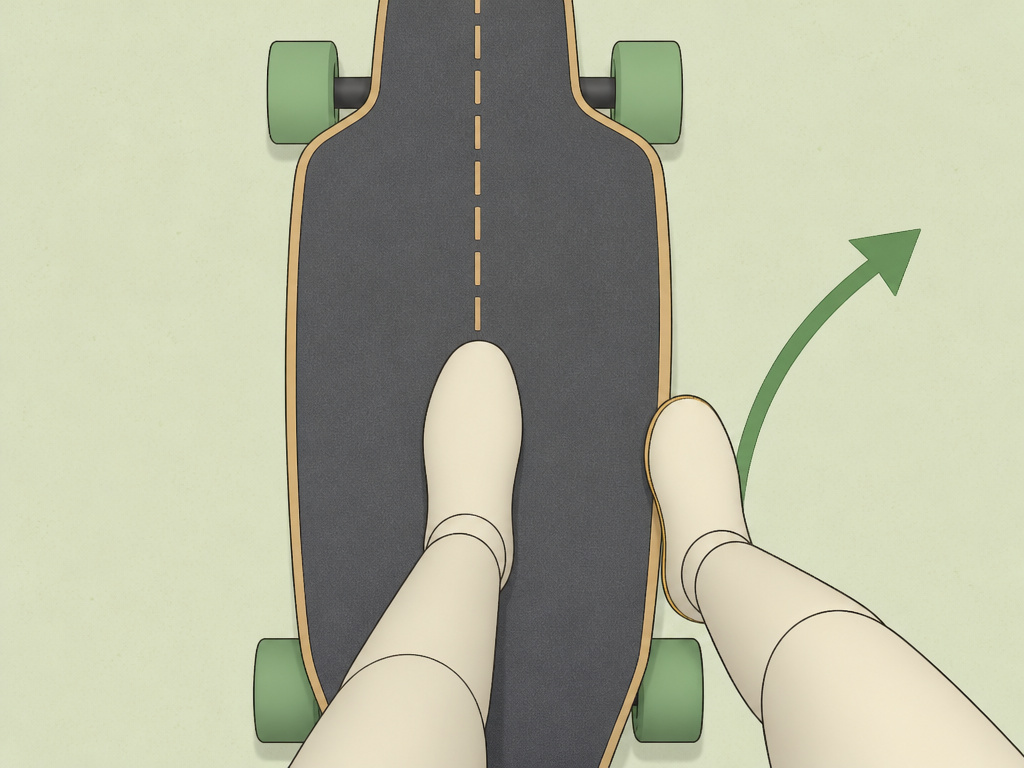
Sources disagree here, and acknowledging this is how you avoid dogma. Your foot placement on a longboard isn’t just about comfort; it’s about control geometry.
The Centered Argument (SurferToday, Degree 33): The dominant advice is to keep every step centered along the board’s stringer. Degree 33 Surfboards drills this: “Make sure your foot is centered along the stringer when moving your foot forward.” The logic is straightforward: centered weight keeps the board tracking straight and prevents a rail from digging in.
The Rail-Bias Argument (Scooterlay): In its guide to longboard freestyle dancing, Scooterlay instructs: “Both of your feet need to be right near the heelside rail as you move your body weight to it.” This is for initiating a carve during a dance step on pavement, not necessarily for trim on a wave.
The Verdict: For surfing on a wave, SurferToday and Degree 33 advise keeping feet centered on the stringer. Scooterlay, discussing freestyle dancing, advises keeping feet near the heelside rail when moving body weight to it. For longboard skate dancing on flat ground, the rail-bias technique is part of a carve-initiation move. Context is everything. If your goal is pure cross-stepping on a wave, plant on the stringer.
How Your Longboard Affects Your Cross Step
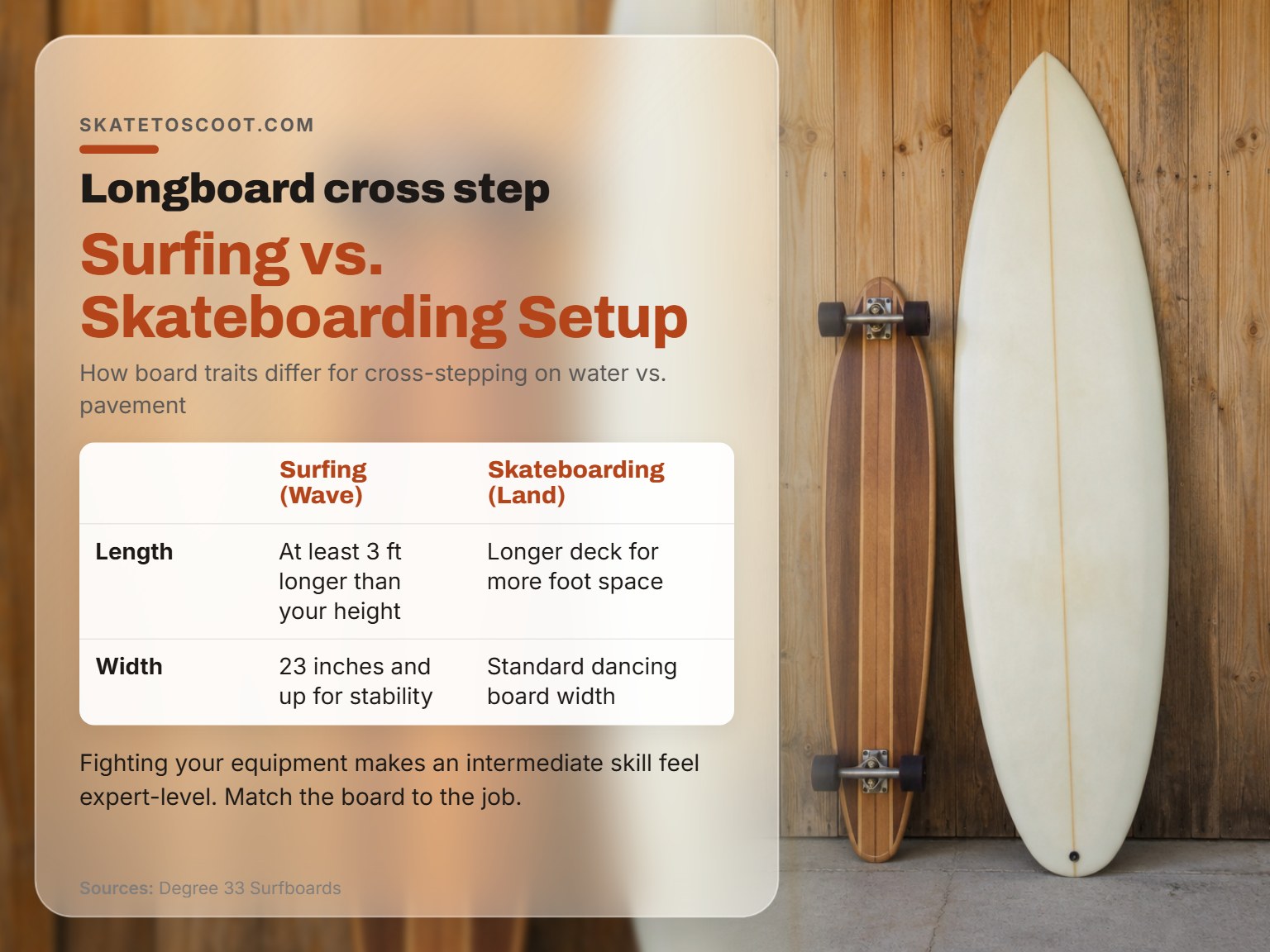
You can’t do a graceful waltz on a postage stamp. Your board’s dimensions are your dance floor. This is where the manufacturer specs from the fact sheet give you concrete edges to work with.
Length: Longer is easier. Degree 33 Surfboards provides a measurable rule: “choose a board that is at least 3 ft longer than your height.” Their Classic Noserider model is cited as their easiest board for this maneuver.
Width: Wider is more stable. The same source recommends a width of 23 inches and up for a stability platform.
Setup for Longboard Skate Practice: If you’re practicing on land, the rules shift. For dancing on a longboard on pavement, Longboards USA describes decks as longer, flexier, and having kicktails. They recommend soft wheels (78A durometer or softer) for smooth rolling and name the Dusters Wanderlust 47“ as a stable, flexible choice for beginners. A drop-through longboard can also work, offering a lower, more stable platform.
| Board Trait | For Surfing (Wave) | For Skateboarding (Land) |
|---|---|---|
| Length | At least 3 ft longer than your height (Degree 33). | Longer deck for more foot space (Scooterlay). |
| Width | 23 inches and up for stability (Degree 33). | Not as critical; standard dancing board width. |
| Flex | Traditional rigidity for wave response. | Some flex for comfort and pumpability (Longboards USA). |
| Key Feature | Single fin or 2+1 setup for hold and pivot. | Kicktails for tricks, softer wheels (78A) for smooth roll. |
Resisting your equipment turns an intermediate skill into an expert-level challenge. Match the board to the job.
Troubleshooting Your Cross Step
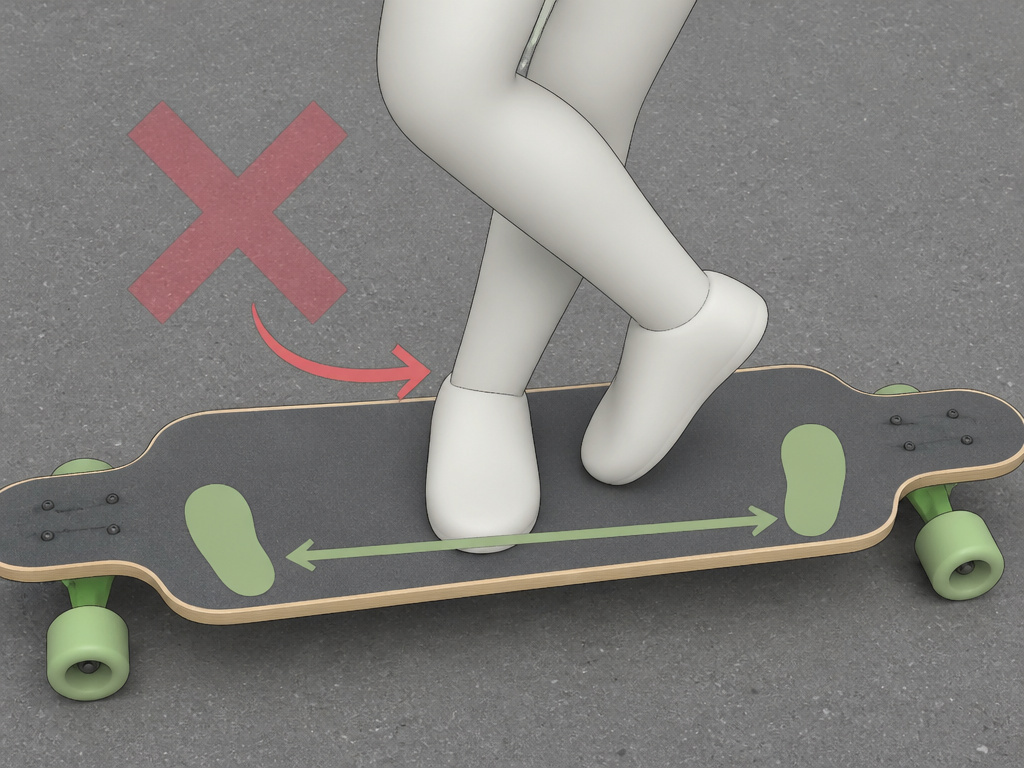
When your cross step fails, it usually does so in one of three predictable ways. Here’s how to diagnose and fix them.
Problem 1: The Board Spins Out / You Lose Trim.
- Cause: You’re stepping off the centerline, or your weight isn’t transferring fully onto the new front foot. You’re essentially steering the board with your feet.
- Fix: Go back to the half-step drill on dry land. Draw a line and practice planting your foot directly on it. On water, focus on the feeling of your weight locking over the new front foot before moving the other.
Problem 2: You Nosedive.
- Cause: You’re walking too far forward, too fast, for the wave’s speed and steepness. You’ve outrun the wave’s support.
- Fix: As Taylor Jensen outlines, position is everything. In a steep section, you can’t just walk to the nose. You need to be “progressing towards the nose” as the section allows. Feel for the board’s lift. If the nose starts to sink, abort the walk and step back quickly.
Problem 3: You Can’t Cross-Step Backwards.
- Cause: It’s inherently harder. Degree 33 notes it “can feel more difficult for newer longboard surfers,” and Lush Longboards ranks the “backpedal” as harder than going forward. You’re also likely looking down at your feet.
- Fix: First, master the forward cross step until it’s automatic. Then, on land, practice the reverse sequence slowly. The key is the same centered placement, just in reverse order. Don’t try it on a wave until the forward walk is rock solid. Your balance is built forward first.
Progression Path: From First Step to Fluid Walking
Learning this isn’t a binary switch from “can’t” to “can.” It’s a staircase. Longboards USA frames it well: learning the basics takes a few weeks; achieving flow takes months.
- Dry-Land Drills (Week 1): Practice the half-step and full cross step on a line drawn on the ground. Degree 33 Surfboards suggests this explicitly. Goal: muscle memory for foot crossing and centered plants.
- Static Water Practice (Week 2-3): On your board in flat water, practice the steps while stationary. Goal: get comfortable with the motion on an unstable platform without wave variables.
- The Single Step on a Wave (Week 4): On a small, gentle wave, perform one full cross step and then return to your baseline stance. Don’t try for two. Goal: integrate the move with basic wave riding.
- Two Steps and Return (Month 2): Add a second step. Then practice the backpedal to return to the tail. This is where you link the pivot of your take-off with forward movement on a longboard.
- The Full Walk (Month 3+): String three or more steps together toward the nose. Begin to vary the timing and size of your steps based on the wave section, as the pros do.
This progression ties your fundamentals for riding a longboard directly to advanced technique. You’re not learning a trick; you’re expanding your vocabulary of movement.
When to Cross-Step on a Wave
Cross-stepping works best when your board has a steady, predictable speed. Aim for a pace a little more than a walking speed. If you’re going too slow, cross-stepping can be harder to manage. If you’re going too fast, maintaining elegant control becomes difficult. Look for a flatter, smoother section of the wave where you have a steady, predictable speed. Avoid trying to cross-step in steep, critical parts of the wave where balance is already a challenge.
Relationship to Noseriding
Cross-stepping is the primary method for getting to the nose of your board to noseride. It’s the most functional movement for traveling from the tail to the nose while maintaining control and trim. Unlike a shuffle, a cross-step allows you to transfer your weight smoothly forward, feeding the board’s nose into the wave pocket without stalling. Mastering this step is essential for setting up a stable noseride, as it positions your weight correctly at the front of the board.
Board Setup for Cross-Stepping
A stable, longer board is recommended for learning cross-steps. Look for a design with a width of 23 inches and up for a stable platform. On a surfboard, this often means a classic noserider shape. For longboard dancing on land, a longer, flexier deck with kicktails is typical.
Frequently Asked Questions
Is cross-stepping necessary, or can I just shuffle?
You can shuffle, but you limit yourself. Shuffling is less efficient for weight transfer and speed generation, and it’s considered poor style in traditional longboarding. The cross step is the functional, accepted method for moving with control and grace.
What’s the hardest part of learning to cross-step?
Overcoming the instinct to look down at your feet. Your eyes guide your weight. If you’re staring at the deck, your head drops, your shoulders hunch, and your center of gravity shifts. Look where you want to go, down the line, and let your feet find their place by feel.
Can I practice cross-stepping on a longboard skateboard?
Absolutely. It’s an excellent way to drill the footwork and weight transfer without wave pressure. As one Reddit user noted, “you are not going to nosedive on a longboard skateboard.” However, remember it’s not a perfect substitute, you won’t learn the wave-timing element, and skating backwards on land feels different than on water.
How do I know if my board is good for cross-stepping?
Check the specs against the guidelines in the fact sheet. Is it at least 3 feet longer than you are? Is it 23 inches or wider? Does it have a forgiving, stable shape like a noserider? If yes, it’s suitable. If not, you’ll be working harder than you need to.
Why do I keep falling when I try to step?
The two most common reasons are off-center foot placement (causing a spin-out) and incomplete weight transfer (causing a wobble). Isolate the half-step drill and practice on a line until every plant is directly on target. Speed can also be a factor, you might be going too slow.
The Bottom Line
The cross step is a commitment, not a tentative slide. Your first workable step will feel less like walking and more like trusting the board to catch you. That’s the threshold.
If you only take away one thing, let it be this: speed stabilizes, centerline rules, and shuffling is a crutch you outgrow. Drill the half-step on land until the cross feels natural, then take it to the softest, slowest part of a small wave. Everything else, the fluid walk, the backpedal, the nose ride, builds from that single, committed step.
The gear matters, but the reps matter more. Longboards USA puts the timeline right: basics take weeks, flow takes months. Trust the process, not just the trick.
